
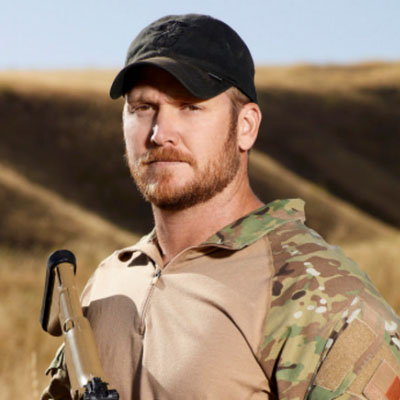
Chris Kyle, born Christopher Scott Kyle on April 8, 1974, in Odessa, Texas, is one of the most legendary figures in modern American military history. Known as the most lethal sniper in U.S. military history, Kyle’s legacy extends far beyond his battlefield accomplishments. He became a household name after the publication of his autobiography, “American Sniper,” which was later adapted into a highly successful film directed by Clint Eastwood. This article delves into the life, fame, and highlights of Chris Kyle, exploring the nuances of his military career, his post-service contributions, and the enduring impact of his story.
Early Life and Influences
Chris Kyle was born into a devout Christian family. His father, Wayne Kenneth Kyle, was a deacon, and his mother, Deby Mercer, was a Sunday school teacher. Raised with strong moral values and a deep sense of duty, Kyle was introduced to firearms at a young age. His father bought him his first rifle, a .30-06 Springfield, when Kyle was just eight years old. This early exposure to guns and hunting trips with his father instilled in him a love for marksmanship, which would later define his military career.
Growing up in Texas, Kyle attended high school in Midlothian, where he played football and baseball. Known for his physical toughness and competitive spirit, he excelled as a linebacker for the Permian Panthers, a high school football team that inspired the book and film “Friday Night Lights.” After graduating from high school in 1991, Kyle pursued a career as a professional rodeo cowboy, a path that was abruptly cut short due to a severe arm injury.
After recovering from his injury, Chris Kyle made the life-changing decision to serve his country. The 1998 bombings of U.S. embassies in Kenya and Tanzania by Al-Qaeda terrorists played a pivotal role in solidifying his resolve to join the military. Initially, Kyle aimed to join the United States Marine Corps, but concerns about the metal pins in his arm led him to be turned down. Undeterred, he explored other options and eventually found his calling in the U.S. Navy SEALs, one of the most elite special operations forces in the world.
In 1999, Kyle was accepted into Basic Underwater Demolition/SEAL (BUD/S) training, a grueling program designed to weed out all but the most determined and resilient candidates. Kyle excelled in this challenging environment, and upon completing his training, he was assigned to SEAL Team 3, where he served as a sniper.
The Iraq War: Becoming “The Devil of Ramadi”
Chris Kyle’s military career reached its zenith during the Iraq War, where he served four tours of duty. His extraordinary skill as a sniper quickly became evident, earning him a fearsome reputation among enemy combatants. Kyle’s first confirmed kill came during the initial invasion of Iraq in 2003, when he shot a woman approaching a group of Marines with a grenade in her hand. This incident marked the beginning of a storied career that would see Kyle credited with 160 confirmed kills, the highest in U.S. military history, although some estimates place the total number significantly higher.
Kyle’s exploits in the war earned him the nickname “Shaitan Ar-Ramadi,” or “The Devil of Ramadi,” from Iraqi insurgents. He became a prime target, with a bounty placed on his head that reportedly grew to $80,000. Despite the danger, Kyle continued to carry out his missions with precision and courage. One of his most remarkable feats occurred in 2008, when he took out an insurgent armed with a rocket-propelled grenade (RPG) from a distance of approximately 2,100 yards—nearly two kilometers—using a McMillan TAC-338 sniper rifle. This shot remains one of the longest confirmed sniper kills in history.
Kyle’s effectiveness as a sniper was not just about his marksmanship; it was also about his ability to make split-second decisions in high-stress situations, always with the primary goal of protecting his fellow soldiers. Throughout his service, he was shot twice and involved in six separate IED (Improvised Explosive Device) explosions, yet he survived all these encounters without serious injury.
Transition to Civilian Life and “American Sniper”
After leaving the Navy in 2009, Chris Kyle faced the challenges of transitioning to civilian life, a common struggle for many veterans. He moved back to Texas with his wife, Taya, and their children, and began to carve out a new path for himself. Kyle founded Craft International, a security training company that provided specialized training to military personnel and law enforcement officers.
In 2012, Kyle published his autobiography, “American Sniper: The Autobiography of the Most Lethal Sniper in U.S. Military History.” The book was a candid and unflinching account of his experiences in Iraq, offering readers a glimpse into the life of a sniper and the toll that war takes on those who serve. Kyle’s straightforward writing style and his unapologetic honesty about his actions and feelings made the book an instant bestseller. It spent 37 weeks on the New York Times bestseller list, making Chris Kyle a national figure and solidifying his legacy as an American hero.
Advocacy and Tragic End
Beyond his work as an author and businessman, Chris Kyle dedicated himself to helping fellow veterans. He became involved with the FITCO Cares Foundation, a nonprofit organization that provides fitness equipment and training to veterans suffering from physical disabilities and post-traumatic stress disorder (PTSD). Through the foundation’s Heroes Project, Kyle sought to give back to those who had served their country, offering them the tools and support they needed to rebuild their lives.
Tragically, Chris Kyle’s life was cut short on February 2, 2013. He and his friend Chad Littlefield were shot and killed at a shooting range in Erath County, Texas, by Eddie Ray Routh, a former Marine who was reportedly suffering from severe PTSD. Kyle and Littlefield had taken Routh to the range in an effort to help him cope with his mental health issues, but the outing ended in a senseless act of violence. Routh was later convicted of capital murder and sentenced to life in prison without the possibility of parole.
Kyle’s death sent shockwaves through the nation, and he was mourned as a true American hero. His funeral was held at Cowboys Stadium in Arlington, Texas, and was attended by thousands, including military personnel, dignitaries, and ordinary citizens who admired his service and sacrifice.
The Legacy of “American Sniper”
The release of the film “American Sniper” in 2014, directed by Clint Eastwood and starring Bradley Cooper as Chris Kyle, brought his story to an even wider audience. The film was a commercial success, grossing over $540 million worldwide, and it sparked widespread discussion about the experiences of military personnel and the complexities of war. While the film took some creative liberties, it remained largely faithful to Kyle’s account of his life and service, portraying him as a dedicated soldier who struggled with the moral and emotional burdens of his role.
“American Sniper” was nominated for six Academy Awards, including Best Picture and Best Actor for Cooper’s portrayal of Kyle. The film’s impact went beyond the box office; it reignited national conversations about the sacrifices made by military families, the challenges of reintegrating into civilian life after combat, and the importance of providing support to veterans.
Controversies and Lawsuits
Chris Kyle’s life and legacy have not been without controversy. In his autobiography, Kyle recounted an incident in which he claimed to have punched former Minnesota governor Jesse Ventura in a bar after Ventura allegedly made derogatory remarks about Navy SEALs. Ventura denied the incident ever occurred and filed a defamation lawsuit against Kyle, which continued even after Kyle’s death. In 2014, a jury awarded Ventura $1.8 million in damages, a decision that was met with mixed reactions from the public and the military community.
Despite this legal battle, Kyle’s reputation as a war hero has largely remained intact. His story continues to inspire and resonate with people across the United States and around the world.
Conclusion
Chris Kyle’s life was a testament to courage, duty, and sacrifice. From his humble beginnings in Texas to his rise as the most lethal sniper in U.S. military history, Kyle’s journey was marked by extraordinary achievements and profound challenges. His service in Iraq earned him the respect and admiration of his peers, while his post-military work demonstrated his commitment to helping others, particularly his fellow veterans.
Kyle’s legacy lives on through his autobiography, the film “American Sniper,” and the countless lives he touched through his advocacy work. Though his life was tragically cut short, Chris Kyle’s story remains a powerful reminder of the human cost of war and the enduring strength of the American spirit.


