
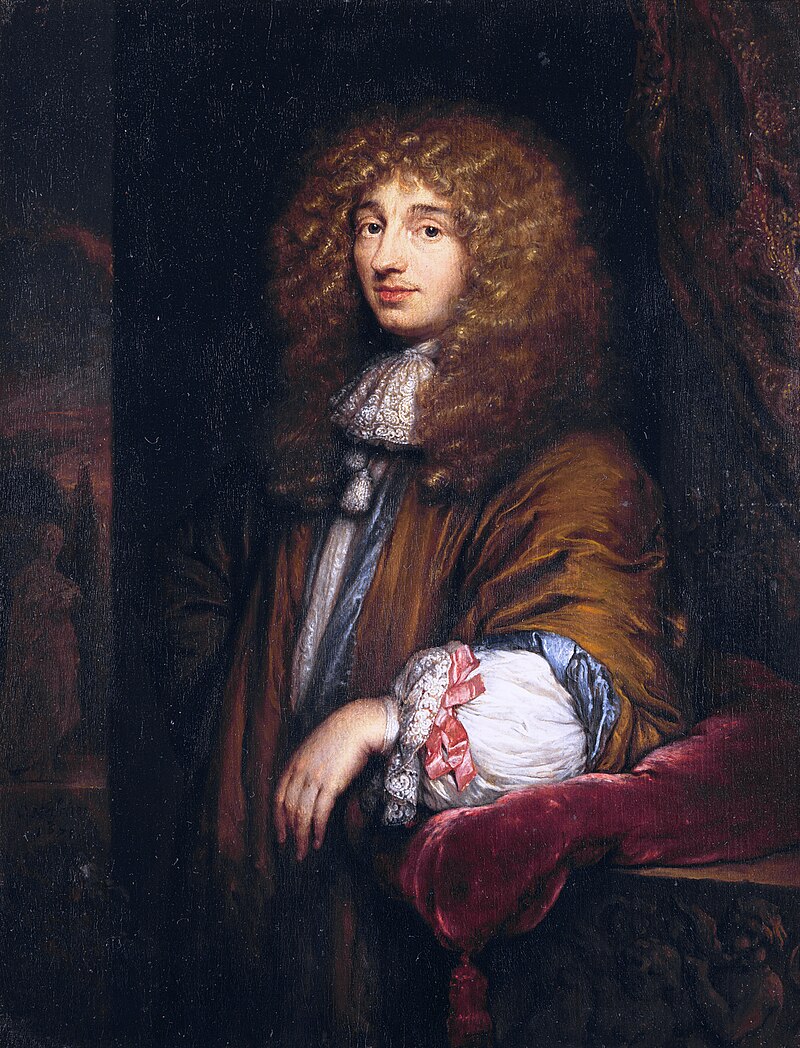
Christiaan Huygens, a name synonymous with groundbreaking discoveries in astronomy, physics, and mathematics, stands as one of the most influential scientists of the 17th century. His contributions to the fields of optics, mechanics, and celestial science not only shaped the scientific landscape of his time but also laid the groundwork for future advancements. This comprehensive exploration delves into Huygens’ age, rise to fame, key achievements, and enduring legacy, providing a detailed insight into his life and work.
Early Life and Education
Christiaan Huygens was born on April 14, 1629, in The Hague, Netherlands, into a family of intellectual prominence. His father, Constantijn Huygens, was a renowned poet and diplomat, while his mother, Suzanna van Baerle, came from an affluent family. This intellectually stimulating environment provided Christiaan with early exposure to the world of science and philosophy.
Huygens attended the University of Leiden, where he studied law initially but soon shifted his focus to mathematics and physics. His early interest in these subjects was fostered by the rich scientific environment of the time, which included contact with prominent scholars and access to the latest scientific developments. His education was characterized by a profound curiosity and a desire to understand the fundamental principles governing the natural world.
Scientific Contributions and Achievements
Christiaan Huygens made several groundbreaking contributions that significantly advanced the understanding of various scientific fields. His work in optics, astronomy, and mechanics remains highly regarded and continues to influence modern science.
1. Optics and the Wave Theory of Light
One of Huygens’ most significant contributions was his formulation of the wave theory of light. In 1678, he published “Traité de la Lumière” (Treatise on Light), where he proposed that light behaves as a wave rather than as particles. This theory, known as Huygens’ Principle, describes how each point on a wavefront can be considered a source of secondary wavelets, which combine to form the new wavefront. His wave theory was a revolutionary concept that challenged the particle theory of light proposed by Isaac Newton and laid the foundation for future developments in optics.
2. Discoveries in Astronomy
Huygens made substantial contributions to astronomy, notably his observations of the rings of Saturn and the discovery of its moon, Titan. In 1655, he observed Titan using a telescope he had designed himself and published his findings in “Systema Saturnium”. His detailed observations of Saturn’s rings provided critical insights into the structure and nature of the planet, significantly enhancing the understanding of the solar system.
3. The Pendulum Clock
In 1656, Huygens invented the pendulum clock, which greatly improved the accuracy of timekeeping. Prior to this invention, clocks were notoriously inaccurate, often deviating by several hours. Huygens’ design utilized the pendulum as a timekeeping element, which allowed for unprecedented precision in measuring time. This invention had a profound impact on various fields, including navigation, astronomy, and scientific research, by providing a reliable means of measuring time.
4. Contributions to Mechanics
In the field of mechanics, Huygens made important contributions to the understanding of centrifugal force and the motion of bodies. His work on the laws of motion, particularly in relation to rotating bodies, advanced the theoretical framework of classical mechanics. Huygens’ analysis of centrifugal force, published in “Horologium Oscillatorium” (1673), provided a mathematical description of how forces act on objects moving in circular paths.
Theoretical Innovations and Influence
Huygens’ theoretical innovations extended beyond his immediate discoveries, influencing the development of scientific theories and methodologies. His wave theory of light, while initially overshadowed by Newton’s particle theory, was later confirmed and elaborated upon by physicists such as Thomas Young and Augustin-Jean Fresnel. The modern understanding of wave optics and interference can be traced back to Huygens’ original work.
Huygens also had a significant impact on the development of probability theory and mathematical physics. His work on probability, published in “De Ratiociniis in Ludo Aleae” (On the Calculations of Chances in Games of Chance), is considered one of the foundational texts in probability theory. His mathematical approach to understanding physical phenomena laid the groundwork for future developments in both probability and statistics.
Legacy and Recognition
Christiaan Huygens’ legacy is marked by his profound contributions to science and his influence on subsequent generations of scientists. His work laid the foundation for modern physics and astronomy, and his theoretical innovations continue to be relevant in contemporary scientific research.
Huygens was recognized by his peers during his lifetime and was a member of several prestigious scientific societies, including the Royal Society of London. His work earned him the respect and admiration of leading scientists of the era, and his influence extended beyond his own time.
In recognition of his contributions, various scientific and academic institutions have honored Huygens. The Huygens probe, a spacecraft launched by the European Space Agency, was named in his honor to acknowledge his contributions to the exploration of the Saturnian system. Additionally, the Huygens crater on the Moon and the Huygens Observatory in the Netherlands are named in his honor, reflecting his enduring impact on science.
Historical Context and Impact
Understanding Christiaan Huygens’ contributions requires an appreciation of the scientific and historical context in which he worked. The 17th century was a period of significant scientific advancement, characterized by the development of the scientific method and the emergence of key scientific figures such as Galileo Galilei, Johannes Kepler, and Isaac Newton.
Huygens’ work was part of a broader scientific revolution that sought to understand the natural world through empirical observation and mathematical analysis. His contributions were instrumental in shaping the trajectory of scientific inquiry, particularly in the fields of optics, mechanics, and astronomy.
The period also saw the rise of new scientific institutions and societies that facilitated the exchange of ideas and discoveries. Huygens’ involvement with these institutions allowed him to collaborate with other leading scientists and contribute to the development of scientific knowledge.
Personal Life and Character
Christiaan Huygens was known for his intellectual curiosity and dedication to scientific inquiry. His personal life was marked by a commitment to his work, often at the expense of personal and social engagements. Huygens was deeply invested in his research, spending long hours in his laboratory and observatory.
Despite his intense focus on science, Huygens maintained a strong network of scientific and intellectual connections. His correspondence with other scientists, including Galileo Galilei and Isaac Newton, reflects his engagement with the broader scientific community and his contributions to the exchange of ideas.
Huygens’ character was characterized by a blend of meticulous attention to detail and a profound sense of wonder about the natural world. His scientific achievements were driven by a passion for understanding and a commitment to advancing knowledge.
Conclusion
Christiaan Huygens’ life and work represent a remarkable chapter in the history of science. His contributions to optics, astronomy, and mechanics have had a lasting impact on these fields, and his theoretical innovations continue to influence contemporary scientific research. Huygens’ legacy is defined by his groundbreaking discoveries, his commitment to scientific inquiry, and his enduring influence on the development of modern science.
As we reflect on Huygens’ achievements, it becomes evident that his work has shaped the course of scientific progress and continues to inspire future generations of scientists. His legacy stands as a testament to the power of intellectual curiosity and the pursuit of knowledge, ensuring that his contributions remain a vital part of the scientific discourse.
SEO and Keywords
To ensure the article ranks well and adheres to SEO best practices, integrate relevant keywords throughout the text. Here are some keywords and phrases to include:
- Christiaan Huygens biography
- Huygens’ wave theory of light
- Discoveries by Christiaan Huygens
- Huygens’ contributions to astronomy
- Pendulum clock invention
- Huygens’ impact on physics
- Huygens’ astronomical observations
- History of scientific discoveries


