
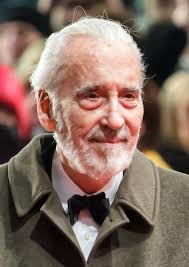
Christopher Frank Carandini Lee, born on May 27, 1922, in London, England, was more than just a towering figure in cinema—both literally and figuratively. Standing at an imposing 195 cm, Lee became an iconic actor recognized globally for his deep voice, striking presence, and unforgettable portrayals of villainous characters. However, his life story is rich with nuances, intriguing twists, and notable achievements that extend far beyond his on-screen persona.
Early Life and Education: A Multifaceted Background
Christopher Lee was born into a family with a diverse heritage. His father, Geoffrey Trollope Lee, was an English army officer, while his mother, Estelle Marie Carandini, came from an Italian noble lineage, specifically the Marchesi di Sarzano. Estelle was known for her beauty, often captured in portraits by prominent Edwardian artists. This mix of British discipline and Italian nobility would come to define much of Lee’s complex character.
His parents’ separation during his youth led to his relocation to Switzerland with his mother, where he attended Miss Fisher’s Academy in Wengen. It was here that Lee took on his first acting role, notably as a villain—a sign of things to come. After returning to London, he continued his education at Wagner’s private school before winning a scholarship to Wellington College, one of the UK’s most prestigious schools.
Military Service: From World War II to Intelligence
Lee’s life took a dramatic turn with the onset of World War II. In 1939, he volunteered to fight for the Finnish forces against the Soviet Union, although he did not see direct combat. However, his military career truly began when he joined the Royal Air Force and later the British intelligence services. Trained as a pilot in South Africa, Lee was eventually reassigned due to a vision problem, serving as a cipher officer in North Africa and Italy.
Interestingly, Ian Fleming, the creator of James Bond, was Lee’s cousin by marriage. It is speculated that some aspects of Bond’s character were inspired by Lee’s wartime experiences—a testament to the adventurous and enigmatic life he led even before stepping into the limelight as an actor.
Entry into Cinema: From Rank Organisation to Hammer Horror
After the war, Lee found himself at a crossroads. With the assistance of his cousin Nicolò Carandini, then the Italian ambassador, he secured a seven-year contract with Rank Organisation, a leading entertainment company. His film debut came in 1948 with “Corridor of Mirrors,” directed by Terence Young. Lee’s early career saw him in numerous action roles, though none brought him significant fame.
It wasn’t until 1957, when Lee starred as the infamous Count Dracula in Hammer Film Productions’ “Horror of Dracula,” that his career took a meteoric rise. His portrayal of Dracula was both chilling and charismatic, and it would become the defining role of his early career, leading to multiple sequels and establishing him as the quintessential cinematic vampire.
Rise to Fame: Iconic Roles and Global Recognition
Throughout the 1960s and 70s, Lee’s reputation as a master of horror grew, but he was not confined to this genre. He diversified his roles, playing everything from the sinister Lord Summerisle in “The Wicker Man” (1973) to the three-nippled assassin Francisco Scaramanga in the James Bond film “The Man with the Golden Gun” (1974). These roles showcased his versatility and his ability to imbue even the most villainous characters with depth and complexity.
Lee’s collaborations with director Peter Jackson in the early 2000s further solidified his place in cinematic history. His portrayal of Saruman in “The Lord of the Rings” trilogy (2001-2003) and as Count Dooku in the “Star Wars” prequels (2002, 2005) introduced him to a new generation of fans. These roles, while in fantastical settings, were grounded by Lee’s gravitas, making them some of the most memorable in both franchises.
Personal Life and Interests: A Man of Many Talents
Beyond his film career, Christopher Lee was a man of many talents. Fluent in eight languages—English, French, Italian, Spanish, German, Swedish, Russian, and Greek—Lee was an intellectual with a passion for history, music, and literature. His marriage to Danish model Birgit Kroencke in 1961 was a lifelong partnership, and they had two children together.
Lee was also a devoted musician, a less-known facet of his life. He collaborated with the Italian metal band Rhapsody of Fire, providing narration for their albums between 2004 and 2007, and even recorded a heavy metal album, “A Heavy Metal Christmas,” at the age of 90. This achievement earned him the title of the oldest metal singer to release an album, demonstrating his unyielding passion for the arts.
Legacy: Awards, Honors, and Cultural Impact
Christopher Lee’s contributions to film and culture were recognized through numerous awards and honors. In 2001, he was appointed Commander of the Order of the British Empire (CBE) by Queen Elizabeth II, a testament to his impact on British cinema. His height and commanding presence also earned him a place in the Guinness World Records as the tallest leading actor.
His connection to Italy remained strong throughout his life, and in 2004, he was awarded honorary citizenship of Casina, a town in Reggio Emilia, where his ancestors once lived. Lee’s love for Italy was further evidenced by his fluency in Italian and his frequent visits to the country.
Historical Context and Nuances: Beyond the Silver Screen
Christopher Lee’s life was marked by a series of fascinating historical contexts that shaped his character and career. Born into a period of significant change in Europe, his early years were influenced by the shifting political landscapes of both World Wars. His service in World War II and his experiences in British intelligence provided him with a unique perspective, one that he often brought to his roles in film.
The post-war era was a time of great cultural shifts, and Lee’s rise to fame during the 1950s and 60s coincided with the golden age of British horror cinema. His work with Hammer Films not only defined his career but also influenced the horror genre globally, setting a standard for future generations of filmmakers and actors.
Conclusion: The Immortal Legacy of Christopher Lee
Christopher Lee passed away on June 7, 2015, at the age of 93, leaving behind a legacy that transcends the confines of cinema. He was not just an actor but a cultural icon, a man whose life was as dramatic and compelling as the characters he portrayed. His contributions to film, music, and even the military are a testament to his extraordinary talents and enduring influence.
Today, Christopher Lee is remembered as one of the greatest actors of his generation, a man whose presence on screen was matched only by the depth of his character off it. His life story is a tapestry of rich experiences, from his aristocratic heritage and wartime heroics to his unparalleled contributions to the arts. In the annals of cinema history, Christopher Lee’s name is etched as a symbol of excellence, versatility, and timeless appeal.


