
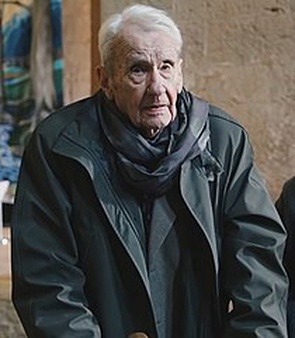
Christopher John Reuel Tolkien, born on November 21, 1924, in Leeds, England, is a pivotal figure in the literary world, best known for his tireless efforts to preserve and expand the legacy of his father, J.R.R. Tolkien, the legendary author of The Lord of the Rings and The Hobbit. As the youngest son of the renowned writer, Christopher Tolkien’s life was deeply intertwined with the intricate worlds his father created. This article explores the life, achievements, and impact of Christopher Tolkien, delving into his role as a scholar, editor, and guardian of the Tolkien legacy.
Early Life and Connection to Middle-earth
Growing up in the shadow of one of the most influential literary figures of the 20th century, Christopher Tolkien was immersed in the rich mythology of Middle-earth from an early age. His father, J.R.R. Tolkien, often read his works-in-progress to his children, and Christopher, even as a child, played a significant role in the development of his father’s stories. He was not merely a passive listener; young Christopher actively engaged with the narratives, offering feedback and even suggesting ideas that would later be woven into the epic tapestry of Middle-earth.
One of Christopher’s most notable contributions during his early years was his work on the maps of Middle-earth. The complex geography of Tolkien’s world was essential to the narrative, and Christopher took on the task of interpreting his father’s often contradictory notes to create coherent and accurate maps. These maps, which were included in the original publications of The Lord of the Rings, are considered iconic elements of the series, providing readers with a visual representation of the fantastical world they were exploring through the text.
During World War II, Christopher Tolkien served as a pilot in the Royal Air Force, a period that temporarily interrupted his academic pursuits. However, the experience of the war, like it did for many of his generation, left a lasting impact on him, shaping his views and deepening his commitment to the values and themes that permeated his father’s work, such as the struggle between good and evil and the importance of courage and friendship in the face of adversity.
Academic Career and Scholarly Pursuits
Following the war, Christopher Tolkien pursued an academic career, following in his father’s footsteps. He became a lecturer in English Language at New College, Oxford, where he taught from 1964 to 1975. His academic background in philology and deep understanding of his father’s work made him uniquely qualified to take on the monumental task that would define his life: editing and publishing J.R.R. Tolkien’s unpublished manuscripts.
J.R.R. Tolkien left behind a vast collection of unfinished works, notes, and drafts that expanded upon the mythology of Middle-earth. These documents, often dense and complex, required someone with an intimate knowledge of the material to bring them to the public in a coherent form. Christopher Tolkien, with his scholarly rigor and personal connection to the material, was the perfect candidate for this task.
In 1977, Christopher Tolkien published The Silmarillion, a collection of mythopoeic stories that form the backdrop to the events of The Lord of the Rings. The book was a labor of love, compiled from his father’s extensive notes and drafts. The Silmarillion is a dense and intricate work, detailing the creation of Middle-earth, the rise and fall of its great civilizations, and the epic struggles between its various inhabitants. Despite its complexity, the book was well-received and has since become a cornerstone of Tolkien’s legendarium.
Following the success of The Silmarillion, Christopher continued to edit and publish his father’s works, including Unfinished Tales (1980), The History of Middle-earth series (1983-1996), and The Children of Húrin (2007). These publications provided fans and scholars with deeper insights into the rich world of Middle-earth, revealing the vast scope of J.R.R. Tolkien’s imagination and the meticulous detail with which he crafted his stories.
The Guardian of the Tolkien Legacy
Christopher Tolkien’s role as the editor of his father’s posthumous works extended beyond the mere publication of books. He saw himself as the guardian of his father’s legacy, a responsibility he took very seriously. This sense of guardianship led to his decision to oppose certain interpretations and adaptations of his father’s work, most notably the film adaptations directed by Peter Jackson.
When the film adaptations of The Lord of the Rings trilogy were announced, Christopher Tolkien expressed his disapproval, arguing that the cinematic medium could not adequately capture the depth and complexity of his father’s work. He believed that the films would inevitably simplify and distort the narratives, focusing more on action and visual spectacle than on the profound themes and intricate storytelling that defined the original books.
Despite his opposition, the films were made and became massive commercial successes, introducing a new generation to the world of Middle-earth. However, Christopher Tolkien’s concerns were not without merit. While the films were widely praised, some critics and fans agreed that they lacked the nuanced character development and philosophical depth of the books.
Christopher’s protection of his father’s work was not limited to the films. He was also involved in legal battles to maintain control over the rights to J.R.R. Tolkien’s works and to ensure that any adaptations remained true to the spirit of the original material. His dedication to preserving the integrity of his father’s legacy sometimes put him at odds with other members of the Tolkien family and the wider fan community, but he remained steadfast in his convictions.
Personal Life and Later Years
Christopher Tolkien’s personal life was marked by his deep commitment to his family and his work. He was married twice, first to Faith Faulconbridge, with whom he had one son, Simon Tolkien. His second marriage was to Baillie Tolkien, with whom he had two children, Adam and Rachel Tolkien. Baillie, like Christopher, played a role in preserving J.R.R. Tolkien’s legacy, editing and publishing The Father Christmas Letters, a collection of illustrated letters that J.R.R. Tolkien had written to his children.
In his later years, Christopher Tolkien lived a relatively private life in France, away from the public eye. However, he continued to work on his father’s manuscripts, ensuring that new material was published even into the 21st century. His final major project was the publication of Beren and Lúthien (2017), a tale of love and adventure that was particularly dear to his father’s heart.
Christopher Tolkien passed away on January 16, 2020, at the age of 95. His death marked the end of an era for the Tolkien estate, but his contributions to literature and to the preservation of his father’s work ensure that his legacy will live on.
Legacy and Impact
Christopher Tolkien’s impact on the world of literature cannot be overstated. While his father created the world of Middle-earth, it was Christopher who ensured that it was preserved and expanded for future generations. His meticulous editing and deep understanding of the material brought to light aspects of Tolkien’s world that might otherwise have been lost to history.
The publication of works like The Silmarillion and The History of Middle-earth series provided readers with a more complete understanding of the mythological and historical context behind The Lord of the Rings. These books have become essential reading for Tolkien scholars and fans alike, offering insights into the creative process of one of the greatest literary minds of the 20th century.
Moreover, Christopher Tolkien’s dedication to his father’s legacy set a standard for how literary estates should be managed. His careful stewardship ensured that J.R.R. Tolkien’s work was treated with the respect and seriousness it deserved, and his opposition to commercial exploitation of the material served as a reminder that literature is not merely a product, but an art form that deserves to be preserved in its integrity.
Christopher Tolkien’s life was one of quiet dedication to a cause greater than himself. He spent decades working in the shadow of his father, but his contributions were no less significant. By ensuring that the world of Middle-earth was fully realized and shared with the world, Christopher Tolkien helped to shape the imaginations of millions of readers, and his influence will be felt for generations to come.
Final Thoughts
Christopher Tolkien’s life and work are a testament to the power of dedication, scholarship, and a deep love for literature. As the guardian of J.R.R. Tolkien’s legacy, he played a crucial role in bringing some of the most beloved stories in modern literature to the world. His work not only preserved the rich history of Middle-earth but also enriched it, adding layers of depth and meaning that continue to inspire readers and scholars alike.
In a world where the line between art and commerce is often blurred, Christopher Tolkien stood as a figure of integrity and conviction. His life’s work ensured that the legacy of J.R.R. Tolkien would be preserved in its full glory, allowing future generations to explore the wonders of Middle-earth as his father intended. For this, Christopher Tolkien will be remembered as one of the most important literary figures of the 20th century, not just for his role as an editor, but as a true custodian of a literary heritage that has touched millions around the globe.


