
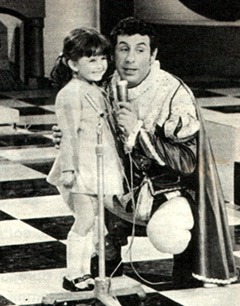
Cino Tortorella, born Felice Tortorella on June 27, 1927, in Ventimiglia, Italy, is a name that holds a significant place in the history of Italian television. Known primarily for his creation of the iconic children’s television program Zecchino d’Oro and for his beloved character Mago Zurlì, Tortorella’s career spanned over five decades, during which he became a central figure in the entertainment industry. His contributions to television, particularly children’s programming, left an indelible mark on Italian culture. This article explores the life, career, and legacy of Cino Tortorella, providing detailed insights into his achievements and the historical context in which he rose to fame.
Early Life and Education
Felice Tortorella, who would later become widely known as Cino, was born into a modest family in Ventimiglia, a small town in the Liguria region of Italy. Tragically, Tortorella’s father passed away before he was born, leaving his mother, Lucia, to raise him alone. Despite the challenges of growing up without a father, Tortorella showed an early interest in the arts, particularly in theater and performance.
After completing his early education, Tortorella enrolled in the University of Milan to study law. However, his passion for the arts soon outweighed his academic pursuits, leading him to abandon his studies before completing his degree. Instead, Tortorella decided to pursue a career in theater, a decision that would set the stage for his future success.
A Foray into Theater: The Birth of Mago Zurlì
Tortorella’s entry into the world of theater was marked by his acceptance into the prestigious Piccolo Teatro di Milano, founded by the renowned director Giorgio Strehler. It was here that Tortorella began to develop his skills as a performer and storyteller. In 1956, he created the character Mago Zurlì, a magical figure who would become central to his career. Mago Zurlì was first introduced in a children’s theater production titled “Zurlì, mago Lipperlì,” which quickly became popular with young audiences.
The success of this character led to Tortorella’s first television program, “Zurlì, mago del giovedì” (Zurlì, the Thursday Wizard), which premiered in 1957. The show was an instant hit, and Mago Zurlì became a beloved figure among Italian children. Tortorella’s ability to engage young audiences with his storytelling and magical persona made him a household name in Italy.
The Creation of Zecchino d’Oro: A National Institution
In 1959, Cino Tortorella created what would become one of Italy’s most enduring and beloved television programs: Zecchino d’Oro. This children’s music festival was designed to showcase young talent, with children under the age of ten performing original songs. The show quickly gained popularity and became an annual event, celebrated for its wholesome content and its ability to bring families together.
Zecchino d’Oro was more than just a television program; it was a cultural phenomenon. The show was produced in collaboration with the Antoniano di Bologna, a Franciscan institution that became closely associated with the program. Tortorella’s role as both the creator and host of Zecchino d’Oro solidified his status as a key figure in Italian television. He was not only a presenter but also a guiding force behind the scenes, ensuring that the show maintained its high standards and appeal to young audiences.
Over the years, Zecchino d’Oro became a platform for launching the careers of many young artists and produced songs that became classics in Italian popular culture. Tortorella’s commitment to the show and his deep understanding of children’s entertainment were crucial to its success.
Expanding Horizons: Contributions to Italian Television
While Zecchino d’Oro remained the cornerstone of Cino Tortorella’s career, he was involved in many other television projects throughout his life. His work extended beyond children’s programming, and he became known for his versatility as a writer, director, and presenter.
In the 1960s, Tortorella collaborated on several notable television shows, including “Chissà chi lo sa?”, a quiz show for young people, and “Nuovi incontri,” a program that featured interviews with prominent literary figures such as Dino Buzzati and Alberto Moravia. These programs demonstrated Tortorella’s ability to engage audiences across different genres, from children’s entertainment to literary and cultural programming.
During the late 1970s and early 1980s, Tortorella ventured into the emerging world of local television, working with channels such as Telealtomilanese and Antenna 3, which were among the first private TV stations in Italy. He created and wrote a variety of shows, including “Il pomofiore,” which he co-wrote with Enzo Tortora, and “Il Napoleone” and “La bustarella,” which showcased his talent for comedy and satire. His ability to adapt to the changing landscape of Italian television allowed him to remain relevant and influential throughout his career.
Tortorella also played a significant role in developing talent shows for young performers. He was the artistic director of “Bravo bravissimo,” a talent show for children that aired on Mediaset and was hosted by the legendary Mike Bongiorno. The show was a precursor to the modern talent shows that dominate television today, and Tortorella’s involvement highlighted his ongoing commitment to nurturing young talent.
The Later Years: Challenges and Legacy
As Cino Tortorella aged, his career faced new challenges. In 2009, after more than five decades of involvement, Tortorella’s relationship with the Zecchino d’Oro program came to a contentious end. A legal dispute with Frate Alessandro Caspoli, the director of the Antoniano di Bologna, led to Tortorella’s departure from the show. This marked a significant turning point in his life, as Zecchino d’Oro had been a central part of his identity and career for many years.
Despite this setback, Tortorella continued to contribute to the world of children’s entertainment. In 2010, he founded the association “Gli amici di Mago Zurlì,” an organization dedicated to protecting children’s rights and celebrating his legacy as a performer and creator. The association was a testament to Tortorella’s enduring passion for his work and his desire to continue making a positive impact on society.
In his later years, Tortorella also faced health challenges. He suffered two ischemic attacks, the first in 2007 and the second in 2009, which resulted in a brief coma. However, Tortorella’s resilience was evident as he recovered and continued to engage in public life, demonstrating the same determination that had characterized his entire career.
Cino Tortorella passed away on March 23, 2017, at the age of 89. His death marked the end of an era in Italian television, but his legacy continues to live on through the countless lives he touched through his work. The programs he created, particularly Zecchino d’Oro, remain a cherished part of Italian culture, and his contributions to children’s entertainment have left an indelible mark on the industry.
The Impact of Cino Tortorella on Italian Culture
Cino Tortorella’s impact on Italian culture is profound. He was not just a television presenter; he was a pioneer who helped shape the landscape of Italian television, particularly in the realm of children’s programming. His work with Zecchino d’Oro set a standard for quality and creativity that continues to influence the industry today.
Tortorella’s ability to connect with audiences of all ages, his dedication to nurturing young talent, and his commitment to creating content that was both entertaining and educational made him a beloved figure in Italy. His character Mago Zurlì became a cultural icon, representing the magic and wonder of childhood for generations of Italian viewers.
Moreover, Tortorella’s work extended beyond entertainment. Through his various projects, he also addressed important social issues, such as the protection of children’s rights, making him a respected figure not only in the entertainment industry but also in the broader cultural and social spheres.
Conclusion
Cino Tortorella’s life and career are a testament to the power of creativity, passion, and dedication. From his early days as a theater performer to his creation of one of Italy’s most beloved television programs, Tortorella’s contributions to Italian culture are immense. His legacy as the creator of Zecchino d’Oro, as well as his role as Mago Zurlì, will continue to be celebrated for years to come.
As we reflect on Tortorella’s life, it is clear that his impact goes far beyond the screen. He touched the hearts of millions, inspired countless young performers, and helped to create a more vibrant and inclusive cultural landscape in Italy. Cino Tortorella may no longer be with us, but his spirit lives on in the programs he created and the memories he left behind.


