
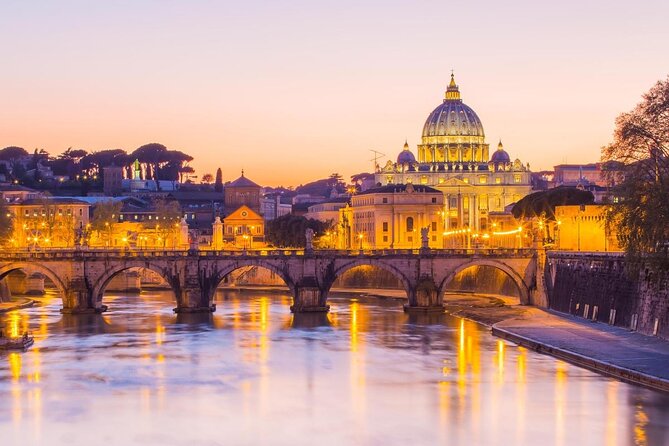
Città del Vaticano, or Vatican City, is one of the most fascinating and unique states in the world. Located in the heart of Rome, it is the spiritual and administrative center of the Roman Catholic Church, serving as the residence of the Pope and the headquarters of the Church’s global operations. Despite its small size—covering just 44 hectares (approximately 110 acres)—Vatican City wields immense influence, both spiritually and politically. This article explores the history, significance, and key aspects of Vatican City, providing a comprehensive overview of what makes this tiny state so important.
Historical Background: The Birth of Vatican City
The modern State of Vatican City was officially established in 1929 with the signing of the Lateran Pacts between the Holy See and the Kingdom of Italy. This agreement marked the end of a long-standing conflict between the Italian state and the Papacy, a conflict that began with the unification of Italy in the 19th century.
Before the unification of Italy, the Pope governed a vast territory known as the Papal States, which covered a significant portion of central Italy. However, during the unification process, the newly formed Italian state annexed these territories, leaving the Pope with only the Vatican area. For nearly 60 years, this led to a tense standoff, often referred to as the “Roman Question,” where the Pope refused to leave the Vatican or recognize the authority of the Italian government over Rome.
The situation was resolved on February 11, 1929, when the Lateran Pacts were signed by Cardinal Pietro Gasparri, representing Pope Pius XI, and Benito Mussolini, representing the Kingdom of Italy. These agreements established Vatican City as an independent sovereign state, ensuring the Pope’s spiritual and temporal independence while also recognizing Catholicism as the state religion of Italy.
The Lateran Pacts: A New Beginning
The Lateran Pacts consist of two main components: the Treaty and the Concordat. The Treaty created the State of Vatican City, establishing it as a sovereign entity with the Pope as its head. This allowed the Pope to maintain full independence and authority within the Vatican’s boundaries, free from interference by the Italian state.
The Concordat, on the other hand, regulated the relationship between the Catholic Church and the Italian state. It recognized Catholicism as the official religion of Italy and provided the Church with financial compensation for the loss of the Papal States. This agreement also granted the Church certain privileges, such as the ability to operate schools and other institutions without state interference.
The signing of the Lateran Pacts was a significant event in both Italian and Church history, as it resolved a long-standing conflict and laid the foundation for the modern relationship between the Church and the Italian state. It also allowed Vatican City to become a fully functioning sovereign state, complete with its own government, legal system, and infrastructure.
The Governance and Structure of Vatican City
Vatican City is a unique entity in many ways, particularly in its governance structure. As an absolute theocracy, the Pope holds supreme power, exercising legislative, executive, and judicial authority. However, the Pope delegates much of the day-to-day administration to various officials and bodies.
The Pope is assisted by the Roman Curia, a complex bureaucracy that helps in the administration of the Church and the governance of Vatican City. The Curia consists of several congregations, councils, and offices that manage everything from the Church’s finances to its diplomatic relations.
In terms of civil governance, Vatican City has its own set of laws, courts, and a legal system separate from Italy. The state has a small judicial system that includes a Court of First Instance, an Appeals Court, and a Supreme Court of Cassation. For criminal matters, Vatican City relies on agreements with Italy, allowing Italian authorities to assist with law enforcement when necessary.
Despite its small size, Vatican City also has its own postal system, currency (which is the Euro, but with unique Vatican designs), and even a small railway station. Additionally, the state operates its own media, including Vatican Radio and the official newspaper, L’Osservatore Romano.
The Religious and Cultural Significance of Vatican City
Vatican City is not only the administrative center of the Roman Catholic Church but also one of the most important religious and cultural sites in the world. At the heart of Vatican City is St. Peter’s Basilica, one of the largest and most famous churches in the world. The basilica is built on the site where Saint Peter, one of Jesus’ apostles and the first Pope, is believed to be buried.
St. Peter’s Basilica is a masterpiece of Renaissance architecture, with contributions from some of the greatest artists of the time, including Michelangelo, who designed the iconic dome. The basilica also houses countless works of art, including Michelangelo’s famous sculpture, the Pietà.
Adjacent to St. Peter’s Basilica is St. Peter’s Square, a grand open space designed by Gian Lorenzo Bernini in the 17th century. The square is bordered by massive colonnades and is the site of many important events, including papal addresses and large-scale religious ceremonies.
Another cultural treasure within Vatican City is the Vatican Museums, which house one of the most extensive art collections in the world. The museums include the Sistine Chapel, famous for its ceiling painted by Michelangelo, as well as countless other works of art collected by the Church over the centuries. The Vatican Museums attract millions of visitors each year, making Vatican City a major cultural and tourist destination.
Vatican City’s Role in International Relations
Despite its small size, Vatican City plays a significant role in international relations. The Holy See, the ecclesiastical jurisdiction of the Catholic Church in Rome, acts as the sovereign entity representing the Vatican City State in diplomatic matters. The Holy See maintains diplomatic relations with over 180 countries and is a member or observer of various international organizations, including the United Nations.
The Vatican’s diplomatic efforts are primarily focused on promoting peace, human rights, and interfaith dialogue. The Pope often acts as a moral authority on global issues, using his influence to advocate for justice, peace, and the protection of the vulnerable. The Vatican’s diplomatic network also works to support the Church’s mission worldwide, ensuring that Catholic communities around the globe can practice their faith freely and receive support from the broader Church.
The Vatican’s unique position as a religious and political entity allows it to mediate in international disputes and conflicts. Over the years, the Vatican has been involved in numerous peace negotiations and diplomatic initiatives, leveraging its moral authority to bring about positive change.
Vatican City’s Modern Challenges and Adaptations
As with any state, Vatican City faces its own set of challenges. In recent years, the Vatican has had to adapt to a rapidly changing world, addressing issues such as secularism, the sexual abuse crisis within the Church, and the need for financial transparency.
Pope Francis, elected in 2013, has been at the forefront of these efforts. His papacy has been marked by a focus on reform, particularly in areas such as financial management and curial administration. Pope Francis has also placed a strong emphasis on social justice, environmental stewardship, and outreach to marginalized communities, reflecting a broader shift in the Church’s priorities.
One of the most significant challenges facing the Vatican today is the need to address the sexual abuse scandals that have plagued the Church for decades. Pope Francis has taken steps to hold perpetrators accountable and to support victims, but the issue remains a significant concern for the Church and its global community.
Financial transparency has also been a major focus of recent Vatican reforms. The Vatican has worked to improve its financial practices, including greater oversight of its finances and efforts to combat money laundering. These reforms are part of a broader effort to restore trust in the Church’s administration and to ensure that its resources are used effectively and ethically.
The Future of Vatican City
As Vatican City moves into the future, it will continue to play a vital role in the Roman Catholic Church and the broader world. The Vatican’s unique combination of spiritual authority, cultural heritage, and political influence ensures that it will remain a significant player on the global stage.
The ongoing reforms under Pope Francis suggest a Church that is adapting to modern challenges while remaining rooted in its centuries-old traditions. Vatican City will likely continue to serve as a center of faith, culture, and diplomacy, bridging the gap between the spiritual and temporal worlds.
In conclusion, Vatican City is more than just a small state in the heart of Rome. It is the epicenter of the Roman Catholic Church, a repository of some of the world’s greatest cultural treasures, and a significant player in international relations. Its history, governance, and cultural significance make it a unique entity in the world, one that continues to inspire and influence millions of people around the globe.


