
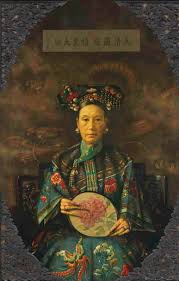
Cixi (also spelled Tzu Hsi), born on November 29, 1835, in Beijing, China, remains one of the most enigmatic and influential figures in Chinese history. As a powerful regent during the Qing dynasty, Cixi’s reign from 1861 to 1908 was marked by both progress and controversy. Her ability to maintain power in a male-dominated society and navigate the complexities of both internal and external challenges has made her a subject of fascination and debate among historians. This article delves into the life, influence, and legacy of Empress Dowager Cixi, exploring the nuances of her rule and the impact she had on China’s modern history.
Early Life and Rise to Power
Cixi was born into a relatively humble Manchu family. Her father, Huizheng, held a modest position within the Qing administration. Despite her non-aristocratic background, Cixi’s life took a dramatic turn when she was selected as a concubine for the Xianfeng Emperor in 1851, at the age of 16. This position, while initially not prestigious, set the stage for her future rise to power.
As a concubine, Cixi bore the emperor his only surviving son, Zaichun, in 1856. This event significantly elevated her status within the imperial court, as she became the mother of the heir apparent. Her influence grew steadily, especially after the emperor’s health began to decline.
When the Xianfeng Emperor died in 1861, Zaichun, who was only five years old at the time, ascended to the throne as the Tongzhi Emperor. Given his young age, a regency was established, and Cixi, alongside the Xianfeng Emperor’s principal wife, Empress Dowager Ci’an, became co-regents. This marked the beginning of Cixi’s de facto rule over China, a position she would hold for nearly half a century.
The Challenges of Rule: Modernization and Resistance
Cixi’s reign was marked by significant challenges, both domestic and foreign. The mid-to-late 19th century was a tumultuous period for China, characterized by internal rebellions, such as the Taiping Rebellion, and increasing pressure from foreign powers seeking to expand their influence in the region.
One of Cixi’s most significant achievements was her role in initiating modernization efforts within China. Recognizing the need to strengthen the country against foreign threats, she supported the Self-Strengthening Movement, which aimed to modernize China’s military and industrial capabilities by adopting Western technology and methods. Under her guidance, China saw the construction of modern arsenals, shipyards, and railways. These efforts, however, were often hindered by resistance from conservative factions within the Qing court, who viewed Western influence with deep suspicion.
Despite her support for modernization in certain areas, Cixi’s reign was also characterized by her complex and sometimes contradictory approach to reform. While she recognized the necessity of adopting certain Western practices to strengthen the state, she remained deeply conservative in other respects, resisting political reforms that would have reduced the power of the monarchy.
The First Sino-Japanese War and Its Aftermath
One of the most significant events during Cixi’s regency was the First Sino-Japanese War (1894-1895). The conflict arose from competing interests between China and Japan over influence in Korea. Despite China’s superior size and resources, Japan’s more modernized military quickly gained the upper hand, leading to a humiliating defeat for China.
The war exposed the weaknesses of the Qing military and the limitations of the Self-Strengthening Movement. Japan’s victory not only led to the loss of Chinese territory, including Taiwan, but also accelerated the decline of Qing authority. The defeat was a significant blow to Cixi’s prestige and contributed to growing unrest and calls for more radical reforms within China.
In the aftermath of the war, Cixi faced increasing criticism for her handling of military affairs and her perceived reluctance to fully embrace modernization. This criticism was exacerbated by reports that she had diverted funds intended for the navy to the construction of the extravagant Summer Palace, a project that became a symbol of her alleged mismanagement and corruption.
The Hundred Days’ Reform and the Fall of Guangxu
In response to the mounting pressures for reform, Cixi allowed the young Guangxu Emperor, whom she had selected to succeed the Tongzhi Emperor in 1875, to launch the Hundred Days’ Reform in 1898. This ambitious program aimed to radically transform China’s political, educational, and military systems, drawing on Western models.
However, the rapid pace and sweeping nature of the reforms alarmed conservative elements within the Qing court, who feared that these changes would undermine their power. Cixi, who had initially supported some aspects of reform, quickly turned against the movement when it became clear that it threatened the traditional structures of power.
In a dramatic coup, Cixi intervened to end the Hundred Days’ Reform, placing Guangxu under house arrest and effectively removing him from power. She then assumed control of the government once again, rolling back many of the reforms that had been introduced. This event marked a turning point in Cixi’s reign, solidifying her reputation as a staunch defender of traditional authority and a formidable political operator.
The Boxer Rebellion and Its Consequences
The Boxer Rebellion, which erupted in 1899, was one of the most significant and controversial episodes of Cixi’s reign. The uprising, led by a secret society known as the “Righteous and Harmonious Fists” (or Boxers), was fueled by deep-seated resentment towards foreign influence in China and the spread of Christianity.
Initially, Cixi was ambivalent towards the Boxers, but as the rebellion gained momentum, she began to see it as an opportunity to rally Chinese nationalism against foreign powers. In 1900, Cixi declared her support for the Boxers, hoping to use them to expel foreign forces from China. This decision proved to be disastrous.
The Boxer Rebellion escalated into a full-scale conflict, leading to the invasion of Beijing by the Eight-Nation Alliance, which included forces from Japan, Russia, Britain, France, the United States, Germany, Austria-Hungary, and Italy. The foreign powers quickly overwhelmed the Chinese forces, leading to the occupation of Beijing and the flight of Cixi and the imperial court to Xi’an.
The defeat of the Boxers and the subsequent occupation of Beijing were humiliating for China. The resulting Boxer Protocol, signed in 1901, imposed severe penalties on the Qing government, including massive indemnities and the establishment of foreign military garrisons in Beijing. The rebellion and its aftermath further weakened the Qing dynasty and tarnished Cixi’s legacy.
The Final Years and Legacy of Cixi
In the final years of her reign, Cixi took steps to address some of the issues that had plagued her rule. Recognizing the need for change, she initiated a series of reforms, known as the “New Policies,” which included measures to modernize China’s education system, legal code, and military. These reforms, though too late to save the Qing dynasty, demonstrated Cixi’s ability to adapt and her willingness to embrace change when necessary.
Cixi’s death on November 15, 1908, marked the end of an era in Chinese history. Her passing came just one day after the death of the Guangxu Emperor, leading to speculation that she may have orchestrated his demise to ensure a smooth transition of power. Cixi’s chosen successor, the young Puyi, would become the last emperor of China, as the Qing dynasty collapsed just three years later in 1911.
Cixi’s legacy is a complex and contested one. She has been variously portrayed as a tyrant, a reformer, a manipulator, and a patriot. Her reign was marked by significant achievements, including efforts to modernize China’s infrastructure and military, but also by deep contradictions and failures, such as her resistance to political reform and her disastrous handling of the Boxer Rebellion.
Historians continue to debate the extent of Cixi’s responsibility for the decline of the Qing dynasty. Some view her as a reactionary figure whose reluctance to fully embrace reform contributed to the downfall of the imperial system. Others argue that she was a pragmatic ruler who did her best to navigate an incredibly difficult period in Chinese history, balancing the demands of tradition with the need for modernization.
Conclusion: Cixi’s Impact on Chinese History
Cixi’s life and reign offer a window into one of the most turbulent periods in Chinese history. As a woman who rose from the status of a concubine to become the de facto ruler of China, she broke through many of the societal barriers of her time. Her ability to maintain power in a patriarchal society, and her efforts to modernize China while preserving its traditional structures, have made her a subject of enduring interest.
While her reign was marred by controversy and conflict, it also set the stage for the transformations that would eventually lead to the birth of modern China. Cixi’s story is one of ambition, resilience, and complexity, reflecting the broader struggles of a nation grappling with the challenges of the modern era.
In the end, Cixi remains one of the most significant figures in Chinese history—a woman who, for better or worse, shaped the course of a nation and left a legacy that continues to be studied and debated today.


