
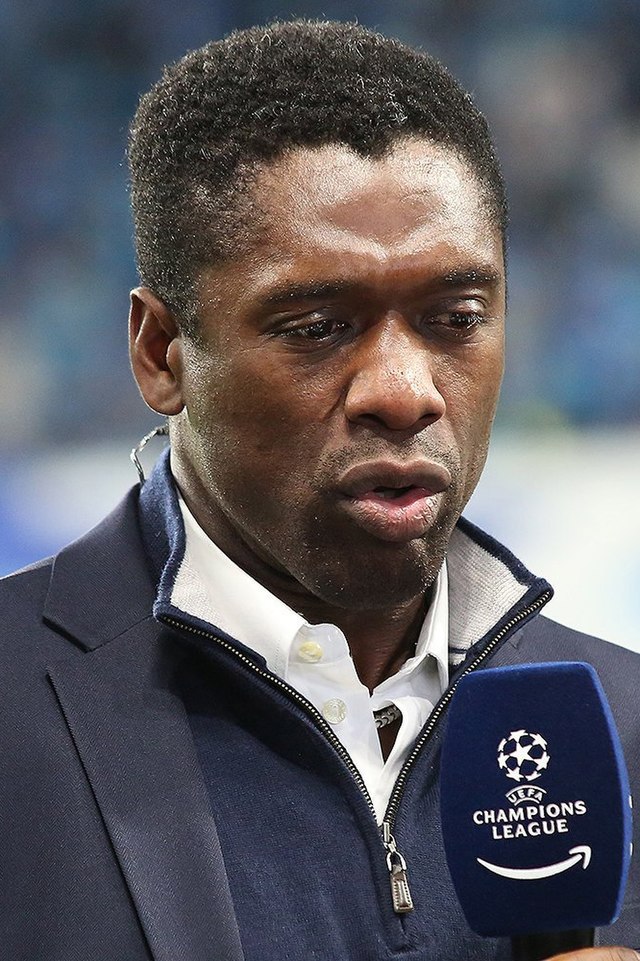
Clarence Clyde Seedorf, born on April 1, 1976, in Paramaribo, Suriname, is a name that resonates deeply within the footballing world. Widely regarded as one of the most successful and versatile midfielders in the history of the sport, Seedorf’s career is a testament to his talent, determination, and ability to excel at the highest levels of football. From his early days in the Netherlands to his remarkable achievements across Europe, Seedorf’s journey is one filled with triumphs, challenges, and a legacy that continues to inspire. This article explores Seedorf’s age, fame, and life highlights, offering detailed insights into his career and the historical context that shaped his success.
Early Life and Football Beginnings
Clarence Seedorf was born in Paramaribo, the capital of Suriname, a small country on the northeastern coast of South America. His family moved to the Netherlands when he was just two years old, settling in the city of Almere. Growing up in a football-loving family, Seedorf was introduced to the sport at a young age. His natural talent was evident from the start, and by the time he was 13, he had joined the youth academy of AFC Ajax, one of the most prestigious football clubs in the Netherlands.
The Ajax youth academy, known for producing world-class talent, was the perfect environment for Seedorf to develop his skills. Under the guidance of experienced coaches, he quickly progressed through the ranks and made his professional debut for Ajax’s senior team on November 29, 1992, at just 16 years old. This debut made Seedorf the youngest player ever to appear in an Eredivisie match for Ajax, a record that highlighted his prodigious talent.
Rise to Prominence with Ajax
Seedorf’s time at Ajax was marked by rapid development and early success. Playing as a central midfielder, his vision, passing ability, and composure on the ball set him apart from his peers. During his time with Ajax, Seedorf was part of a golden generation of players that included the likes of Patrick Kluivert, Marc Overmars, and Edwin van der Sar. Together, they formed a formidable team that dominated Dutch football in the early 1990s.
In the 1993-94 season, Seedorf won his first major trophy with Ajax, lifting the KNVB Cup (Dutch Cup). The following season, Ajax secured the Eredivisie title, and Seedorf’s performances earned him widespread acclaim. However, it was the 1994-95 season that truly catapulted Seedorf to international stardom. Ajax won the UEFA Champions League, defeating AC Milan in the final. At just 19 years old, Seedorf became one of the youngest players to win Europe’s most prestigious club competition.
Journey Across Europe: Sampdoria and Real Madrid
After achieving so much success at a young age with Ajax, Seedorf sought new challenges abroad. In the summer of 1995, he signed with Sampdoria, an Italian Serie A club known for its competitive spirit. The move to Italy marked the beginning of Seedorf’s journey across Europe’s top leagues. Although his time at Sampdoria was short-lived, with just one season in which he scored three goals in 32 appearances, it provided him with valuable experience in one of the toughest leagues in the world.
Seedorf’s performances in Italy caught the attention of Real Madrid, one of the most storied clubs in football history. In 1996, Seedorf made the move to the Spanish capital, joining a squad filled with world-class talent. His arrival at Real Madrid coincided with a period of resurgence for the club. In his first season, Seedorf played a key role in helping Real Madrid win the La Liga title, their first in four years.
The pinnacle of Seedorf’s time at Real Madrid came in 1998 when the club won the UEFA Champions League, ending a 32-year drought in the competition. The victory was particularly sweet as it came at the expense of Juventus, another Italian giant. Seedorf had now won the Champions League with two different clubs, a remarkable achievement that solidified his reputation as one of Europe’s elite midfielders.
Return to Italy: Inter Milan and AC Milan
In December 1999, Seedorf returned to Italy, this time joining Inter Milan. His time at Inter was marked by both highs and lows. He made an immediate impact, scoring on his debut in a 5-0 victory over Perugia. However, despite his individual brilliance, Inter struggled to achieve consistent success during Seedorf’s tenure. The club’s failure to qualify for the Champions League in the 2000-01 season and the dramatic collapse in the 2001-02 Serie A title race, famously losing the title on the last day, were significant disappointments.
In the summer of 2002, Seedorf made a controversial switch to Inter’s city rivals, AC Milan. The move was met with skepticism by some, but Seedorf quickly silenced his critics with his performances on the pitch. Under the guidance of coach Carlo Ancelotti, Seedorf became an integral part of a Milan team that was renowned for its midfield prowess, alongside players like Andrea Pirlo, Gennaro Gattuso, and Kaka.
With AC Milan, Seedorf achieved even greater success. In 2003, he won his third UEFA Champions League title, making him the first player in history to win the competition with three different clubs (Ajax, Real Madrid, and AC Milan). This incredible feat highlighted Seedorf’s unique ability to adapt to different teams, leagues, and styles of play while consistently performing at the highest level.
The Later Years: More Success with Milan and Beyond
Seedorf’s time at AC Milan was marked by continued success and a legacy that few players can match. In addition to the Champions League triumph in 2003, he helped Milan win the Serie A title in 2004 and 2011, the Coppa Italia in 2003, and the FIFA Club World Cup in 2007. His contributions were not just limited to winning trophies; Seedorf was also recognized for his leadership, football intelligence, and ability to deliver in crucial moments.
One of the most memorable highlights of Seedorf’s Milan career came in the 2006-07 season when he played a pivotal role in leading the team to another Champions League final. In the knockout stages, Seedorf scored crucial goals against Bayern Munich and Manchester United, securing Milan’s place in the final against Liverpool. The victory in Athens was particularly significant for Milan, as it avenged their heartbreaking defeat to Liverpool in the 2005 final.
After a decade of success with AC Milan, Seedorf left the club in 2012 to join Botafogo in Brazil. The move was seen as a new challenge for Seedorf, who wanted to experience football in a different environment. Despite being in the twilight of his career, Seedorf’s impact in Brazil was immediate. He scored nine goals in his first season and helped Botafogo win the Campeonato Carioca in 2013. His professionalism, work ethic, and influence on the team earned him the respect of his teammates and fans alike.
Transition to Management and Beyond
In January 2014, Seedorf announced his retirement from professional football, marking the end of an illustrious playing career. However, his love for the game remained strong, and he quickly transitioned into management. Just days after hanging up his boots, Seedorf was appointed as the head coach of AC Milan, replacing Massimiliano Allegri. The decision to appoint Seedorf was seen as a bold move by Milan’s management, as he had no prior coaching experience.
Seedorf’s tenure at Milan was short-lived, lasting just five months. Despite improving the team’s performance in the latter half of the season, he was dismissed in June 2014. The experience was a steep learning curve for Seedorf, who later reflected on the challenges of transitioning from player to coach.
Undeterred by his brief stint at Milan, Seedorf continued to pursue a career in coaching. He went on to manage clubs in China and Spain, as well as the Cameroon national team. Although his coaching career has had its ups and downs, Seedorf’s dedication to the sport and desire to share his knowledge and experience with the next generation of players remain unwavering.
Legacy and Impact
Clarence Seedorf’s legacy extends far beyond his achievements on the football pitch. As one of the most successful and respected players of his generation, Seedorf’s impact on the sport is profound. His unique ability to win the UEFA Champions League with three different clubs is a testament to his versatility, adaptability, and footballing intelligence.
Off the pitch, Seedorf has been a vocal advocate for social causes, particularly in the areas of education, health, and sports development. Through his foundation, “Champions for Children,” Seedorf has worked to promote the importance of education and physical activity for children in underprivileged communities around the world. His commitment to philanthropy and using his platform to make a positive difference is an integral part of his legacy.
Seedorf’s contributions to football and society have been recognized with numerous accolades and honors. In 2005, he was named a UNICEF Goodwill Ambassador, and in 2011, he received the “Golden Foot” award for his outstanding career achievements and humanitarian work. Seedorf’s influence continues to inspire both current and future generations of footballers, as well as individuals who seek to make a meaningful impact in their communities.
Conclusion
Clarence Seedorf’s life and career are a testament to the power of talent, hard work, and perseverance. From his early days as a young prodigy at Ajax to his historic achievements across Europe’s top clubs, Seedorf’s journey in football is one of remarkable success. His legacy as a player, coach, and humanitarian is one that will continue to inspire and influence for years to come.
As we reflect on Seedorf’s life highlights, it is clear that his contributions to football and society extend far beyond the trophies and accolades. Seedorf’s story is one of resilience, adaptability, and a deep love for the game, qualities that have made him one of the most respected figures in football history.


