
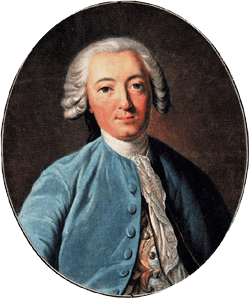
Claude-Adrien Helvétius, born on January 26, 1715, in Paris, France, was a philosopher, writer, and intellectual who played a pivotal role in the French Enlightenment. Known for his radical ideas and controversial works, Helvétius challenged the established norms of his time, particularly in the realms of religion, morality, and politics. This article explores the life, achievements, and enduring impact of Claude-Adrien Helvétius, providing a comprehensive overview of one of the most influential figures in 18th-century philosophy.
Early Life and Education
Claude-Adrien Helvétius was born into a family of Swiss origin, with the surname Schweitzer, which was later Latinized to Helvétius. His father was a physician to Queen Marie Leszczyńska, wife of King Louis XV of France. This privileged background afforded Helvétius a comfortable upbringing and access to some of the best educational institutions of the time. He attended the Jesuit College Louis-Le-Grand in Paris, where he received a classical education that emphasized literature, philosophy, and the humanities.
From an early age, Helvétius showed a keen interest in literature and poetry. However, his family’s connections led him to a different path initially. In 1738, through the recommendation of Queen Marie, Helvétius was appointed as a tax collector for the French government, a position that provided him with substantial income and social standing. Despite the financial benefits of this role, Helvétius remained deeply interested in intellectual pursuits, particularly those aligned with the burgeoning Enlightenment movement.
The Enlightenment and Intellectual Pursuits
The Enlightenment, a period of intellectual fervor and skepticism towards traditional authority, provided the perfect backdrop for Helvétius’s developing ideas. He became closely associated with several leading intellectuals of the time, including Voltaire, Diderot, and d’Alembert. Helvétius was particularly influenced by the works of John Locke and the materialist philosophy that was gaining traction in France. His friendships with these thinkers exposed him to a world of radical ideas, which would later find expression in his own writings.
In 1758, Helvétius published his most famous work, De l’esprit (On the Mind), which sought to explore the nature of human thought, emotions, and behavior. The book argued that all human actions are motivated by self-interest and the pursuit of pleasure, challenging the prevailing notions of morality and virtue. Helvétius also posited that education and social conditions play a crucial role in shaping an individual’s character and intellect, rather than inherent qualities or divine influence.
Controversy and Censorship
De l’esprit was a sensation upon its release, but it quickly became a source of intense controversy. The book’s materialistic and deterministic views were seen as a direct challenge to religious and moral orthodoxy. The Sorbonne, the theological faculty of the University of Paris, condemned the book as heretical, and it was publicly burned. The French Parliament and the Catholic Church also denounced Helvétius’s work, leading to its official suppression.
Helvétius was forced to retract many of his statements and faced social and political backlash. However, the controversy only served to enhance his reputation as a bold and daring thinker. His ideas resonated with many Enlightenment intellectuals, who saw in Helvétius’s work a powerful critique of the established order.
Despite the official censure, Helvétius continued to write and circulate his ideas among his intellectual peers. He became a prominent figure in the salons of Paris, where he engaged in lively debates with other leading philosophers of the time. His home became a hub for Enlightenment thinkers, including Jean-Jacques Rousseau, who was both a friend and intellectual sparring partner.
Later Life and Legacy
After the publication of De l’esprit, Helvétius retired from his official duties as a tax collector and focused entirely on his intellectual pursuits. He married Anne-Catherine de Ligniville, a member of the French nobility, and together they purchased estates in the French countryside. Helvétius devoted much of his later life to improving agricultural practices on his lands and experimenting with new methods of farming. His interest in practical matters reflected his broader philosophical views, which emphasized the importance of education, environment, and social reform in shaping human behavior.
Helvétius continued to write and correspond with other philosophers, but he published little during the remainder of his life. His second major work, De l’homme (On Man), which further elaborated on his ideas about human nature and society, was completed shortly before his death but was published posthumously in 1773. In this work, Helvétius continued to challenge the traditional views of his time, arguing that all human beings are essentially equal in their capacity for reason and virtue, and that differences in behavior and achievement are largely the result of environmental factors.
Helvétius died on December 26, 1771, in Versailles, at the age of 56. His death marked the end of a life that had been dedicated to challenging the status quo and pushing the boundaries of philosophical thought. While his ideas were controversial and often met with fierce opposition, they also laid the groundwork for many of the social and political changes that would come in the following decades.
Impact on Philosophy and the Enlightenment
Claude-Adrien Helvétius’s contributions to philosophy are significant, particularly in the context of the Enlightenment. His emphasis on the role of education and social conditions in shaping human behavior was a precursor to modern ideas about psychology, sociology, and education. Helvétius’s materialistic approach to understanding human nature also influenced later thinkers, including the utilitarians and early socialists, who saw in his work a justification for social and political reform.
One of the key legacies of Helvétius’s work is his challenge to the notion of innate morality or virtue. By arguing that all human actions are motivated by self-interest, Helvétius forced his contemporaries to reconsider the basis of moral judgments and the role of society in shaping ethical behavior. This line of thinking would later influence the development of moral philosophy, particularly in the works of Jeremy Bentham and John Stuart Mill, who expanded on the idea that the pursuit of pleasure and avoidance of pain are central to human decision-making.
Helvétius’s ideas also had a profound impact on the political thought of the Enlightenment. His belief in the power of education and social reform to improve human behavior contributed to the growing demand for political and social change in France and across Europe. Helvétius’s work helped to inspire the revolutionary movements that would emerge in the late 18th and early 19th centuries, as people sought to create societies based on reason, equality, and justice.
Historical Context and Nuances
Understanding Helvétius’s work requires an appreciation of the historical context in which he lived. The 18th century was a time of significant social, political, and intellectual change in Europe. The Enlightenment was challenging traditional authority and promoting new ways of thinking about the world. In France, the absolute monarchy and the Catholic Church held significant power, and any challenge to their authority was met with fierce resistance.
Helvétius’s materialism and rejection of religious explanations for human behavior were radical ideas in this context. His work was part of a broader movement among Enlightenment thinkers to apply reason and scientific inquiry to all aspects of life, including morality, politics, and society. This movement sought to replace superstition and dogma with knowledge and understanding, and Helvétius was one of its most outspoken proponents.
However, Helvétius’s work also reflects some of the limitations of Enlightenment thought. While he championed the idea of equality and the importance of education, his ideas were often abstract and did not always address the practical realities of social and political life. Moreover, his focus on self-interest as the driving force behind human behavior has been criticized for overlooking the complexity of human motivations and the role of altruism and empathy in shaping ethical behavior.
Conclusion
Claude-Adrien Helvétius was a philosopher who dared to challenge the established norms of his time. His work on human nature, education, and morality was both groundbreaking and controversial, pushing the boundaries of Enlightenment thought and laying the groundwork for future developments in philosophy and social theory. Despite the opposition he faced, Helvétius’s ideas have had a lasting impact on the way we think about human behavior, morality, and society.
Helvétius’s legacy is one of intellectual courage and a commitment to the pursuit of truth, even in the face of adversity. His work continues to be studied and debated by philosophers, historians, and scholars, who recognize the significance of his contributions to the Enlightenment and the broader history of ideas. As we continue to grapple with the challenges of our own time, Helvétius’s insights into the power of education, the importance of social conditions, and the role of self-interest in human behavior remain as relevant as ever.


