
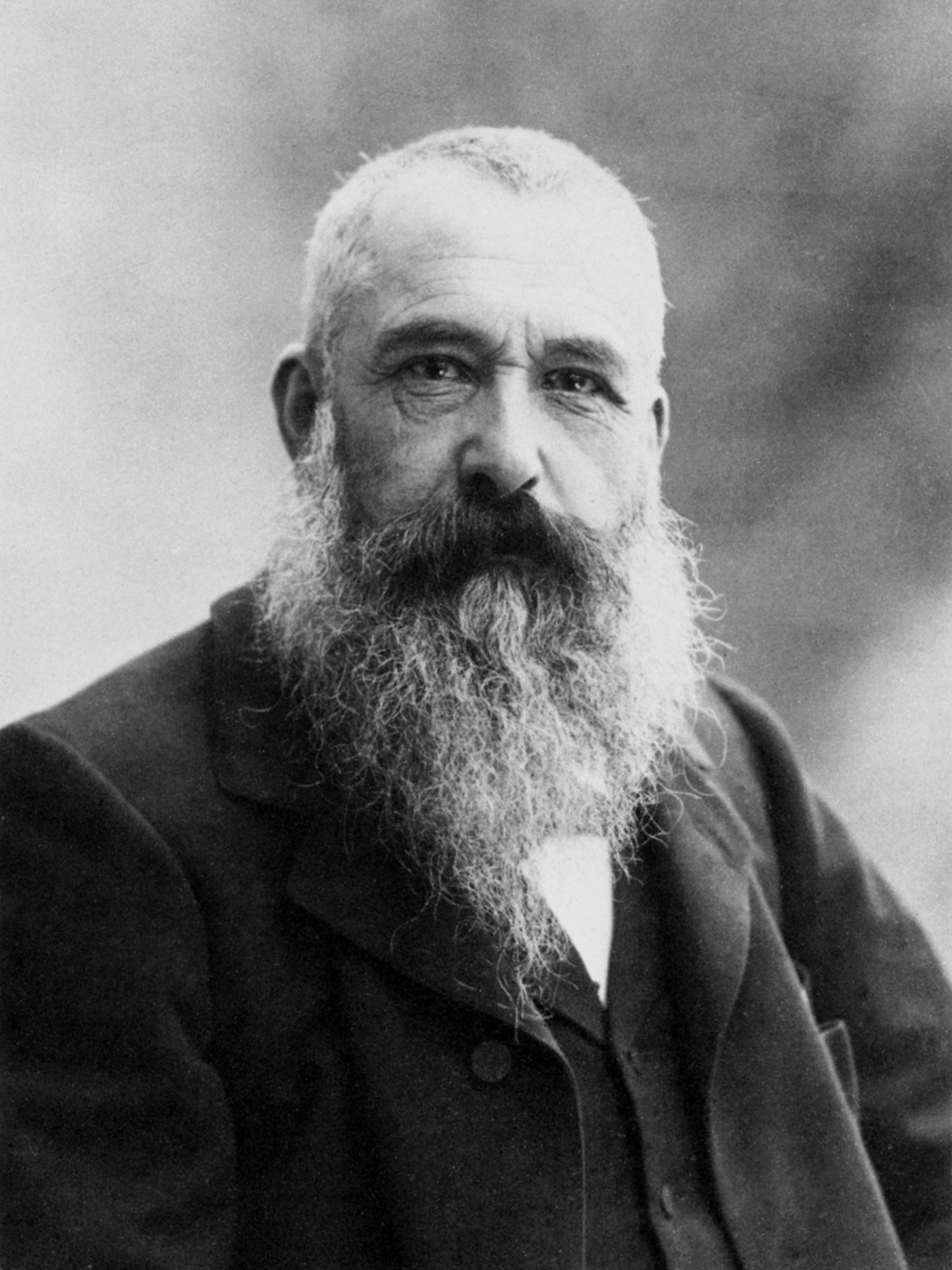
Claude Monet, born on November 14, 1840, in Paris, is one of the most revered figures in the history of art. Renowned as the founder of the Impressionist movement, Monet’s work has transcended time, leaving an indelible mark on the world of art. His paintings, characterized by their vibrant colors and innovative techniques, continue to captivate audiences around the globe. This article delves into the life, career, and legacy of Claude Monet, exploring the nuances of his art, his rise to fame, and the impact he has had on modern painting.
Early Life and Artistic Beginnings
Monet spent his early childhood in Le Havre, a coastal city in Normandy, where he developed an affinity for the natural world—a theme that would dominate his artistic career. From a young age, Monet displayed a talent for drawing, particularly in creating caricatures, which he would sell to local residents. His early work caught the attention of Eugène Boudin, a local landscape artist, who became his mentor. Boudin introduced Monet to plein air painting, the practice of painting outdoors, which would later become a hallmark of Monet’s work.
At 15, Monet moved to Paris, encouraged by Boudin, to pursue formal training in art. Paris, the cultural capital of Europe at the time, offered Monet exposure to various artistic movements and influential artists. Monet enrolled in the Académie Suisse, where he encountered other young artists who would later become central figures in the Impressionist movement, including Camille Pissarro, Frédéric Bazille, Alfred Sisley, and Pierre-Auguste Renoir.
The Birth of Impressionism
Monet’s early years in Paris were marked by experimentation and the forging of significant relationships with fellow artists. These friendships were instrumental in the formation of the Impressionist movement. The group of artists shared a common desire to break away from the rigid conventions of academic art and explore new ways of capturing the world around them.
One of Monet’s early masterpieces, “Women in the Garden” (1866), showcased his developing style. This large canvas, painted entirely outdoors, was a groundbreaking piece that highlighted his commitment to capturing natural light and color. Although it was rejected by the Paris Salon, the official art exhibition of the Académie des Beaux-Arts, the work demonstrated Monet’s burgeoning talent and his departure from traditional techniques.
The turning point in Monet’s career came with the creation of “Impression, Sunrise” (1872). This painting, depicting the port of Le Havre at sunrise, was characterized by loose brushwork and a focus on capturing the fleeting effects of light. The term “Impressionism” was coined from the title of this painting when it was exhibited in the first Impressionist exhibition in 1874. Critics initially used the term derisively, but it eventually became associated with a revolutionary art movement that would change the course of art history.
The Struggles and Triumphs of an Innovator
Despite the groundbreaking nature of their work, Monet and his fellow Impressionists faced significant challenges in gaining acceptance within the art world. The public and critics were often hostile toward their unconventional techniques and subject matter. The rejection of their works by the Paris Salon led the group to organize independent exhibitions, which, while poorly attended at first, gradually began to attract attention and support.
During this period, Monet struggled financially. His commitment to his art often left him in precarious situations, and he was frequently dependent on the support of friends and patrons. His personal life was also fraught with difficulties. In 1870, Monet married Camille Doncieux, who had been his model for several paintings. The couple had two sons, but their life was marked by financial instability and Camille’s deteriorating health. She died in 1879, an event that deeply affected Monet and was reflected in his art.
Despite these challenges, Monet’s work during the 1870s and 1880s laid the foundation for his future success. He continued to refine his techniques, experimenting with the effects of light and color. His series paintings, such as those of the Gare Saint-Lazare and the haystacks, demonstrated his ability to capture the same subject under different conditions, highlighting the transient nature of light.
The Gardens of Giverny and the Mastery of Light
In 1883, Monet moved to Giverny, a small village in northern France, where he would spend the remainder of his life. It was here that Monet created some of his most iconic works, inspired by the gardens he meticulously designed around his home. The water garden, with its famous lily pond and Japanese bridge, became the focus of his art for the next three decades.
The “Water Lilies” series, begun in the 1890s and continued until his death, represents the culmination of Monet’s exploration of light, color, and reflection. These large-scale paintings, often created on canvases several meters wide, are considered some of the most profound achievements in modern art. The series captures the changing effects of light on the water’s surface, with a focus on color and abstraction that prefigured the development of modernist painting.
Monet’s dedication to capturing the nuances of natural light extended to other series, such as his paintings of the Rouen Cathedral and the Houses of Parliament in London. These works are studies in how light can alter the perception of a solid, architectural form, turning it into a transient, almost ethereal image.
Monet’s Later Years and Legacy
As Monet aged, his health began to decline. In the early 1900s, he developed cataracts, which affected his ability to perceive colors accurately. Despite these challenges, he continued to paint, adapting his techniques to accommodate his changing vision. Some of his late works, characterized by bolder colors and broader brushstrokes, reflect his struggle with his deteriorating eyesight, yet they also demonstrate his unwavering commitment to his art.
Monet’s reputation grew steadily during his later years, with his work gaining recognition both in Europe and the United States. In 1923, he underwent surgery to remove his cataracts, which restored some of his vision and allowed him to continue painting until his death.
Claude Monet passed away on December 5, 1926, at the age of 86, in Giverny. He was buried in the local churchyard, and his home and gardens were later preserved as a museum, attracting visitors from around the world.
The Impact of Monet’s Art on Modern Painting
Claude Monet’s contributions to the art world are immeasurable. As a pioneer of Impressionism, he challenged the conventions of traditional painting, emphasizing the importance of light and color over realistic representation. His techniques, particularly his use of broken color and rapid brushstrokes, influenced generations of artists who sought to capture the essence of a moment rather than a precise depiction.
Monet’s work laid the groundwork for many subsequent art movements, including Post-Impressionism, Fauvism, and Abstract Expressionism. Artists such as Vincent van Gogh, Henri Matisse, and even the American Abstract Expressionists, including Mark Rothko and Jackson Pollock, drew inspiration from Monet’s emphasis on color and emotion.
Moreover, Monet’s exploration of series painting—where he would paint the same scene multiple times under different conditions—paved the way for modernist and minimalist approaches in art. His focus on the ephemeral nature of light and color anticipated the abstract explorations of the 20th century, making him a central figure in the transition from representational to abstract art.
Conclusion: Claude Monet’s Enduring Influence
Claude Monet’s life and work embody the essence of artistic innovation and perseverance. From his early struggles in Paris to his later years in Giverny, Monet remained committed to his vision, constantly pushing the boundaries of what art could achieve. His legacy is not only preserved in his masterpieces but also in the countless artists he has inspired over the years.
Today, Monet’s paintings are celebrated worldwide, with his works featured in major museums and collections. The gardens of Giverny, meticulously maintained, continue to be a place of pilgrimage for art lovers, offering a glimpse into the world that inspired one of history’s greatest artists.
Claude Monet’s influence extends beyond the canvas, as his approach to capturing the fleeting beauty of the natural world resonates with contemporary audiences. In a world where change is constant, Monet’s art reminds us of the importance of appreciating the moments of beauty that surround us every day.
Monet’s legacy is one of innovation, passion, and an unyielding dedication to the pursuit of artistic excellence. His work continues to inspire, challenge, and delight, ensuring that his place in the pantheon of great artists remains secure for generations to come.


