
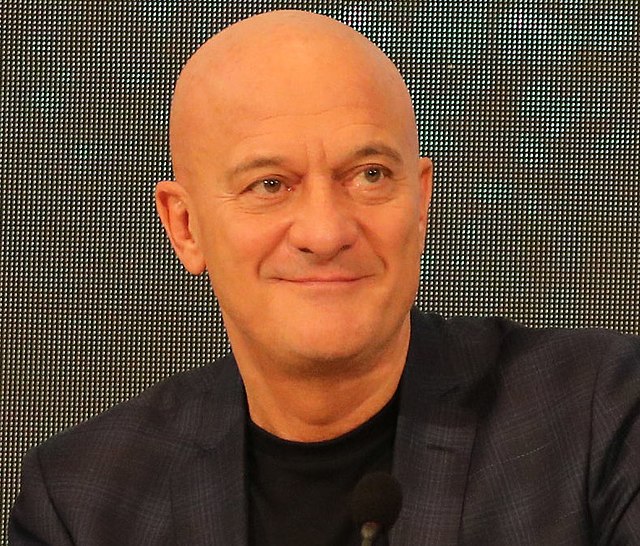
Claudio Bisio, an iconic figure in Italian entertainment, was born on March 19, 1957, in Novi Ligure, Alessandria. He grew up in Milan, where he cultivated his passion for drama and the arts, ultimately graduating from the prestigious Civica Scuola d’Arte Drammatica del Piccolo Teatro. Bisio’s career spans across theater, cinema, television, and music, marking him as a versatile and beloved personality in the Italian cultural landscape.
Early Career and Theater Beginnings
Bisio’s journey in the performing arts began on stage. His theatrical debut came in 1981 with the Teatro dell’Elfo company, a collaboration that lasted until 1989. It was during this period that he formed a significant professional bond with director Gabriele Salvatores. This partnership saw Bisio debut in film with the 1983 adaptation of Shakespeare’s “A Midsummer Night’s Dream,” directed by Salvatores.
Rise to Fame in Cinema: The 1980s and 1990s
Throughout the 1980s, Bisio’s film career flourished. He worked with some of Italy’s most renowned directors, including Mario Monicelli in “I Picari” (1987), Dino Risi in “Scemo di guerra” (1985), and Giuseppe Bertolucci in “Strana la vita” (1987) and “I cammelli” (1988). The 1990s saw Bisio further establishing his cinematic credentials with roles in films like Francesco Rosi’s “La tregua” (1996).
However, it was his collaborations with Gabriele Salvatores that truly showcased his talent. In “Mediterraneo” (1991), which won an Academy Award for Best Foreign Language Film, Bisio played Noventa, a frightened soldier trying to escape war. Other notable roles with Salvatores include Alex in “Puerto Escondido” (1992), Giacomo Fiori in “Sud” (1993), and Corvo Rosso in “Nirvana” (1997).
In 1999, Bisio not only acted but also co-wrote the screenplay for “Asini,” directed by Antonello Grimaldi. This marked his foray into screenwriting, expanding his influence in the film industry.
Television Success and Hosting Zelig
Bisio’s television career began in the late 1980s with sitcoms like “Zanzibar” (1988) and continued with variety shows such as “Cielito Lindo” and “Su la testa!” These programs introduced audiences to future stars like Antonio Albanese, Maurizio Milani, Luciana Littizzetto, and the comedy trio Aldo Giovanni and Giacomo.
His most significant television success came with the comedy show “Zelig,” which he hosted for many years. The show’s immense popularity and record-breaking viewership solidified Bisio’s status as a household name in Italian television.
Music and Literary Ventures
Bisio’s artistic pursuits extended into music and literature. Collaborating with his friend Rocco Tanica from the band “Elio e le Storie Tese,” Bisio released the single “Rapput” and the album “Paté d’animo.” In the literary field, he published two humorous books: “Quella vacca di Nonna Papera” (1993) and “Prima comunella poi comunismo” (1996).
Voice Acting and Theater in the 2000s
In the early 2000s, Bisio lent his voice to the character Sid in the Italian versions of the animated films “Ice Age” (2002) and “Ice Age: The Meltdown” (2006). His voice acting brought a new dimension to his career, reaching younger audiences.
Bisio continued his theatrical endeavors with the monologue “Grazie” by Daniel Pennac in 2005. His collaboration with “Elio e le Storie Tese” extended to live performances, blending music and comedy in unique shows.
Recent Years: The 2010s and Beyond
The 2010s saw Bisio transitioning into new roles and formats. He left “Zelig” in 2012 after a 15-year tenure. In 2015, he joined the judging panel of “Italia’s Got Talent” on Sky and in 2018, he hosted the Italian version of “Saturday Night Live” on TV8. His hosting duties reached a peak when he co-hosted the 2019 Sanremo Music Festival with Virginia Raffaele.
Film Highlights in the 2010s
During this decade, Bisio starred in several notable films, including the hit comedies “Benvenuti al Sud” (2010) and its sequel “Benvenuti al Nord” (2012), both directed by Luca Miniero. He also appeared in “Maschi contro femmine” (2010) and its sequel “Femmine contro maschi” (2011), both directed by Fausto Brizzi. Other significant films include “Benvenuto Presidente!” (2013) and its sequel “Bentornato Presidente!” (2019), “Confusi e felici” (2014), “Ma che bella sorpresa” (2015), “Gli sdraiati” (2017), and “Se mi vuoi bene” (2019).
Claudio Bisio’s Legacy
Claudio Bisio’s career is marked by his versatility and ability to engage audiences across multiple media. His contributions to theater, film, television, music, and literature demonstrate a dynamic and enduring talent. From his early days on the stage to his recent film successes, Bisio has remained a beloved figure in Italian culture.
His journey reflects the evolution of Italian entertainment over the past four decades, with Bisio playing a pivotal role in shaping its landscape. His legacy is not just in the roles he has played but in the laughter and joy he has brought to millions.
Conclusion
Claudio Bisio’s life and career are a testament to his immense talent and dedication to the arts. His ability to transition seamlessly between different forms of entertainment has made him a versatile and cherished figure in Italian culture. As he continues to entertain and inspire, Bisio remains a beacon of creativity and humor, leaving an indelible mark on the world of entertainment.


