
Introduction
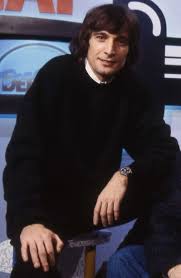
Claudio Cecchetto is a name that resonates strongly within the Italian entertainment industry. Born on April 19, 1952, in Ceggia, near Venice, Cecchetto is a multifaceted personality who has made significant contributions as a disc jockey, music producer, television presenter, and talent scout. Over the course of his illustrious career, Cecchetto has not only been a prominent figure in the Italian media landscape but has also played a pivotal role in launching the careers of some of Italy’s most famous artists. This article delves into the life and achievements of Claudio Cecchetto, exploring his rise to fame, his innovative contributions to music and television, and his lasting impact on Italian pop culture.
Early Life and Education
Claudio Cecchetto was born into a modest family in the small town of Ceggia, located near Venice. From an early age, Cecchetto exhibited a keen interest in music and entertainment, a passion that would eventually shape his career. Despite his inclination towards the arts, Cecchetto initially followed the wishes of his parents by enrolling in the Faculty of Law at the University of Milan. However, his academic pursuits were short-lived, as he decided to drop out after less than a year to pursue his true passion—music.
Early Career in Radio and Television
Cecchetto’s first significant foray into the entertainment industry came in 1975 when he joined Radio Milano International, one of the first private radio stations in Italy. His work as a disc jockey on Radio Milano International quickly earned him recognition, and he soon became a prominent voice in the Italian radio scene. This success led to his subsequent involvement with Radio Studio 105, the first national radio network in Italy.
Cecchetto’s talents were not confined to radio alone. In 1978, he made his television debut on Telemilano 58, a local TV station in Milan, where he hosted the music program “Chewing Gum” for two seasons. His charm and on-screen presence caught the attention of Italian audiences, leading to his first appearance on national television in 1979. He co-hosted the popular music program Discoring on RAI, Italy’s national broadcaster, alongside Rosanna Napoli and Awana Gana. This exposure further solidified Cecchetto’s reputation as a rising star in the Italian entertainment industry.
Breakthrough at the Sanremo Music Festival
Cecchetto’s big break came in 1980 when he was selected to host the prestigious Sanremo Music Festival at the age of just 28. His selection marked a significant shift in the festival’s approach, as it was the first time a disc jockey had been chosen to host the event. Cecchetto’s youthful energy and modern style breathed new life into the festival, and his tenure as host for three consecutive years (1980-1982) was met with widespread acclaim.
During his time at Sanremo, Cecchetto also released his own hit single, “Gioca jouer,” in 1981. The song, produced by Claudio Simonetti and Giancarlo Meo, became a massive success, further boosting Cecchetto’s profile. Following his Sanremo success, Cecchetto continued his television career, hosting the second edition of Fantastico on RAI Uno, one of Italy’s most popular variety shows at the time.
The Birth of Radio Deejay and TV Ventures
In 1982, Cecchetto made a bold move by leaving RAI to join Canale 5, the newly launched private television network owned by Silvio Berlusconi’s Fininvest group. At Canale 5, Cecchetto hosted Popcorn, a popular music program that became a staple of Italian television. Around this time, he also co-hosted the variety show Premiatissima with Amanda Lear.
However, Cecchetto’s most significant contribution during this period was the founding of Radio Deejay in 1982. This venture marked a turning point in Cecchetto’s career, as it allowed him to create a platform that would shape the future of Italian radio. Radio Deejay quickly became one of Italy’s leading radio stations, known for its cutting-edge music programming and its ability to connect with a younger audience.
Building on the success of Radio Deejay, Cecchetto launched Deejay Television in 1983, a television program that brought music videos to Italian audiences at a time when MTV was still in its infancy. Deejay Television, initially aired on Canale 5 and later moved to Italia 1, became a cultural phenomenon, winning multiple Telegatto awards for Best Music Program in 1984 and 1985. The show also served as a launching pad for several future Italian TV stars, including Amadeus, Linus, Kay Rush, and Gerry Scotti.
Talent Scout Extraordinaire
Claudio Cecchetto’s knack for discovering and nurturing talent became one of his defining characteristics. In the mid-1980s, he founded Ibiza Records, a record label that allowed him to take on the role of a music producer. One of the label’s first major successes was “People from Ibiza,” a hit single by Sandy Marton that became an anthem of the era.
Cecchetto’s influence as a talent scout was further solidified with the discovery and promotion of Jovanotti (real name Lorenzo Cherubini), whom he signed to his label in 1988. Cecchetto produced Jovanotti’s debut album, “Jovanotti for President,” which became a runaway success and launched Jovanotti’s career as one of Italy’s most successful and enduring pop stars. Cecchetto also played a crucial role in the early careers of Sabrina Salerno and Tracy Spencer, both of whom enjoyed significant success in the 1980s.
In 1990, Cecchetto introduced the Italian public to Rosario Fiorello, a charismatic entertainer who quickly became one of Italy’s most beloved TV personalities. Fiorello, along with his radio partner Marco Baldini, hosted the popular show “Viva Radio Deejay,” which became a cultural touchstone for Italian youth in the early 1990s.
The 1990s: Continued Success and New Ventures
The 1990s were a period of continued success for Claudio Cecchetto, both professionally and personally. In 1992, he married Maria Paola Danna, with whom he had two children, Jody (born in 1994) and Leonardo (born in 2000). During this decade, Cecchetto remained at the forefront of Italian entertainment, producing hit records, launching new talents, and hosting major television events.
One of his most successful projects in the 1990s was the production of 883, a pop-rock band fronted by Max Pezzali. The band’s debut album, “Hanno ucciso l’Uomo Ragno,” was a massive commercial success, and 883 quickly became one of Italy’s most popular bands. Cecchetto also played a pivotal role in launching the solo career of Max Pezzali after 883 disbanded.
Cecchetto’s influence extended beyond music and television. In 1994, he sold his stake in Radio Deejay to the Espresso Group and went on to revitalize Radio Capital, transforming it into a national network. He also launched the careers of Fabio Volo and Daniele Bossari, both of whom became major figures in Italian media.
The 2000s and Beyond
As the new millennium dawned, Claudio Cecchetto continued to adapt to the changing media landscape. Although he took a brief hiatus from television, he remained active behind the scenes, focusing on talent management and music production. In 2002, he returned to the Sanremo Music Festival as the president of the Jury of Quality, reaffirming his status as a key figure in the Italian entertainment industry.
Cecchetto’s ability to spot talent remained as sharp as ever. In 2003, he helped launch the career of Francesco Facchinetti (known as DJ Francesco), the son of Roby Facchinetti from the legendary band Pooh. Francesco’s hit song “La canzone del capitano” became a summer anthem and solidified Cecchetto’s reputation as a hitmaker.
In the mid-2000s, Cecchetto continued to mentor young talent, including the Lombard band Finley, which he helped bring to national attention. He also embraced the digital age by launching the Cecchetto Festival in Internet, a project aimed at discovering and promoting emerging artists online.
Political Ambitions and Recent Projects
In recent years, Claudio Cecchetto has also ventured into politics. In 2019, he ran for office in Misano Adriatico, narrowly missing victory by just 300 votes. Undeterred, he ran again in 2022, this time for mayor of Riccione with a civic list. While these political endeavors may seem like a departure from his entertainment career, they are consistent with Cecchetto’s lifelong commitment to innovation and public engagement.
Cecchetto’s autobiography, “In diretta. Il gioca jouer della mia vita,” published in 2014, offers a detailed account of his journey through the entertainment industry, providing valuable insights into his creative process and the challenges he faced along the way. In 2015, he served as the president of the jury at the Sanremo Music Festival, further cementing his legacy as a central figure in Italian pop culture.
Conclusion
Claudio Cecchetto is a true pioneer in the Italian entertainment industry. From his early days as a disc jockey to his role as a television presenter, music producer, and talent scout, Cecchetto has consistently been at the forefront of innovation. His ability to recognize and nurture talent has had a profound impact on Italian pop culture, launching the careers of some of the country’s most beloved stars.
Cecchetto’s legacy is one of creativity, innovation, and a deep understanding of the power of media. As he continues to explore new ventures and embrace the opportunities of the digital age, Claudio Cecchetto remains a vital force in the world of entertainment. His story is a testament to the power of passion and perseverance, and his influence will undoubtedly continue to shape Italian culture for generations to come.


