
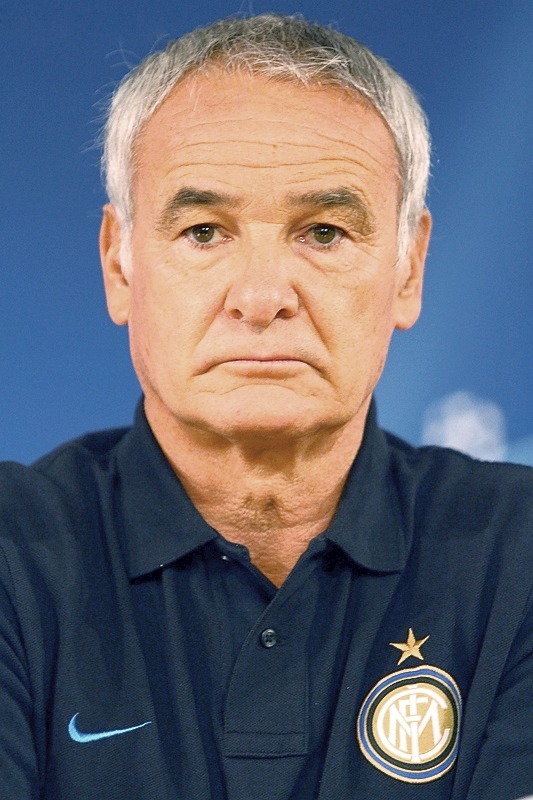
Claudio Ranieri is a name that resonates with football enthusiasts around the globe. Born on October 20, 1951, in Rome, Italy, Ranieri has etched his name in the annals of football history as one of the most respected and celebrated football managers of all time. With a career spanning over five decades, his journey from a young player in Rome to a world-renowned manager is nothing short of legendary.
Early Life and Playing Career
Claudio Ranieri’s love for football began in the streets of Rome, where he played as a child. His talent was evident from a young age, and at just sixteen, he joined the youth ranks of the Dodicesimo Giallorosso. It wasn’t long before he caught the attention of Helenio Herrera, one of the most influential figures in football, who brought him into the AS Roma fold. Initially playing as a forward, Ranieri was soon transitioned into a defender, a position that would define his playing career.
Ranieri made his Serie A debut on November 4, 1973, under coach Manlio Scopigno. Although his time at Roma was brief, appearing in only six league matches, it was the beginning of a professional career that saw him become a stalwart in Italian football. After Roma, Ranieri moved to Catanzaro, where he truly made his mark. Between 1976 and 1982, he became a key figure for the club, making 128 appearances in Serie A and becoming the most-capped player for Catanzaro in the top flight.
In 1982, Ranieri moved to Catania, where he played a pivotal role in the club’s promotion to Serie A. He later played for Palermo before retiring as a player. His playing career, while not filled with individual accolades, was marked by his consistency, reliability, and leadership on the pitch.
Transition to Management
Ranieri’s transition from player to manager was seamless. In 1986, shortly after hanging up his boots, he began his managerial career with Vigor Lamezia in the Interregional category. His early years in management saw him navigate the lower leagues of Italian football, honing his skills and developing a reputation as a tactician.
His big break came in 1988 when he took charge of Cagliari, a team struggling in Serie C1. Under Ranieri’s guidance, Cagliari achieved back-to-back promotions, propelling the team to Serie A in just two years. This remarkable achievement was a testament to Ranieri’s ability to inspire and motivate his players, a trait that would define his managerial career.
The Rise to Fame: Managing in Italy and Spain
After his success with Cagliari, Ranieri was appointed as the manager of Napoli in 1991. Despite the challenges, including the departure of club legend Diego Maradona, Ranieri managed to lead Napoli to a respectable fourth-place finish in Serie A, securing European football for the club. However, his tenure at Napoli was short-lived, and he was dismissed in 1992 following a defeat to AC Milan.
Ranieri’s next significant role was with Fiorentina, where he took over in 1993 after the club had been relegated to Serie B. He immediately led them back to Serie A and, in 1996, guided the team to a fourth-place finish in the league and a Coppa Italia triumph. This period marked Ranieri’s first major silverware as a manager, cementing his reputation in Italian football.
In 1997, Ranieri made his first move abroad, taking over as manager of Valencia in Spain. His impact was immediate; he stabilized a struggling team and led them to a ninth-place finish and a Copa del Rey victory in 1999. His success in Spain earned him a move to Atletico Madrid, although his time there was less fruitful, and he left after just one season.
The English Chapter: Chelsea and Beyond
Ranieri’s next major challenge came in 2000 when he was appointed as the manager of Chelsea in the English Premier League. This period coincided with the early days of Roman Abramovich’s ownership, and Ranieri was tasked with building a team capable of competing at the highest level. During his four-year tenure, Ranieri transformed Chelsea into one of the top teams in England, finishing as Premier League runners-up in 2004 and reaching the semi-finals of the UEFA Champions League.
Despite his success, Ranieri was replaced by Jose Mourinho in 2004. He returned to Valencia briefly, but his second spell was less successful, and he was dismissed after just six months.
The Miracle of Leicester City
Perhaps the defining moment of Ranieri’s career came in 2015 when he was appointed as the manager of Leicester City. Tasked with keeping the club in the Premier League, Ranieri exceeded all expectations by leading Leicester to the most improbable league title in English football history. Under his leadership, Leicester defied the odds, with a team built on unity, hard work, and tactical discipline, clinching the Premier League title in 2016.
This achievement was widely regarded as one of the greatest sporting miracles of all time. Ranieri was lauded worldwide, earning numerous accolades, including the FIFA Best Men’s Coach award. However, football is a fickle world, and despite the historic triumph, Ranieri was sacked the following season as Leicester struggled to replicate their success.
Late Career and Legacy
After Leicester, Ranieri had brief stints with Nantes in France, Fulham in England, and Roma and Sampdoria in Italy. While these roles did not bring the same level of success, they added to Ranieri’s rich tapestry of experience across Europe’s top leagues.
In 2023, Ranieri returned to Cagliari, the club where he first made his name as a manager. In a fitting end to his career, he led Cagliari to promotion to Serie A, securing their place in the top flight with a dramatic late goal in the playoff final against Bari. This triumph, more than fifty years after he first began his journey in football, was a fitting tribute to a career defined by resilience, passion, and an unyielding love for the game.
A Managerial Philosophy Rooted in Pragmatism
Ranieri’s managerial success can be attributed to his pragmatic approach to the game. He is not wedded to a particular style of play but adapts his tactics to the strengths of his players and the demands of the situation. This flexibility has allowed him to achieve success in different leagues and with teams of varying capabilities.
His calm demeanor, coupled with his ability to communicate effectively with players from different cultural backgrounds, has made him a respected figure in the dressing room. Ranieri’s man-management skills, particularly his ability to foster a strong team spirit, were crucial in Leicester City’s title-winning campaign.
Claudio Ranieri’s Impact on Football
Ranieri’s career is a testament to the idea that success in football is not solely about winning trophies but also about leaving a lasting impact. His achievements with Leicester City have inspired a generation of football managers and players, proving that with the right mindset, anything is possible in football.
Ranieri’s legacy extends beyond his tactical acumen. He is a symbol of perseverance, showing that even in the twilight of one’s career, there is still room for extraordinary achievements. His story is one of continuous evolution, from a young boy playing in the streets of Rome to one of the most revered managers in the world.
Conclusion
Claudio Ranieri’s journey through football is a narrative of resilience, adaptability, and triumph against the odds. From his early days as a player in Italy to his managerial success across Europe, Ranieri has left an indelible mark on the world of football. His story serves as an inspiration to aspiring coaches and players, reminding us all that with dedication, hard work, and a bit of tactical ingenuity, the impossible can become possible.
As Ranieri steps away from the game, his legacy will undoubtedly continue to influence football for years to come. Whether through his famous “dilly-ding, dilly-dong” catchphrase or the memories of that magical season with Leicester City, Claudio Ranieri will always be remembered as one of football’s greats.


