
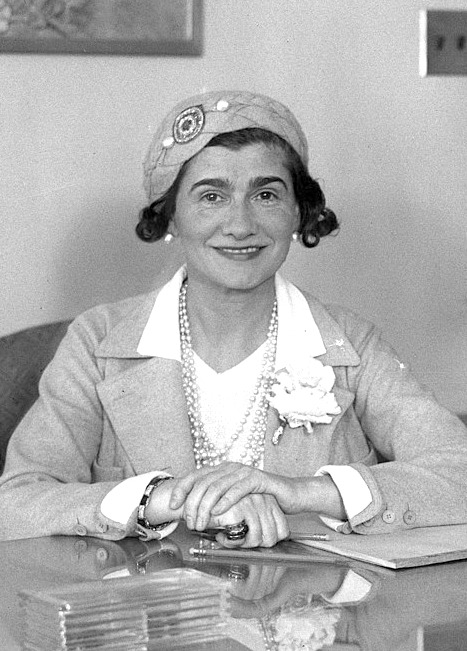
Coco Chanel, born Gabrielle Bonheur Chanel on August 19, 1883, in Saumur, France, is a name synonymous with style, luxury, and elegance. As one of the most influential fashion designers of the 20th century, Chanel revolutionized women’s fashion, breaking away from the restrictive and elaborate designs of the past and introducing a more modern, comfortable, and liberating style. Her contributions to fashion have had a lasting impact, making her an enduring icon in the world of haute couture. Chanel’s life story is a tale of resilience, innovation, and a relentless pursuit of independence, which shaped not only her career but also the entire fashion industry.
Early Life and Humble Beginnings
Gabrielle Chanel’s early life was far from the glamorous world she would eventually inhabit. She was born into poverty, the daughter of an unmarried laundrywoman, Eugénie Jeanne Devolle, and a traveling street vendor, Albert Chanel. When Gabrielle was just 12 years old, her mother died of tuberculosis, and her father abandoned her and her siblings. As a result, Chanel was sent to a convent orphanage, the Aubazine Abbey in central France, where she spent much of her adolescence.
Life at the convent was austere and disciplined, but it was here that Chanel learned to sew, a skill that would later prove to be her ticket out of poverty. The nuns’ minimalist lifestyle and the simple, unadorned clothing they wore also influenced Chanel’s aesthetic, laying the groundwork for the clean lines and understated elegance that would become her trademark.
Despite her humble beginnings, Chanel was determined to rise above her circumstances. After leaving the orphanage at 18, she worked as a seamstress by day and sang in cabarets by night, where she earned the nickname “Coco.” Some say the name came from two popular songs she would sing, “Ko Ko Ri Ko” and “Qui qu’a vu Coco?” Others believe it was a pet name given to her by her admirers.
The Birth of a Fashion Empire
Chanel’s journey from orphan to fashion icon began with a series of strategic relationships. In 1908, she became the mistress of Étienne Balsan, a wealthy textile heir, who introduced her to the world of high society. Through Balsan, she met Arthur “Boy” Capel, an English polo player who would become the love of her life and the financier of her first independent venture.
With Capel’s financial backing, Chanel opened her first shop in Paris in 1910, selling hats under the name Chanel Modes. Her simple, elegant designs quickly gained popularity among the fashionable Parisians, and she soon expanded her business. In 1913, she opened a boutique in the upscale resort town of Deauville, followed by another in Biarritz in 1915. These locations allowed Chanel to cater to the wealthy and influential, helping her establish a loyal clientele and laying the foundation for her fashion empire.
Revolutionary Designs and the Rise of Chanel
The 1920s marked the beginning of Chanel’s rise to prominence in the fashion world. During this decade, she introduced some of her most iconic designs, which revolutionized women’s fashion. At a time when women were still bound by corsets and layers of fabric, Chanel offered a new vision of femininity that emphasized comfort, freedom of movement, and simplicity.
One of Chanel’s most significant contributions was the introduction of the jersey fabric into women’s fashion. Previously used primarily for men’s underwear, jersey was cheap and widely available due to the shortages caused by World War I. Chanel saw its potential for creating stylish yet practical clothing, and she began designing dresses, suits, and blouses made from this soft, flexible fabric. Her jersey garments were a hit, and they helped establish her reputation as a designer who understood the needs of modern women.
In 1921, Chanel introduced what would become one of the most famous perfumes in history: Chanel No. 5. Created in collaboration with the perfumer Ernest Beaux, Chanel No. 5 was revolutionary for its use of aldehydes, which gave the scent a fresh, clean quality that set it apart from the heavy, floral perfumes of the time. The fragrance was named simply after the fifth sample Beaux presented to Chanel, and its minimalist bottle design became an instant classic. Chanel No. 5 remains one of the best-selling perfumes in the world, and its success cemented Chanel’s status as a cultural icon.
Chanel continued to innovate throughout the 1920s and 1930s, introducing several other key elements that would define her brand. She popularized the little black dress, which she once described as “a sort of uniform for all women of taste.” She also introduced the Chanel suit, characterized by its boxy jacket and slim skirt, which became a symbol of sophistication and elegance.
The War Years and Chanel’s Controversies
The outbreak of World War II in 1939 brought significant challenges for Chanel and her business. She closed her fashion house, leaving only her perfume business operating. During the war, Chanel lived at the Hotel Ritz in Paris, where she began a relationship with a German officer, Hans Gunther von Dincklage. This relationship would later lead to accusations of collaboration with the Nazis, a charge that would haunt Chanel for the rest of her life.
After the war, Chanel was briefly arrested for her association with von Dincklage, but she was released without charges. It is widely believed that her high-profile connections, including Winston Churchill, helped secure her release. Nevertheless, the accusations of collaboration damaged her reputation, and she retreated to Switzerland for several years to avoid the backlash.
The Comeback of a Legend
In 1954, at the age of 71, Chanel made a triumphant return to the fashion world. Despite the controversies surrounding her wartime activities, she reopened her fashion house and introduced a new collection that revived the classic Chanel style. The collection included updated versions of her earlier designs, such as the Chanel suit and the little black dress, which resonated with a new generation of women who were drawn to her timeless elegance.
Chanel’s comeback was initially met with skepticism in Paris, where critics were wary of her age and the lingering rumors about her wartime conduct. However, her designs found a receptive audience in the United States, where they were embraced by Hollywood stars and the fashion elite. Chanel’s influence grew once again, and she became the go-to designer for women who valued both style and practicality.
One of the most iconic moments of Chanel’s later career was her introduction of the Chanel suit in the 1950s. This version of the suit featured a boxy, collarless jacket with a fitted skirt, often made from tweed and trimmed with braid. The suit became a symbol of effortless chic and was worn by some of the most influential women of the time, including Jacqueline Kennedy, who famously wore a pink Chanel suit on the day her husband, President John F. Kennedy, was assassinated.
Legacy and Cultural Impact
Coco Chanel passed away on January 10, 1971, at the age of 87, in her apartment at the Hotel Ritz in Paris, where she had lived for more than 30 years. Her death marked the end of an era, but her legacy has endured, continuing to influence fashion designers, artists, and cultural figures around the world.
Chanel’s impact on fashion is immeasurable. She redefined what it meant to be a modern woman, creating designs that were not only beautiful but also practical and empowering. Her emphasis on simplicity, comfort, and elegance revolutionized women’s fashion, making it accessible and relevant to women’s changing roles in society. Chanel’s designs have become timeless classics, and her brand remains one of the most prestigious and successful in the world.
Beyond fashion, Chanel’s influence extends to the broader cultural landscape. She was a pioneer in branding and marketing, understanding the power of a strong personal brand long before it became a common practice. Chanel’s use of her own image and lifestyle to promote her brand set the standard for future designers and entrepreneurs. Her life story, with its themes of resilience, independence, and creativity, continues to inspire countless individuals to this day.
Chanel’s philosophy that “fashion passes, but style remains” is perhaps the most enduring aspect of her legacy. She believed that true style was about more than just following trends; it was about expressing oneself with confidence and authenticity. This belief has made Chanel not just a brand, but a symbol of timeless elegance and enduring influence.
Conclusion: The Enduring Appeal of Coco Chanel
Coco Chanel’s life was a journey from poverty to unprecedented success, from the orphanage to the heights of the fashion world. Her contributions to fashion have had a lasting impact, and her legacy continues to shape the industry today. Chanel’s designs remain synonymous with luxury, elegance, and sophistication, and her influence can be seen in the work of countless designers who have followed in her footsteps.
Chanel’s story is one of resilience, innovation, and a relentless pursuit of excellence. She overcame personal and professional challenges to build a brand that has stood the test of time. Today, Chanel remains a symbol of style and sophistication, a testament to the power of vision, creativity, and determination. Her life and work continue to inspire, proving that true style is indeed timeless.


