
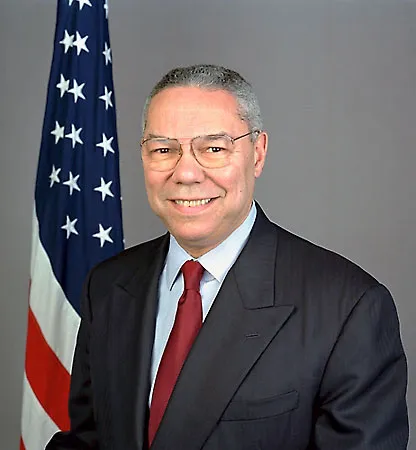
Colin Powell, born on April 5, 1937, in New York City to Jamaican immigrant parents, was a towering figure in American military and political history. His journey from a humble beginning in the South Bronx to becoming the first African American Secretary of State is a classic tale of the American Dream. Powell’s life is a testament to hard work, dedication, and an unwavering commitment to public service. In this article, we will delve into the life of Colin Powell, exploring his age, rise to fame, and the key highlights of his remarkable life.
Early Life and Education: The Foundation of a Leader
Colin Luther Powell was born in Harlem, New York, but he grew up in the South Bronx, a neighborhood known for its tough environment. His parents, Luther and Maud Powell, had emigrated from Jamaica in search of better opportunities, and they instilled in young Colin the values of hard work, education, and perseverance. Powell often spoke about his upbringing in the Bronx, where he worked various jobs, including as a store clerk, to support his family and pay for his education.
Powell attended Morris High School in the Bronx, where he was an average student but showed early signs of leadership and a strong work ethic. After high school, he enrolled at the City College of New York (CCNY), where he initially struggled academically. However, it was at CCNY that Powell discovered the Reserve Officers’ Training Corps (ROTC), a program that would change the trajectory of his life. He found his passion in military science, excelling in ROTC and eventually becoming the cadet colonel, the highest rank in the program. In 1958, Powell graduated with a degree in geology and a commission as a second lieutenant in the U.S. Army.
Military Career: From Vietnam to the Pentagon
Colin Powell’s military career began during a tumultuous time in American history. After completing his training, he was stationed in West Germany before being deployed to Vietnam in 1962 as an advisor to a South Vietnamese infantry battalion. Powell’s experience in Vietnam was formative, exposing him to the harsh realities of war. He was wounded twice during his tours, once stepping on a punji stake—a type of booby trap—and later surviving a helicopter crash. Despite the dangers, Powell’s leadership skills were recognized, and he was awarded the Purple Heart and the Bronze Star.
After his service in Vietnam, Powell continued to climb the military ranks, attending the Command and General Staff College, where he graduated at the top of his class. His military career saw him serve in various key roles, including as a brigade commander in South Korea and as an assistant to the Secretary of Defense and the Deputy National Security Advisor under President Jimmy Carter.
Rising to Prominence: National Security Advisor and Chairman of the Joint Chiefs of Staff
In 1987, President Ronald Reagan appointed Colin Powell as the National Security Advisor, making him the first African American to hold the position. During his tenure, Powell played a crucial role in the final years of the Cold War, advising on key issues such as arms control and the U.S. invasion of Panama. His pragmatic approach to national security, emphasizing diplomacy over military action, earned him respect across the political spectrum.
Powell’s most prominent military role came in 1989 when President George H.W. Bush appointed him as the Chairman of the Joint Chiefs of Staff, the highest military position in the Department of Defense. Powell was the first African American and the youngest officer to hold this position. His tenure coincided with several significant events, including the end of the Cold War, the U.S. invasion of Panama, and the Persian Gulf War.
During the Gulf War, Powell was instrumental in developing what became known as the “Powell Doctrine,” which emphasized the use of overwhelming force to achieve a decisive victory, clear objectives, and a well-defined exit strategy. This approach was evident in the Gulf War, where the coalition forces, led by the United States, quickly liberated Kuwait from Iraqi occupation with minimal casualties. Powell’s leadership during the war made him a national hero and solidified his reputation as one of America’s most respected military leaders.
Transition to Civilian Life: Secretary of State
After retiring from the military in 1993, Colin Powell remained a prominent figure in American public life. He wrote his autobiography, My American Journey, which became a bestseller and further boosted his national profile. Powell was often mentioned as a potential presidential candidate, but he chose not to run, instead focusing on public speaking and supporting various educational and charitable causes.
In 2001, newly elected President George W. Bush nominated Colin Powell to be Secretary of State, making him the highest-ranking African American official in U.S. history at that time. As Secretary of State, Powell was initially seen as a voice of moderation in the Bush administration, advocating for diplomacy and coalition-building in international relations.
The Iraq War and Its Aftermath
One of the most defining moments of Colin Powell’s tenure as Secretary of State was his role in the lead-up to the Iraq War. On February 5, 2003, Powell delivered a speech to the United Nations Security Council, presenting evidence that Iraq possessed weapons of mass destruction (WMDs). This presentation was a pivotal moment in justifying the U.S. invasion of Iraq. However, the intelligence that Powell presented was later found to be flawed, and no WMDs were discovered in Iraq.
The Iraq War and the faulty intelligence deeply affected Powell’s legacy. Despite his initial reluctance to go to war, Powell’s UN speech made him the face of the administration’s case for military action. In the years following the war, Powell expressed regret over the speech, calling it a “blot” on his record. This episode is often cited as one of the most significant controversies of his career, highlighting the challenges and complexities of making decisions at the highest levels of government.
Later Years: Public Service and Advocacy
After leaving the Bush administration in 2005, Colin Powell continued to be active in public life, though he largely stepped back from the political spotlight. He focused on his work with America’s Promise Alliance, a nonprofit organization he founded with his wife, Alma Powell, in 1997. The organization aims to improve the lives of children and youth across the United States, particularly in education and health.
Powell also became an outspoken advocate for a variety of causes, including military veterans’ rights, education reform, and racial equality. Despite his association with the Republican Party, Powell became increasingly critical of the party’s direction in the 21st century. He endorsed Barack Obama in the 2008 and 2012 presidential elections, citing Obama’s leadership qualities and the need for a change in the country’s direction.
In his later years, Powell continued to be a respected voice on national security and foreign policy issues. He frequently appeared on television as a commentator, offering his insights on the challenges facing the United States in a rapidly changing world.
Legacy and Impact
Colin Powell’s legacy is complex and multifaceted. He is remembered as a trailblazer who broke racial barriers in the U.S. military and government, a decorated war hero, and a leader who played a significant role in some of the most critical moments in recent American history. His rise from the South Bronx to the highest echelons of power is a testament to the possibilities of the American Dream, but his career also serves as a cautionary tale about the weight of responsibility and the consequences of decisions made on the global stage.
Powell’s impact on U.S. military strategy, particularly through the Powell Doctrine, continues to influence military thinking today. His emphasis on clear objectives, overwhelming force, and a defined exit strategy remains a guiding principle for military engagements.
Despite the controversies surrounding the Iraq War, Powell’s contributions to American society are undeniable. He was a leader who dedicated his life to public service, advocating for a strong, yet measured approach to U.S. foreign policy. His efforts to promote diplomacy, build international coalitions, and support the next generation of leaders through education and mentorship have left a lasting legacy.
Conclusion: A Life of Service
Colin Powell passed away on October 18, 2021, at the age of 84, due to complications from COVID-19. His death marked the end of an era for many who saw in Powell a symbol of integrity, leadership, and service. Powell’s life story is one of perseverance, courage, and dedication to the principles he believed in. He navigated the complexities of race, politics, and military service with a steady hand, leaving behind a legacy that will be studied and remembered for generations.
In reflecting on Colin Powell’s life, it is clear that he embodied the values of duty, honor, and country. His journey from the streets of New York to the highest offices of power is a powerful reminder of what is possible in America, even as it also serves as a reminder of the challenges and responsibilities that come with leadership.


