
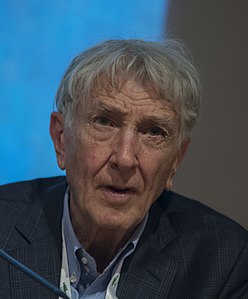
Early Life and Background
Corrado Augias was born in Rome on January 26, 1935. From a young age, he demonstrated a strong inclination towards the arts and culture, which would shape his future career. In the early 1960s, he became involved in the avant-garde theater movement in Rome, participating in the “Teatro del 101” under the direction of Antonio Calenda. Here, he wrote plays such as “Direzione Memorie” and “Riflessi di conoscenza,” which were performed by notable actors like Gigi Proietti.
Journalism Career
Augias’ journalism career is extensive and distinguished. He spent several years abroad, first in Paris and later in New York, working as a correspondent for major Italian publications. During his time in New York, he reported for “L’Espresso” and “la Repubblica,” witnessing significant historical events. Notably, on June 6, 1968, he was at the Ambassador Hotel in Los Angeles when Robert Kennedy was assassinated, and he reported the news live.
In the mid-1970s, Augias returned to New York to establish the U.S. correspondence office for “la Repubblica,” which started publishing on January 14, 1976. His time abroad provided him with a unique perspective on global events, enriching his subsequent journalistic endeavors.
Television and Cultural Programs
Augias is well-known for his contributions to Italian television, particularly in the realm of cultural programming. He created and hosted several successful shows that focused on cultural dissemination. From 1987 to 1992, he presented “Telefono giallo,” a program that explored unsolved cases, which he later compiled into a book. He also hosted “Babele,” a show dedicated entirely to books, and “Domino” for TMC in 1994.
One of his most enduring television contributions was the program “Le Storie – diario italiano,” which aired on Rai Tre. This daily 30-minute segment delved into a wide range of cultural topics, from music and literature to recent history and visual arts. Additionally, he hosted “Enigma,” a show that examined historical figures and events, and “Le storie” as part of the morning show “Cominciamo bene.”
Literary Contributions
As an author, Corrado Augias has made significant contributions to Italian literature. He is known for his mystery novels, including a trilogy set in the early 20th century featuring the protagonist Giovanni Sperelli. This trilogy includes “Quel treno da Vienna” (1981), “Il fazzoletto azzurro” (1983), and “L’ultima primavera” (1985). Other notable works include “Sette delitti quasi perfetti” (1989), “Una ragazza per la notte” (1992), and “Quella mattina di luglio” (1995).
Augias also wrote “Tre colonne in cronaca” (1987) with his wife Daniela Pasti, and “Giornali e spie” (1983), a detailed account of a real espionage case from 1917. His works are characterized by meticulous research and a deep understanding of historical contexts, which bring his narratives to life.
Essays and Non-Fiction
In addition to fiction, Augias has authored several essays that explore cultural and artistic themes. His series of books titled “I segreti” delves into the hidden histories and charms of major world cities, including “I segreti di Parigi” (1996), “I segreti di New York” (2000), “I segreti di Londra” (2003), and “I segreti di Roma” (2005).
In 1998, he published “Il viaggiatore alato,” a biographical account of the painter Amedeo Modigliani, inspired by a poem by Baudelaire. Augias also co-authored “Inchiesta su Gesù” (2006) with Mauro Pesce, a book that sparked considerable debate within Catholic communities for its critical examination of Jesus Christ’s life and legacy.
Political Involvement and Recognition
Corrado Augias briefly ventured into politics in the 1990s. In 1994, he was elected as a Member of the European Parliament as an independent candidate on the lists of the Democratic Party of the Left. He served in this role until 1999, contributing his expertise and perspective to European legislative processes.
Throughout his career, Augias has received numerous accolades for his contributions to journalism, literature, and culture. In 2002, he was awarded the Order of Merit of the Italian Republic. In 2006, he received the title of Knight of the Grand Cross, and in 2007, he was honored with the Legion of Honour by the French Republic.
Recent Work and Legacy
From 2015 to 2019, Augias wrote and hosted the Rai 3 program “Quante storie,” which continued the legacy of his previous show, “Le storie – Diario italiano.” The program remains on air, now hosted by journalist Giorgio Zanchini.
In late 2020, Augias made headlines by returning his Legion of Honour in protest of actions he believed dishonored the memory of Giulio Regeni, an Italian student who was murdered in Egypt under suspicious circumstances.
Conclusion
Corrado Augias’ life and career are a testament to his dedication to cultural enrichment and his unwavering commitment to journalistic integrity. His work spans multiple disciplines, including theater, journalism, television, and literature, and he has left an indelible mark on each. Through his insightful writings and thought-provoking television programs, Augias has significantly contributed to the cultural landscape, making complex topics accessible to a broad audience.
Augias’ journey from the avant-garde theaters of Rome to the corridors of the European Parliament reflects his multifaceted talents and his relentless pursuit of truth and knowledge. His legacy continues to inspire and educate, solidifying his place as one of Italy’s most esteemed cultural figures.


