
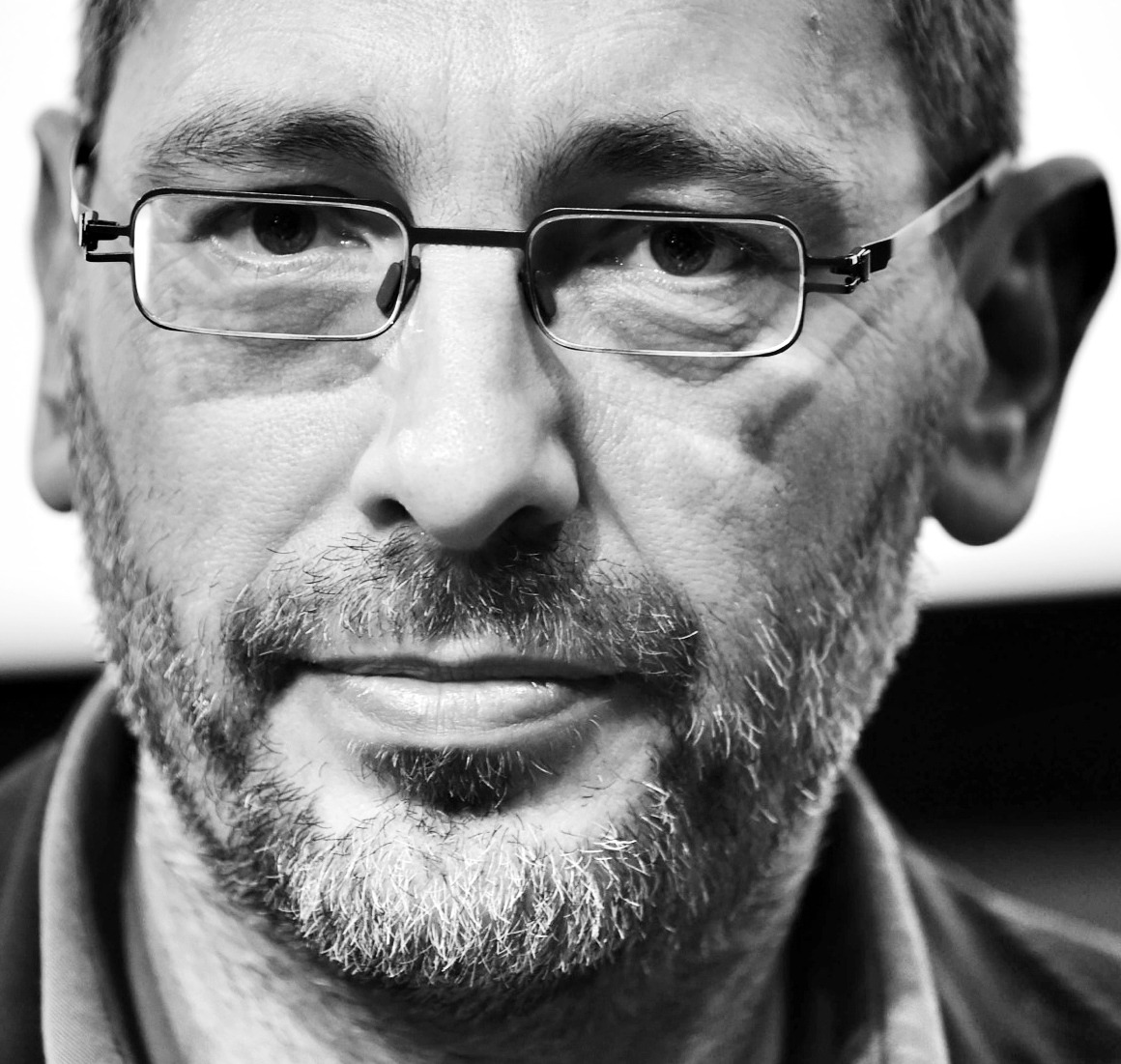
Corrado Formigli, born on March 24, 1968, in Naples, Italy, is a distinguished Italian journalist, television host, and investigative reporter. Over the course of his career, Formigli has become known for his fearless journalism, particularly in political reporting and international affairs. His work, characterized by in-depth investigations and hard-hitting interviews, has earned him a prominent place in the Italian media landscape. This article explores Formigli’s life, career, and the key events that have shaped his journey to fame.
Early Life and Educational Background
Corrado Formigli was born into a family with a strong professional background—his father was an executive in the construction industry. Growing up in Naples, a city rich in history and culture, Formigli developed an early interest in current affairs and storytelling. This passion led him to pursue a career in journalism, a field where he would eventually make a significant impact.
In the late 1980s, Formigli began his journalism career at the newspaper Paese Sera in Florence. During this time, he was also enrolled at university, studying law. Although he initially pursued a legal education, Formigli’s commitment to journalism grew stronger, and he eventually decided to dedicate himself fully to the profession.
Early Career: From Il Manifesto to the Rai Network
Formigli’s career took a significant turn when he moved to London, where he worked as a correspondent for the Italian newspaper Il Manifesto. Reporting from the British capital provided him with valuable experience in international journalism, and after a year abroad, he returned to Italy to join the Roman office of Il Manifesto. At the newspaper, Formigli covered a wide range of topics, including politics and entertainment, showcasing his versatility as a journalist.
In 1994, Formigli transitioned to television journalism, joining Rai, Italy’s national public broadcaster. He worked on the program Tempo Reale, which marked the beginning of his long association with televised journalism. Two years later, in 1996, Formigli followed the renowned journalist Michele Santoro to Mediaset, where he served as a correspondent for the program Moby Dick on Italia 1. This role allowed him to cover some of the most significant and harrowing events of the time, including the massacres committed by Islamic fundamentalists in Algeria.
Formigli’s work during this period earned him widespread recognition. In 1998, he won the prestigious Ilaria Alpi Award for a documentary on the Algerian war, a testament to his skill in investigative journalism. That same year, he received the Penne Pulite Award for a documentary on the working conditions at the Volkswagen factory in Wolfsburg, Germany. His ability to tackle complex and sensitive issues with clarity and insight made him a standout in the field.
The Rise to Prominence in the 2000s
As the 2000s approached, Corrado Formigli’s career continued to ascend. He rejoined Rai, once again working closely with Michele Santoro. During this time, he took on roles as a special correspondent and co-host for several high-profile programs, including Circus on Rai Uno and Raggio Verde on Rai Due. His work on these programs further established his reputation as a journalist capable of handling diverse topics, from political scandals to international conflicts.
One of the most notable moments in Formigli’s career occurred in the early 2000s, when he became the first television journalist to enter the Jenin refugee camp in the West Bank following the Israeli military raids in the spring of 2002. His on-the-ground reporting from this volatile region highlighted his commitment to covering critical global issues and brought him further acclaim.
In 2003, following the end of the program Sciuscià, Formigli made a significant move to Sky TG24, a newly established all-news channel in Italy, where he hosted the political talk show Controcorrente. This role allowed him to delve deeper into political analysis and foster meaningful discussions on pressing national and international issues.
Expanding Horizons: Radio, La7, and Further Success
Corrado Formigli’s versatility as a journalist extended beyond television. In 2004, he began collaborating with La7, an Italian private television network, where he worked on Passato Prossimo, a series of historical documentaries. The first installment focused on the Battle of Montecassino, showcasing Formigli’s ability to bring historical events to life with compelling storytelling.
During this period, Formigli also contributed to La Storia Siamo Noi (We Are History), a series on Rai Educational. He worked on the documentary A Risentirci a Più Tardi, directed by Alex Infascelli, which featured an encounter between former Italian President Francesco Cossiga and former terrorist Adriana Faranda. This project demonstrated Formigli’s skill in handling sensitive and complex subjects with the nuance they required.
In addition to his television work, Formigli ventured into radio. In 2006, he joined Radio 24, where he co-hosted La Zanzara, a popular talk show known for its provocative and engaging discussions. Formigli’s time on La Zanzara further broadened his audience and allowed him to reach listeners with his sharp commentary on current affairs.
By 2008, Formigli had returned to Rai to work once again with Michele Santoro on the program Annozero, contributing to many of the show’s most impactful investigations. His work on Annozero further solidified his position as one of Italy’s leading investigative journalists.
Establishing Piazzapulita on La7
In 2011, Corrado Formigli made a bold move by leaving Rai and Santoro to join La7, where he launched his own political talk show, Piazzapulita. The program, which aired in prime time, quickly became a platform for in-depth political analysis, investigative reporting, and lively debates on the most pressing issues facing Italy.
Piazzapulita distinguished itself from other talk shows by focusing on rigorous journalism and holding those in power accountable. Formigli’s direct interviewing style and commitment to uncovering the truth resonated with viewers, making the show a staple of La7’s programming. The show’s success also positioned Formigli as one of the most influential voices in Italian media.
However, Formigli’s work has not been without controversy. In February 2012, he was embroiled in a legal battle with Fiat, one of Italy’s largest companies, over a segment aired on Annozero in 2010. The segment, which compared the Alfa Romeo MiTo to other vehicles, was deemed defamatory by Fiat, resulting in a lawsuit that initially led to a €7 million judgment against Formigli and Rai. The case was a significant moment in Formigli’s career, highlighting the risks and challenges of investigative journalism. However, in October 2013, the Court of Appeal in Turin overturned the ruling, absolving Formigli and affirming his right to free and critical journalism.
Continuing Influence and Recent Work
Corrado Formigli’s influence in Italian journalism has only grown over the years. In 2013, Piazzapulita returned to La7’s schedule, filling the time slot previously occupied by L’Infedele, a program hosted by Gad Lerner. Piazzapulita continued to tackle the most pressing political and social issues in Italy, providing a forum for in-depth discussions and investigations that were both informative and thought-provoking.
In 2014, Formigli published a book titled Impresa Impossibile: Storie di Italiani che Hanno Combattuto e Vinto la Crisi (Impossible Business: Stories of Italians Who Fought and Won the Crisis), in which he documented the stories of Italians who had successfully navigated the economic crisis. The book reflected Formigli’s ongoing commitment to highlighting the challenges and resilience of ordinary people in the face of adversity.
One of the most significant journalistic achievements of Formigli’s recent career came in 2014, when he became the first Italian journalist to enter the city of Kobane, Syria, during the conflict with ISIS. His reporting from Kobane provided crucial insights into the situation on the ground and demonstrated his unwavering dedication to covering global issues that matter.
Legacy and Impact on Italian Journalism
Corrado Formigli’s career is marked by a relentless pursuit of truth, a commitment to rigorous journalism, and a willingness to tackle difficult and often controversial subjects. His work has had a profound impact on Italian media, particularly in the areas of political reporting and investigative journalism.
Formigli’s approach to journalism is characterized by a deep understanding of the complexities of the issues he covers, as well as a determination to hold those in power accountable. His ability to engage with both national and international audiences through television, radio, and print has made him one of the most respected and influential journalists in Italy.
Through Piazzapulita and his other projects, Formigli has consistently provided a platform for critical discussions on the state of Italian politics, society, and international affairs. His work continues to inspire a new generation of journalists who are committed to upholding the principles of free and independent journalism.
As he continues to navigate the challenges and opportunities of the modern media landscape, Corrado Formigli’s legacy as a fearless and dedicated journalist remains firmly established. His contributions to Italian journalism have not only shaped the way news is reported but have also played a crucial role in informing and empowering the public.


