
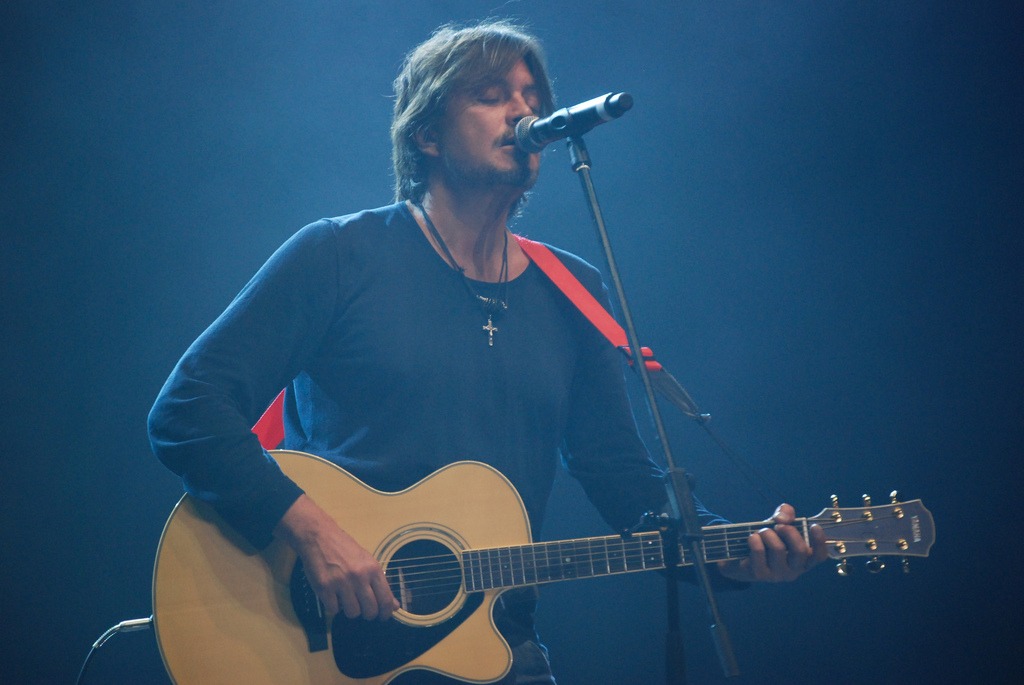
Cristiano De André, born on December 29, 1962, in Genoa, Italy, is a celebrated musician and singer-songwriter, best known as the son of the legendary Fabrizio De André. His career, however, extends far beyond the shadow of his father, marked by his own unique contributions to Italian music. Cristiano’s journey in the music industry is a tale of navigating the pressures of living up to a famous legacy while forging a path that reflects his own artistic identity. This article delves into the life of Cristiano De André, exploring his rise to fame, personal challenges, and his enduring impact on Italian music.
Early Life and Musical Upbringing
Cristiano De André was born into a family deeply rooted in the Italian cultural scene. His mother, Enrica “Puny” Rignon, was married to Fabrizio De André, one of Italy’s most revered singer-songwriters. Growing up in such a creative environment, Cristiano was exposed to music and the arts from an early age. His childhood was filled with interactions with some of Italy’s most prominent cultural figures, including Paolo Villaggio, Gino Paoli, and Bruno Lauzi, all close friends of his father.
From a young age, Cristiano showed a keen interest in music. He attended a private religious school for his early education, but his true passion lay in the musical instruments he studied at the “Niccolò Paganini” Conservatory in Genoa. Cristiano learned to play the violin and guitar, skills that would become the foundation of his musical career. His early exposure to music, coupled with the influence of his father and the vibrant cultural milieu of Genoa, shaped his artistic sensibilities and set him on the path to becoming a musician.
Early Career: The Formation of Tempi Duri
In the early 1980s, Cristiano De André took his first significant steps in the music industry by forming the band Tempi Duri. The group included musicians from Verona, such as Marco Bisotto, Carlo Pimazzoni, and Carlo Facchini. Tempi Duri’s music was a blend of rock and pop, reflecting the eclectic tastes of its members and the evolving sound of the Italian music scene at the time.
The band released an album titled Chiamali Tempi Duri, which garnered some attention and led to opportunities to perform as the opening act for Fabrizio De André’s concerts. These performances were crucial in building Cristiano’s confidence and stage presence, allowing him to gain valuable experience in front of large audiences. However, despite the potential, Tempi Duri disbanded in 1985, marking the end of Cristiano’s first major foray into the music industry.
Solo Career and Sanremo Success
Following the dissolution of Tempi Duri, Cristiano De André embarked on a solo career. His first notable success came in 1985 when he participated in the prestigious Festival di Sanremo, one of Italy’s most important music competitions. Cristiano competed in the Giovani section with the song “Bella più di me,” which was written by Roberto Ferri. The performance earned him fourth place and the Critic’s Award, signaling the start of a promising solo career.
In 1987, Cristiano released his debut solo album, Cristiano De André. The album was produced in collaboration with Massimo Bubola, a respected songwriter who had also worked with Fabrizio De André. This album laid the foundation for Cristiano’s musical identity, combining introspective lyrics with melodic compositions. Three years later, in 1990, Cristiano released his second album, L’albero della cuccagna, which featured contributions from renowned musicians such as Ares Tavolazzi, Ellade Bandini, Vince Tempera, and Mauro Pagani.
L’albero della cuccagna was a critical success and demonstrated Cristiano’s growth as an artist. That same year, Cristiano became a father to his first daughter, Francesca, a milestone that added a new dimension to his life and music.
Continued Success and Challenges
In 1992, Cristiano De André released his third album, Canzoni con il naso lungo, which featured collaborations with notable artists like Eugenio Finardi. The album was well-received, and in 1993, Cristiano returned to the Festival di Sanremo with the song “Dietro la porta.” This performance was a turning point in his career, earning him both the Premio Volare and the Critic’s Award. Additionally, Cristiano finished in second place in the overall competition, further solidifying his reputation as a talented singer-songwriter.
Following this success, Canzoni con il naso lungo was re-released under the title Cristiano De André, now including the Sanremo hit “Dietro la porta.” The re-release brought greater commercial success and expanded Cristiano’s audience.
In 1995, Cristiano released Sul confine, an album that featured collaborations with various artists, including his father, Fabrizio, on the track “Cose che dimentico.” This album marked a significant moment in Cristiano’s career as it demonstrated his ability to merge his personal style with influences from his father’s work. The following years saw Cristiano joining Fabrizio on tour, playing violin and guitar during the Anime Salve tour in 1997 and the Mi innamoravo di tutto tour in 1998. These tours were not only significant for Cristiano’s career but also provided a deeper connection between father and son.
Tragically, Fabrizio De André passed away in January 1999, shortly after these tours. The loss of his father had a profound impact on Cristiano, both personally and professionally. However, Cristiano continued to honor his father’s legacy while pursuing his own musical path.
Scaramante and Later Career
In 2001, Cristiano De André released Scaramante, an album that received critical acclaim and won the Premio Lunezia for Best Album. Scaramante was a testament to Cristiano’s artistic maturity, featuring a blend of introspective lyrics and sophisticated musical arrangements. The album’s success was followed by a tour, which allowed Cristiano to connect with his audience on a deeper level.
In 2003, Cristiano returned to the Festival di Sanremo with the song “Un giorno nuovo,” which had strong ethnic musical influences. This performance led to the release of a live album of the same name. Despite his ongoing success, Cristiano faced personal challenges during this period. He took a break from the music scene to focus on managing the Fondazione Fabrizio De André and overseeing his father’s artistic legacy.
However, this period was also marked by personal turmoil. In 2004, Cristiano was convicted of assault after a violent incident involving his partner. The court sentence was converted to a financial penalty, but the event cast a shadow over his career. In 2006, Cristiano was arrested in Santa Margherita, Liguria, after an altercation with police officers while under the influence of alcohol. These incidents highlighted the struggles Cristiano faced in balancing his personal life with the pressures of his career.
Revival and De André Canta De André
In 2009, Cristiano De André made a significant comeback with the tour De André canta De André, where he reinterpreted the songs of his father. This tour was a pivotal moment in Cristiano’s career, as it allowed him to pay tribute to Fabrizio De André’s legacy while also asserting his own artistic identity. The tour was a success and led to further projects that celebrated his father’s music.
In 2012, Cristiano participated in a tribute album to Giorgio Gaber, Per Gaber… io ci sono, where he performed the song “Buttare lì qualcosa.” The following year, in January 2013, Cristiano faced another personal challenge when he was hospitalized in Milan after neighbors reported hearing disturbing noises from his apartment. Despite this incident, Cristiano managed to overcome this difficult period and released his album Come in cielo così in guerra later that year. The album, produced by Corrado Rustici, was well-received and led to the Come in cielo così in guerra Tour.
In 2014, Cristiano returned to the Festival di Sanremo, performing the songs “Il cielo è vuoto” and “Invisibili.” His participation in the festival marked another chapter in his ongoing career, demonstrating his resilience and continued relevance in the Italian music scene.
Legacy and Impact
Cristiano De André’s career is a testament to his resilience and dedication to music. Despite the challenges and controversies he has faced, Cristiano has managed to carve out a significant place for himself in Italian music. His ability to honor his father’s legacy while developing his own distinct voice has earned him respect and admiration from both critics and fans.
Cristiano’s music reflects a deep understanding of the human experience, drawing on themes of love, loss, and redemption. His work is characterized by a blend of personal introspection and social commentary, much like his father’s, yet it also stands on its own, reflecting Cristiano’s unique perspective and artistic sensibilities.
As he continues to create and perform, Cristiano De André remains an important figure in the Italian music landscape. His journey from the son of a musical legend to a respected artist in his own right serves as an inspiration to many, demonstrating the power of perseverance and the enduring impact of music.
Conclusion
Cristiano De André’s life and career are marked by a deep connection to his father’s legacy, but also by his own significant contributions to Italian music. Through his struggles and successes, Cristiano has proven himself to be a talented and resilient artist, capable of carrying forward the De André name while forging his own path. His music continues to resonate with audiences, ensuring that his voice, like his father’s, will be remembered for generations to come.


