
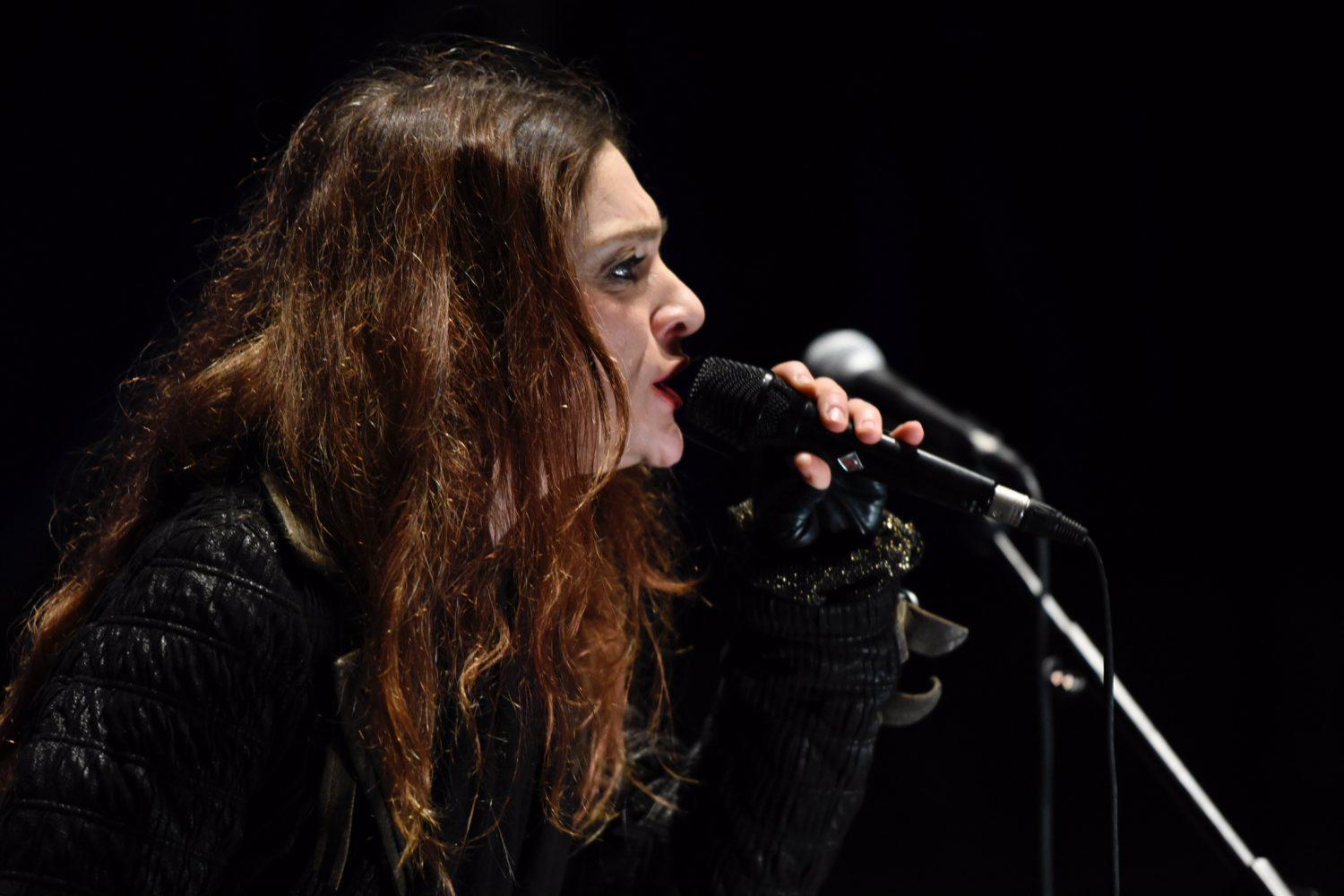
Cristina Zavalloni is a name synonymous with versatility and talent in the world of music. Born on November 21, 1973, in Bologna, Italy, she has carved out a unique niche in the international music scene through her dynamic performances and eclectic repertoire. With a career spanning multiple decades, Zavalloni has demonstrated an ability to transcend traditional genre boundaries, earning her a place among the most respected and innovative musicians of her generation.
Early Life and Musical Beginnings
Cristina Zavalloni’s journey into the world of music began in her hometown of Bologna. After completing her high school education, she made the pivotal decision to pursue a professional career in music. This decision marked the beginning of her formal training in both classical singing and composition. The early 1990s saw Zavalloni immersing herself in jazz, attending renowned seminars like “Siena Jazz” and “Umbria Jazz.” Her involvement in these programs laid the foundation for her future as a versatile performer, blending the improvisational nature of jazz with the structured complexity of classical music.
During this period, Zavalloni joined the “O.F.P. Orchestra” as both an arranger-composer and a singer. Her dual role in the orchestra highlighted her multifaceted musical abilities and set the stage for her later explorations into other musical genres.
The Rise to Prominence
Zavalloni’s career took a significant leap forward in 1994 when she formed the “Open Quartet.” This group, which became a platform for her to experiment with different musical styles, released three CDs: “Danse à Rebours,” “Come valersi non servilmente di Bertolt Brecht,” and “When you go yes is yes!” These recordings showcased her ability to seamlessly blend elements from various musical traditions, from classical to avant-garde, and cemented her reputation as a forward-thinking artist.
In 1997, Zavalloni made her operatic debut, performing the role of Lucilla in Gioachino Rossini’s “La Scala di Seta” at the Teatro Comunale in Bologna. This performance marked the beginning of her foray into opera, a genre that would become a significant part of her artistic identity. That same year, she performed Arnold Schönberg’s “Pierrot Lunaire” with the E.C.O. Ensemble, a challenging piece that further demonstrated her versatility and technical prowess. This performance was widely acclaimed and led to a series of subsequent performances across Italy, including in cities like Livorno, Bologna, and Palermo.
Collaborations and International Success
The late 1990s and early 2000s were a period of intense creative output and collaboration for Zavalloni. In 1999, she debuted at the Concertgebouw in Amsterdam with Louis Andriessen’s composition “Passeggiata in tram per l’America e ritorno,” based on a text by Dino Campana. This performance was followed by collaborations with other notable composers, including Gavin Bryars and Michael Nyman.
In 2000, Zavalloni’s collaboration with pianist Stefano De Bonis culminated in the release of the CD “Scoiattoli Confusi,” which was presented at the Bimhuis in Amsterdam. This period also saw her participation in the Venice Biennale, where she performed with the E.C.O. Ensemble, interpreting works by composers such as Oehring, Boccadoro, and Carluccio.
Zavalloni’s growing international reputation led to her debut at the prestigious Teatro alla Scala in Milan in 2001. Here, she performed works by Andriessen and MacMillan with the ensemble Sentieri Selvaggi, directed by Carlo Boccadoro. This performance was later repeated at the Venice Biennale, solidifying her status as a leading figure in contemporary music.
A Versatile Performer
One of Zavalloni’s most remarkable qualities is her ability to navigate between different musical genres with ease. Whether performing jazz, opera, or contemporary classical music, she brings a distinctive voice and a deep understanding of the music to each performance. This versatility has allowed her to collaborate with a wide range of artists, from jazz musicians like Roy Paci to classical composers like Louis Andriessen.
In 2002, Zavalloni embarked on a European tour with the Orkest de Volharding and collaborated with the Banda Ionica, further expanding her musical horizons. Her versatility was again on display in 2003 when she released the CD “Cristina Zavalloni,” accompanied by pianists Andrea Rebaudengo and Stefano De Bonis. The album featured compositions by Maurice Ravel, Luciano Berio, and Manuel de Falla, as well as original pieces, showcasing her ability to interpret a wide range of musical styles.
Recent Work and Continuing Influence
In 2004, Zavalloni continued to push the boundaries of her artistry with the release of “When you go yes is yes! Live in Utrecht,” a live recording from the SJU Festival in Utrecht, Netherlands. The album featured a collaboration with musicians such as Fabrizio Puglisi, Francesco Cusa, and Antonio Borghini, with guest appearances by Gianluca Petrella. This period also saw her performing at the Teatro degli Arcimboldi in Milan, where she premiered Michael Nyman’s composition “Acts of Beauty,” a piece composed specifically for her.
Zavalloni’s influence extends beyond her performances. She is also a respected composer and educator, contributing to the development of new music and mentoring the next generation of musicians. Her work has been featured in major festivals and concert halls around the world, including the Lincoln Center in New York, where she made her debut in 2004.
The Legacy of Cristina Zavalloni
Cristina Zavalloni’s career is a testament to her ability to transcend the conventional boundaries of music. As a mezzosoprano, composer, and performer, she has continually reinvented herself, drawing on a wide range of influences to create a body of work that is both innovative and deeply rooted in tradition. Her contributions to the world of music are not only significant in terms of her performances but also in her ability to inspire and influence other musicians.
Zavalloni’s legacy is one of innovation and versatility. She has shown that it is possible to navigate the complexities of different musical genres while maintaining a unique artistic voice. Her work continues to resonate with audiences around the world, and her influence on contemporary music is undeniable. Whether performing on the opera stage, in jazz clubs, or in contemporary music festivals, Cristina Zavalloni remains a compelling and dynamic force in the world of music.


