
Introduction
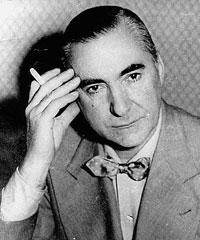
Curzio Malaparte, born Curt Erich Suckert on June 9, 1898, in Prato, Italy, was a man of many contradictions and complexities. He was a writer, journalist, and soldier, whose life was marked by political turbulence, literary innovation, and a relentless quest for personal and intellectual freedom. Malaparte’s life and work are a reflection of the tumultuous times he lived in, from the rise of fascism in Italy to the devastation of World War II. His contributions to literature and his controversial political affiliations make him a fascinating figure in 20th-century history. This article delves into the life of Curzio Malaparte, exploring his early years, his rise to fame, his literary works, and the controversies that surrounded him.
Early Life and Background
Curt Erich Suckert, later known as Curzio Malaparte, was born to a Saxon father, Erwin Suckert, and an Italian mother, Edda Perelli. Growing up in Italy, Malaparte was exposed to diverse cultural influences, which would later play a significant role in shaping his literary and political views. He attended the prestigious Cicognini Classical High School in Prato, where he developed an early interest in politics and literature.
Volunteering in World War I
At the young age of 16, Malaparte volunteered to fight in World War I, even though Italy was initially neutral. He joined the Garibaldian Legion, which later became part of the French Foreign Legion. When Italy eventually entered the war, he enlisted as an infantryman in the Royal Italian Army, serving with distinction in the Alps and in France. His bravery earned him a bronze medal for military valor.
Literary Debut
After the war, Malaparte turned to writing, producing his first book, “Viva Caporetto!” in 1921. The book, a critical examination of Italy’s defeat at the Battle of Caporetto, was controversial and initially met with resistance. Publishers refused to print it, and when it was finally published at Malaparte’s expense, it was quickly seized by authorities for its perceived anti-military sentiment. The book was later republished under the title “La rivolta dei santi maledetti” (“The Revolt of the Cursed Saints”).
Malaparte and Fascism
Malaparte’s early political affiliations were complex and evolving. Initially drawn to anarchist ideas, he later gravitated towards the emerging Fascist movement led by Benito Mussolini. In 1922, he participated in the March on Rome, which marked the beginning of Mussolini’s rise to power. Malaparte became a prominent figure in Fascist circles, editing and writing for several Fascist publications.
However, Malaparte’s relationship with Fascism was never straightforward. He was known for his independence and often criticized the regime’s leaders, including Mussolini himself. This led to his eventual expulsion from the National Fascist Party in 1933 and his exile to the island of Lipari. Despite this, Malaparte continued to write and publish, often under the pseudonym “Candido.”
The Creation of the Pen Name “Curzio Malaparte”
The name “Curzio Malaparte” was adopted by Suckert as a pen name, a transformation that reflected his Italian identity and his complex relationship with his German heritage. The surname “Malaparte” was inspired by a satirical 19th-century pamphlet titled “I Malaparte e i Bonaparte” (“The Malaparte and the Bonaparte”). The choice of this name symbolized his desire to distance himself from his German roots and embrace a new identity as an Italian intellectual.
Rise to Literary Fame
Malaparte’s literary career truly took off in the 1930s with the publication of several influential works. In 1931, he published “Technique du coup d’État” (“The Technique of the Coup d’État”), a political treatise that examined the mechanics of political power and revolution. The book was highly critical of both Mussolini and Hitler, which further alienated Malaparte from the Fascist establishment.
Malaparte’s most famous works, however, came during and after World War II. His novel “Kaputt,” published in 1944, is a haunting, semi-autobiographical account of his experiences as a journalist and war correspondent on the Eastern Front. The book vividly describes the horrors of war and the moral decay it engenders. “La Pelle” (“The Skin”), published in 1949, is another of Malaparte’s masterpieces. Set in Naples during the Allied occupation, the novel explores the degradation and suffering of the Italian people in the aftermath of the war.
Villa Malaparte: A Symbol of Isolation and Genius
In 1936, Malaparte commissioned the construction of Villa Malaparte on the island of Capri. Designed by the architect Adalberto Libera, the villa is perched on a cliff overlooking the Tyrrhenian Sea, accessible only by a steep staircase carved into the rock. The stark, modernist design of the villa, with its flat roof and minimalist lines, has made it an iconic example of 20th-century architecture. The villa served as both a retreat and a symbol of Malaparte’s isolation from the world. It became a meeting place for intellectuals and artists, but it also reflected Malaparte’s complex personality—a blend of genius and solitude.
Post-War Years and Later Life
After World War II, Malaparte continued to write and remained a controversial figure. He briefly aligned himself with the Italian Communist Party, although his relationship with communism was as ambivalent as his earlier flirtation with fascism. In 1951, he directed and wrote the screenplay for the neorealist film “Il Cristo proibito” (“The Forbidden Christ”), which won the “Città di Berlino” prize at the Berlin International Film Festival.
In his later years, Malaparte became a correspondent for the newspaper “Il Tempo,” where he wrote a column titled “Il Serraglio” (“The Seraglio”). His work took him to the Soviet Union and China, where he met and interviewed Mao Zedong. However, his health was in decline, and he was forced to return to Italy prematurely due to a severe lung condition.
Death and Legacy
Curzio Malaparte died on July 19, 1957, in Rome, at the age of 59. His death was likely caused by complications from mustard gas exposure during World War I, which had left him with chronic respiratory problems. Malaparte’s legacy is complex and multifaceted. He is remembered as a brilliant writer and a keen observer of the human condition, but also as a man whose political affiliations and personal life were marked by contradictions.
Historical Context and Influence
Malaparte’s life and work cannot be understood without considering the historical context in which he lived. The early 20th century was a period of immense upheaval, marked by the rise of totalitarian regimes, world wars, and the collapse of traditional social structures. Malaparte was a product of this turbulent era, and his writing reflects the anxieties, disillusionment, and moral ambiguity of the time.
His works, particularly “Kaputt” and “La Pelle,” are considered important contributions to the literature of war and human suffering. They offer a grim portrayal of the consequences of political extremism and the dehumanizing effects of war. Malaparte’s unique voice—blending irony, cynicism, and deep empathy—has influenced generations of writers and continues to resonate with readers today.
Conclusion
Curzio Malaparte was a man of contradictions—a Fascist who criticized Fascism, a German-Italian who chose to be fully Italian, and a writer whose works were both celebrated and condemned. His life was a reflection of the complexities of the 20th century, and his literary contributions remain significant to this day. Malaparte’s ability to capture the horrors and absurdities of war, his keen insight into the human condition, and his willingness to confront uncomfortable truths make him a writer worth studying and remembering.
Malaparte’s legacy is one of intellectual daring and moral complexity. He challenged the status quo, both in his life and in his work, and his writings continue to challenge readers to confront the darker aspects of history and human nature. As we reflect on his life and work, we are reminded of the enduring power of literature to illuminate the human experience, even in its most painful and perplexing moments.


