
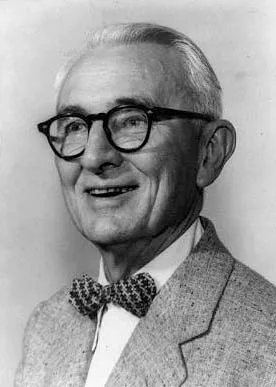
Dale Carnegie, born Dale Breckenridge Carnagey on November 24, 1888, in Maryville, Missouri, is widely regarded as a pioneer in the field of self-improvement, public speaking, and interpersonal skills. His influence continues to resonate through the generations, thanks to his groundbreaking books and the enduring legacy of his courses. Carnegie’s work, especially his seminal book “How to Win Friends and Influence People,” has had a profound impact on personal development, making him a household name worldwide.
Early Life and Education
Dale Carnegie was born into a modest farming family in Maryville, Missouri. As the second son of James William Carnagey and Amanda Elisabeth Harbison, Dale’s early life was shaped by the challenges of rural poverty. Despite these hardships, his parents instilled in him a strong work ethic and a deep appreciation for education. This foundation would later play a crucial role in his success.
Carnegie attended the State Teacher’s College in Warrensburg, Missouri, where he honed his communication skills and developed a passion for public speaking. His ability to engage audiences became evident during his time at college, where he participated in debate teams and won several speaking contests. These early experiences laid the groundwork for his future career as a motivational speaker and author.
The Struggles and Early Career
After graduating from college, Carnegie faced the harsh realities of the job market. He initially took a job selling correspondence courses to ranchers, which provided him with invaluable experience in sales and human interaction. However, Carnegie soon realized that his true passion lay in teaching and inspiring others.
In pursuit of his dreams, Carnegie moved to New York City in 1911, a bold move that marked the beginning of his quest to become a writer and speaker. However, his early days in the city were fraught with difficulties. He struggled to find work as an actor, a career he briefly pursued by enrolling in the American Academy of Dramatic Arts. Unfortunately, his acting career never took off, leaving him disillusioned and broke.
It was during this low point that Carnegie’s life took a pivotal turn. Drawing on his experience in sales and public speaking, he convinced the local YMCA in New York to allow him to teach a public speaking course. Carnegie’s first course was a modest success, but it revealed something important: people were eager to learn how to express themselves better and gain confidence in front of an audience.
The Birth of Dale Carnegie Training
In 1912, Dale Carnegie officially launched what would become known as the Dale Carnegie Course, focusing on effective communication and interpersonal skills. The course quickly gained popularity, attracting individuals from all walks of life who were eager to improve their public speaking abilities and boost their self-confidence.
Carnegie’s teaching methods were innovative for the time. He encouraged participants to speak about topics they were passionate about, often asking them to discuss something that made them angry or excited. This approach helped even the most timid individuals overcome their fear of public speaking. Carnegie’s ability to connect with his students and provide practical, actionable advice was the key to his early success.
As his reputation grew, so did his influence. By the mid-1910s, Carnegie was earning a considerable income from his courses, which were now being offered in several cities across the United States. His success as a teacher and speaker laid the foundation for the development of Dale Carnegie Training, a company that continues to operate today in over 85 countries, helping individuals and organizations achieve lasting success through improved communication and leadership skills.
The Breakthrough: “How to Win Friends and Influence People”
The publication of “How to Win Friends and Influence People” in 1936 marked a turning point in Dale Carnegie’s career. The book, which offered practical advice on how to build relationships, influence others, and achieve success in both personal and professional life, became an instant bestseller. It was one of the first books of its kind, and its impact was immediate and far-reaching.
“How to Win Friends and Influence People” was based on the principles Carnegie had been teaching in his courses for years. The book provided readers with a blueprint for success, emphasizing the importance of empathy, active listening, and sincere appreciation in building strong relationships. Carnegie’s philosophy was simple yet powerful: by understanding and respecting the needs and desires of others, one could create mutually beneficial relationships that would lead to personal and professional success.
The book’s success was unprecedented. It went through 17 printings in its first year alone and has since sold over 15 million copies worldwide. It has been translated into dozens of languages, making Carnegie’s wisdom accessible to a global audience. The book’s enduring popularity is a testament to the timelessness of Carnegie’s advice and the universal appeal of his message.
Dale Carnegie’s Legacy in Literature and Training
Following the success of “How to Win Friends and Influence People,” Dale Carnegie continued to write and teach, further solidifying his legacy as a thought leader in personal development. In 1948, he published “How to Stop Worrying and Start Living,” another bestseller that addressed the pervasive issue of stress and anxiety in modern life. The book offered practical strategies for overcoming worry and living a more fulfilling life, further cementing Carnegie’s reputation as a pioneer in self-help literature.
Carnegie’s influence extended beyond his books. He was also a prolific public speaker, and his courses on public speaking and human relations were attended by thousands of people, including many who went on to become successful leaders in business and politics. His ability to distill complex ideas into simple, actionable steps made him a highly sought-after speaker and trainer.
The principles that Carnegie taught in his courses and books are still relevant today. Dale Carnegie Training, the company he founded, continues to offer courses in communication, leadership, and personal development. The company’s programs are designed to help individuals and organizations achieve lasting success by improving their interpersonal skills and fostering a positive, collaborative work environment.
The Influence of a Name: From Carnagey to Carnegie
A crucial, albeit often overlooked, aspect of Dale Carnegie’s success was his decision to change his surname from Carnagey to Carnegie. This change was more than a mere alteration of spelling; it was a strategic move that aligned him with the well-known industrialist and philanthropist Andrew Carnegie. During the early 20th century, the name Carnegie was synonymous with success, wealth, and influence. By adopting this name, Dale Carnegie tapped into that association, which helped him gain credibility and attract attention.
This decision also led to one of the most iconic moments in Carnegie’s career: his ability to rent the prestigious Carnegie Hall for his lectures. This venue, named after Andrew Carnegie, provided Dale Carnegie with a platform that not only boosted his visibility but also reinforced the connection to a name already synonymous with success and excellence.
Challenges and Personal Life
Dale Carnegie’s journey was not without its challenges. His first marriage to Lolita Baucaire ended in divorce in 1931, a personal setback that could have derailed his career. However, Carnegie remained focused on his work, continuing to write and teach even as he dealt with personal difficulties.
In 1944, Carnegie remarried, this time to Dorothy Price Vanderpool, a woman who shared his passion for personal development and teaching. The couple had one daughter, Donna Dale, who, along with Rosemary, Carnegie’s daughter from his first marriage, became an important part of his life.
Despite his success, Carnegie remained humble and dedicated to his mission of helping others. He continued to teach and write until his death on November 1, 1955, at the age of 66. His passing was a significant loss to the world of personal development, but his legacy has endured, thanks in large part to the continued success of his books and the ongoing work of Dale Carnegie Training.
The Enduring Impact of Dale Carnegie
Dale Carnegie’s influence extends far beyond the realm of public speaking and personal development. His work has had a profound impact on the way we think about communication, leadership, and interpersonal relationships. The principles he taught are now considered foundational to success in both personal and professional life.
Carnegie’s approach to communication and leadership was revolutionary because it emphasized the importance of empathy, understanding, and respect in building relationships. He believed that true leadership was not about power or authority but about inspiring others and creating an environment where everyone could succeed. This philosophy has been embraced by leaders in business, politics, and education, making Carnegie’s teachings as relevant today as they were in the early 20th century.
Conclusion
Dale Carnegie’s life and work have left an indelible mark on the world. From his humble beginnings in rural Missouri to his rise as one of the most influential figures in personal development, Carnegie’s journey is a testament to the power of perseverance, passion, and the desire to help others succeed. His books, particularly “How to Win Friends and Influence People,” continue to be read and studied by millions, while his training programs help individuals and organizations achieve their full potential.
As we reflect on Carnegie’s legacy, it is clear that his teachings are not just about achieving success in the traditional sense, but about living a life of purpose, integrity, and connection. His work reminds us that the true measure of success is not just what we achieve, but how we make others feel and how we help them achieve their own goals.


