
Introduction
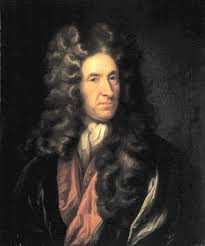
Daniel Defoe, born on April 3, 1660, in London, England, is widely recognized as one of the most important figures in English literature and the father of the modern novel. His most famous work, “Robinson Crusoe,” has become a staple of literary history, influencing generations of writers and readers alike. However, Defoe’s life was far from the typical path of a literary icon. A man of many talents and interests, he was not only a writer but also a merchant, political activist, and journalist. Defoe’s life was marked by dramatic ups and downs, from significant financial success to bankruptcy and imprisonment, and his works reflect the complexity and richness of his experiences.
Early Life and Education
Daniel Defoe was born into a family of dissenters, a religious minority in England that opposed the Church of England’s authority. His father, James Foe, was a prosperous London merchant, and the young Daniel was educated at a dissenters’ academy, where he was trained in a variety of subjects, including classical languages, history, geography, and theology. The dissenting background of his family played a crucial role in shaping Defoe’s worldview, particularly his advocacy for religious tolerance and freedom of conscience, themes that would later permeate his writings.
Defoe’s early ambitions were far removed from the literary world. He initially intended to become a Presbyterian minister, but he soon abandoned this plan in favor of a career in commerce. By the age of 19, Defoe was already involved in various business ventures, including the importation of goods from mainland Europe. His business acumen, however, did not always lead to success, and his ventures were often marred by financial difficulties and failures.
Political Involvement and the Glorious Revolution
Defoe’s political engagement began in earnest during the late 17th century, a period of significant turmoil and change in England. The Glorious Revolution of 1688, which saw the overthrow of King James II in favor of William of Orange, was a pivotal moment in Defoe’s life. As a staunch supporter of William III, Defoe actively participated in the political and military struggles of the time. He even took part in the Monmouth Rebellion of 1685, a failed attempt to overthrow James II, which led to his brief imprisonment.
Defoe’s political writings from this period reflect his strong commitment to the principles of religious freedom, limited government, and individual rights. One of his most famous early works, “The True-Born Englishman” (1701), was a satirical poem defending William III against his critics, who attacked the king for being of foreign birth. The poem was a huge success and established Defoe as a prominent political commentator.
Financial Troubles and Imprisonment
Despite his literary success, Defoe’s business ventures continued to falter, leading to his financial ruin. In 1692, he was declared bankrupt with debts amounting to over £17,000—a colossal sum at the time. This financial disaster landed him in prison, but Defoe managed to secure his release by working as a government agent and informer, a role he would continue to play throughout his life.
Defoe’s time in prison had a profound impact on him, both personally and professionally. It was during this period that he began to focus more seriously on his writing. His experiences as a debtor and prisoner would later inform some of his most famous works, including “Moll Flanders” and “Roxana,” both of which explore themes of crime, punishment, and redemption.
Literary Career and the Birth of the Modern Novel
It wasn’t until Defoe was nearly 60 years old that he achieved lasting fame as a writer. His first major novel, “Robinson Crusoe,” was published in 1719 and became an instant success. The story of a shipwrecked sailor who survives on a deserted island for 28 years, “Robinson Crusoe” is often regarded as the first English novel. The novel’s realistic portrayal of Crusoe’s struggles and triumphs captivated readers and set the stage for the development of the modern novel.
“Robinson Crusoe” is not just an adventure story; it is also a profound exploration of human resilience, survival, and self-reliance. The novel reflects Defoe’s deep interest in individualism and the human capacity to overcome adversity, themes that resonated with the emerging middle class of the time. The book’s popularity was unprecedented, and it was soon followed by a sequel, “The Farther Adventures of Robinson Crusoe,” published in 1719.
Following the success of “Robinson Crusoe,” Defoe continued to write prolifically. His subsequent novels, including “Moll Flanders” (1722), “A Journal of the Plague Year” (1722), and “Roxana” (1724), further established him as a master storyteller. These works are notable for their vivid descriptions of London life, their exploration of social issues, and their complex, often morally ambiguous characters.
The Social and Political Context of Defoe’s Work
Defoe’s writing must be understood within the broader social and political context of early 18th-century England. This was a time of significant change, as the country was transitioning from a feudal society to a modern, commercial economy. The rise of the middle class, the expansion of trade and empire, and the development of new forms of government and social organization all influenced Defoe’s work.
Many of Defoe’s novels reflect the concerns and anxieties of this emerging middle class. For example, “Moll Flanders” tells the story of a woman who rises from poverty to wealth through a combination of cunning, crime, and luck. The novel explores themes of social mobility, economic survival, and the moral complexities of pursuing wealth in a rapidly changing society.
Similarly, “A Journal of the Plague Year” provides a detailed and harrowing account of the Great Plague of London in 1665. Although the novel is presented as a factual account, it is actually a work of fiction based on historical records and Defoe’s own imagination. The book’s meticulous attention to detail and its focus on the human experience of catastrophe make it a pioneering work of historical fiction.
Defoe’s Legacy and Contribution to Literature
Daniel Defoe’s contribution to English literature cannot be overstated. He is often credited with inventing the modern novel, a form that would dominate literary production in the centuries to come. Defoe’s novels are characterized by their realism, their focus on individual experience, and their engagement with contemporary social and political issues.
One of Defoe’s most significant contributions to literature is his use of the first-person narrative, which allows readers to enter the minds and experiences of his characters. This technique creates a sense of immediacy and intimacy that was revolutionary at the time and has since become a standard feature of the novel form.
Defoe’s work also reflects his deep interest in the human condition and the complexities of moral decision-making. His characters are often placed in difficult situations that force them to make choices with profound ethical implications. Whether it is Robinson Crusoe’s struggle to survive on a deserted island or Moll Flanders’ efforts to escape poverty, Defoe’s novels are filled with characters who must navigate the challenges of life in a rapidly changing world.
Defoe’s Later Years and Final Works
In the final years of his life, Defoe continued to write, although his output slowed as he faced increasing financial difficulties and declining health. He published several more works, including “The History of the Remarkable Life of John Sheppard” (1724), a biography of the notorious criminal, and “The Fortunate Mistress” (1724), also known as “Roxana.”
“Roxana” is one of Defoe’s most complex and intriguing novels. It tells the story of a woman who rises to wealth and social prominence through a series of morally ambiguous choices, including becoming the mistress of several powerful men. The novel explores themes of power, gender, and morality, and its ambiguous ending leaves readers questioning the true cost of Roxana’s success.
Defoe’s final years were marked by personal and financial difficulties. He was often in debt and struggled to support his large family. Despite these challenges, he remained committed to his writing, and his work continued to reflect his keen observations of society and human nature.
Daniel Defoe died on April 24, 1731, in London. He was 71 years old. At the time of his death, he was largely forgotten by the literary world, and he died in relative obscurity. However, his legacy would endure, and today he is celebrated as one of the founding fathers of the English novel.
Historical Context and Lasting Influence
Defoe’s work must be understood in the context of the early 18th century, a period of significant social, economic, and political change in England. The country was transitioning from a feudal society to a modern, capitalist economy, and the rise of the middle class created new opportunities and challenges. Defoe’s novels reflect these changes, exploring themes of social mobility, economic survival, and the moral complexities of pursuing wealth in a rapidly changing world.
Defoe’s influence on literature is profound and far-reaching. His pioneering use of realism, his focus on individual experience, and his engagement with contemporary social issues set the stage for the development of the modern novel. Writers such as Henry Fielding, Samuel Richardson, and later Charles Dickens would build on Defoe’s innovations, creating a rich tradition of English novel writing that continues to this day.
Conclusion
Daniel Defoe’s life and work represent a significant turning point in the history of English literature. As one of the earliest practitioners of the novel form, Defoe helped to shape the course of literary history, creating works that continue to captivate and inspire readers around the world. Despite the many challenges he faced, including financial ruin, imprisonment, and personal hardship, Defoe remained committed to his craft, producing a body of work that is both entertaining and thought-provoking.
Today, Defoe is remembered as a pioneer of the modern novel, a master storyteller, and a keen observer of the human condition. His works, including “Robinson Crusoe,” “Moll Flanders,” and “A Journal of the Plague Year,” remain essential reading for anyone interested in the history of literature and the development of the novel. Daniel Defoe’s legacy is secure, and his contributions to the world of letters will continue to be celebrated for generations to come.


