
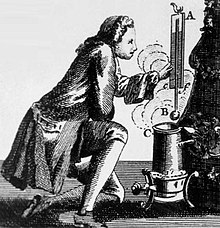
Daniel Gabriel Fahrenheit, born on May 23, 1686, in Gdańsk (then part of Poland), is a name that resonates profoundly in the realms of physics and thermometry. Best known for developing the Fahrenheit temperature scale, he was a pioneering physicist and instrument maker whose contributions have had a lasting impact on scientific measurement and understanding of temperature. This article explores the life, career, and legacy of Daniel Gabriel Fahrenheit, shedding light on how his work continues to influence the scientific world.
Early Life and Education
Daniel Gabriel Fahrenheit was born into a merchant family in Gdańsk, a city known for its rich trading history and vibrant intellectual culture. From a young age, Fahrenheit demonstrated a keen interest in science and technology, which was encouraged by the intellectually stimulating environment of his upbringing. Tragedy struck early in his life when both of his parents died in 1701, prompting him to leave Gdańsk and travel across Europe.
During his travels, Fahrenheit lived in several countries, including England, Germany, and the Netherlands. His time in these countries exposed him to various scientific communities and ideas, significantly shaping his understanding of physics and instrumentation. His travels also allowed him to develop skills in glassblowing—a craft that would prove essential in his later work with thermometers.
The Birth of a Scientific Career
Fahrenheit’s scientific career began to take shape in the early 18th century when he settled in the Netherlands, a hub for scientific innovation at the time. It was here that he delved deeper into the study of physics, particularly in the area of thermometry—the measurement of temperature.
One of his earliest and most significant contributions to science was the development of the alcohol thermometer in 1709. This invention was crucial because it provided a more reliable and consistent method of measuring temperature than the air thermometers commonly used at the time. However, Fahrenheit did not stop there; he continued to refine and improve his designs, driven by a relentless pursuit of accuracy and precision.
In 1714, Fahrenheit made a groundbreaking advancement by creating the first mercury-in-glass thermometer. This was a major improvement over previous thermometers because mercury, unlike alcohol, has a consistent rate of expansion across a wide range of temperatures. This consistency made mercury thermometers more accurate and reliable, setting a new standard in the field of thermometry.
The Fahrenheit Temperature Scale
Daniel Gabriel Fahrenheit’s most enduring legacy is undoubtedly the Fahrenheit temperature scale, which he introduced in 1724. This scale was revolutionary at the time and remains one of the most widely recognized temperature scales today, particularly in the United States.
The Fahrenheit scale is based on two key reference points: the freezing point of water, which he set at 32 degrees Fahrenheit (°F), and the boiling point of water, which he set at 212 degrees Fahrenheit. The interval between these two points is divided into 180 equal parts, or degrees. This choice of scale was innovative because it allowed for a finer granularity of measurement compared to the Celsius scale, which divides the same interval into 100 degrees.
Fahrenheit’s decision to use 32° and 212° as reference points was influenced by a variety of factors, including the desire for a scale that avoided negative numbers for most everyday temperatures and the practical consideration of creating a scale that could be easily reproduced with the technology available at the time.
While the Celsius scale, introduced later by Anders Celsius, has become the standard in most of the world, the Fahrenheit scale remains in common use in the United States, particularly in weather forecasting, cooking, and industrial applications.
Membership in the Royal Society
Fahrenheit’s contributions to science did not go unnoticed. In 1724, the same year he introduced his temperature scale, he was elected a Fellow of the Royal Society, one of the most prestigious scientific institutions in the world. This honor was a testament to the significance of his work and his reputation as a leading figure in the field of thermometry.
Membership in the Royal Society was not only a recognition of Fahrenheit’s past achievements but also an opportunity for him to engage with other leading scientists of his time. The society provided a platform for him to share his ideas, collaborate with others, and further refine his inventions. It was during this period that Fahrenheit solidified his legacy as one of the foremost instrument makers of the 18th century.
Later Years and Continued Innovation
After being recognized by the Royal Society, Fahrenheit continued to innovate and contribute to the field of scientific instrumentation. One of his lesser-known but significant inventions was a type of hydrometer, an instrument used to measure the density or specific gravity of liquids. This invention, like his thermometers, demonstrated Fahrenheit’s deep understanding of both theoretical and practical aspects of physics.
Throughout his career, Fahrenheit remained dedicated to improving the accuracy and reliability of scientific instruments. His work was characterized by a meticulous attention to detail and a commitment to advancing the field of experimental physics. These qualities not only defined his own career but also influenced the development of scientific methodology in the 18th century.
Legacy and Impact
Daniel Gabriel Fahrenheit passed away on September 16, 1736, in The Hague, Netherlands, at the age of 50. Although he died relatively young, his impact on the scientific community was profound and lasting. His innovations in thermometry and the development of the Fahrenheit scale left an indelible mark on the field of physics and on the way temperature is measured and understood.
Fahrenheit’s legacy is evident not only in the continued use of the Fahrenheit temperature scale in the United States but also in the standards of precision and accuracy he established in scientific instrumentation. His work laid the foundation for future developments in thermometry and set a high bar for instrument makers who followed in his footsteps.
The Fahrenheit scale, while no longer the global standard, remains a key part of American life, influencing how temperatures are communicated and understood in everyday contexts. Moreover, Fahrenheit’s approach to scientific experimentation and instrument design continues to inspire scientists and engineers, underscoring the importance of precision and reliability in scientific research.
Historical Context and the Evolution of Thermometry
To fully appreciate Fahrenheit’s contributions, it is important to understand the historical context in which he worked. The early 18th century was a period of significant scientific discovery and innovation, often referred to as the Age of Enlightenment. During this time, there was a growing emphasis on empirical evidence, experimentation, and the development of new technologies to better understand the natural world.
Thermometry, in particular, was a field ripe for innovation. Prior to Fahrenheit’s work, temperature measurement was imprecise, relying on rudimentary tools that were often inconsistent and difficult to calibrate. The invention of the mercury-in-glass thermometer by Fahrenheit represented a major leap forward, providing a tool that was not only more accurate but also more practical for a wide range of applications.
The development of the Fahrenheit scale also reflected the broader intellectual currents of the Enlightenment. Fahrenheit’s approach to creating a temperature scale was methodical and based on empirical observation, aligning with the era’s emphasis on rational thought and scientific inquiry. His work was part of a larger movement to standardize measurements, which was crucial for the advancement of science and industry.
The Continued Relevance of Fahrenheit’s Work
Today, Daniel Gabriel Fahrenheit’s contributions continue to be relevant, particularly in discussions about the different temperature scales used around the world. While the Celsius scale has become the global standard, the Fahrenheit scale is still widely used in the United States and in certain industries, such as engineering and medicine, where its finer granularity can be advantageous.
Moreover, Fahrenheit’s work serves as a reminder of the importance of precision in scientific measurement. In an era where technology has advanced to the point of measuring temperatures to fractions of a degree, the principles established by Fahrenheit remain foundational. His insistence on accuracy, reliability, and consistency in measurement is a legacy that endures in the scientific community.
Fahrenheit’s story also highlights the interconnectedness of scientific progress. His work was built on the discoveries of those who came before him, and in turn, it paved the way for future innovations in thermometry and other fields. His ability to combine theoretical knowledge with practical skill exemplifies the best of scientific inquiry.
Conclusion
Daniel Gabriel Fahrenheit’s life and work are a testament to the power of innovation and the impact that one individual can have on the course of scientific history. From his early days as a glassblower to his later achievements as a physicist and instrument maker, Fahrenheit’s contributions have left an enduring legacy that continues to shape the way we understand and measure temperature.
His development of the mercury thermometer and the Fahrenheit scale were groundbreaking achievements that set new standards for accuracy and precision in scientific measurement. These innovations not only advanced the field of thermometry but also contributed to the broader scientific revolution of the 18th century.
As we continue to rely on the principles and tools that Fahrenheit helped to establish, his work remains a critical part of our scientific heritage. His dedication to precision and his willingness to push the boundaries of what was possible serve as an inspiration to scientists and innovators today.


