
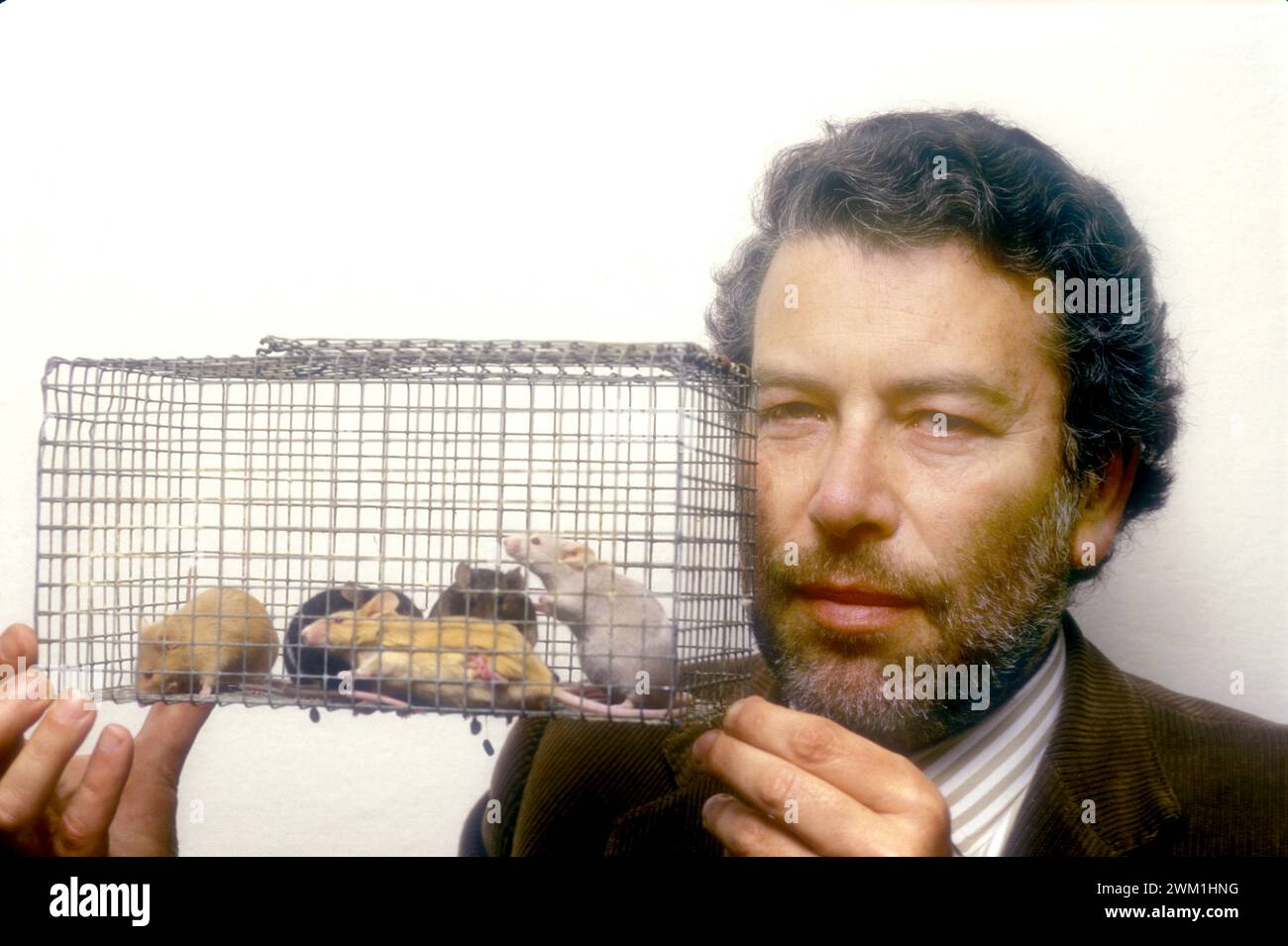
Danilo Mainardi was a prominent Italian ethologist, scientist, and environmental advocate, born on November 25, 1933, in Milan, Italy. He was a figure of great influence in the fields of behavioral ecology and ethology, known for his significant contributions to the scientific community and his efforts to promote environmental education and awareness. His life and work offer a compelling narrative of intellectual rigor, environmental activism, and a profound commitment to the study of animal behavior.
Early Life and Academic Background
Danilo Mainardi was born into a culturally rich family. His father, Enzo Mainardi, was a poet and futurist painter, which undoubtedly influenced Danilo’s own intellectual development. This cultural upbringing in Milan, a city known for its historical and artistic significance, provided Danilo with a unique perspective that he later applied to his scientific endeavors.
Mainardi pursued his academic career with diligence and passion. He became a professor of Behavioral Ecology at the prestigious University Ca’ Foscari of Venice. However, his academic journey began earlier when he secured a professorship in 1967, marking the start of his extensive career in education. Initially, he taught Zoology and later transitioned to General Biology and Ethology at the University of Parma, where he served until 1992. His role wasn’t just confined to teaching; Mainardi also held significant administrative positions, such as the director of the Institute of Zoology and the Department of General Biology and Physiology at the University of Parma. His influence extended to the University Ca’ Foscari, where he directed the Department of Environmental Sciences.
Contributions to Ethology and Behavioral Ecology
Danilo Mainardi’s scientific contributions are vast and varied, with over 200 publications to his name. His research primarily focused on eco-ethology, the study of animal behavior in relation to ecological processes. This field is crucial for understanding the complex interactions between animals and their environments, particularly in the context of human impact on nature.
One of Mainardi’s significant research areas was the study of the social behavior of animals, particularly the interactions between parents and offspring. He explored the roles of maternal and paternal figures, alloparental care (care provided by individuals other than the parents), and the phenomenon of infanticide. His work on imprinting—the process by which young animals form attachments and develop preferences—was groundbreaking, particularly in understanding the ontogeny of social and sexual preferences and feeding behaviors.
Mainardi’s studies also delved into the communication systems of animals, especially the signals used by infants, the importance of play and exploration, and the cultural transmission of behaviors. His work provided critical insights into how sociality and isolation affect the development of aggressive behavior in animals.
Leadership and Influence in the Scientific Community
Beyond his research, Danilo Mainardi was a pivotal figure in the broader scientific community. He was the director of the International School of Ethology at the Ettore Majorana Center for Scientific Culture in Erice from 1973. Here, he organized numerous courses and workshops on various topics, including the foundations of ethology, neuropsychology, human and animal behavior, and the effects of environmental changes on animal behavior. The content of these workshops was often published by prestigious publishers, further disseminating Mainardi’s work to a global audience.
Mainardi held leadership roles in several scientific societies. He was the president of the International Ethological Society and the Italian Society of Ethology. His editorial work included serving as the director of the Italian Journal of Zoology, the official publication of the Italian Zoological Union. Mainardi’s leadership was not limited to national boundaries; he chaired international conferences, including the XIV International Ethological Conference in 1975 and a significant conference on aggression organized by the International Society for Research on Aggression in 1985.
Advocacy and Public Engagement
Danilo Mainardi’s influence extended beyond academia into the realm of public education and environmental advocacy. He was a passionate advocate for environmental protection and education, emphasizing the importance of understanding the human impact on nature. His role as the national president of the Italian League for the Protection of Birds (LIPU) is a testament to his commitment to wildlife conservation.
Mainardi was also a prolific science communicator, contributing to the popularization of scientific knowledge through various media. He was a familiar face on Italian television, known for his appearances on programs such as “Dalla parte degli animali” and series within the “Quark” broadcast. These shows, aimed at educating the public about animal behavior and environmental issues, made Mainardi a household name in Italy.
His written works also played a significant role in his public engagement efforts. Mainardi authored several books that became popular in Italy, including “Zoo privato,” “Il cane e la volpe,” and “Lo zoo aperto.” These books were recognized with various literary awards and were instrumental in making scientific concepts accessible to a broader audience. His “Dizionario di Etologia” (Dictionary of Ethology) is particularly noteworthy for its comprehensive coverage of key concepts in the field.
Awards and Recognition
Throughout his life, Danilo Mainardi received numerous accolades for his contributions to science and public education. In 1986, he was awarded the Anghiari Prize “A Life for Nature” in recognition of his lifelong dedication to environmental conservation. The following year, he received the Chianciano Prize from the Association of Radio and Television Critics for his excellence in cultural television programming.
Mainardi’s work was also recognized internationally. In 1996, he was awarded the International Blue Elba, and in 1999, he received the Environmental Prize in Milan. These awards reflect the global impact of his work and his status as a leading figure in the field of ethology.
Legacy and Final Years
Danilo Mainardi’s legacy is one of profound intellectual contribution and passionate advocacy for the natural world. His research has laid the groundwork for further studies in ethology and behavioral ecology, and his public engagement efforts have inspired a generation of environmentalists and scientists.
Mainardi continued his work until his final years, publishing several books that explored the minds and behaviors of animals. His later works, such as “Nella mente degli animali” (2006) and “L’acchiappacolombi” (2008), continued to reflect his deep curiosity and understanding of the animal world.
Danilo Mainardi passed away in Venice on March 8, 2017, at the age of 83. His death marked the loss of a towering figure in the scientific community, but his legacy lives on through his extensive body of work and the countless lives he touched through his research, teaching, and advocacy.
Conclusion
Danilo Mainardi’s life was a testament to the power of intellectual curiosity and the importance of understanding the natural world. His contributions to ethology and behavioral ecology have left an indelible mark on the scientific community, while his efforts in public education and environmental advocacy have inspired countless individuals to appreciate and protect the world around them. As we reflect on his life, it becomes clear that Danilo Mainardi was not just a scientist but a passionate advocate for the planet and its inhabitants, whose legacy will continue to influence future generations.


