
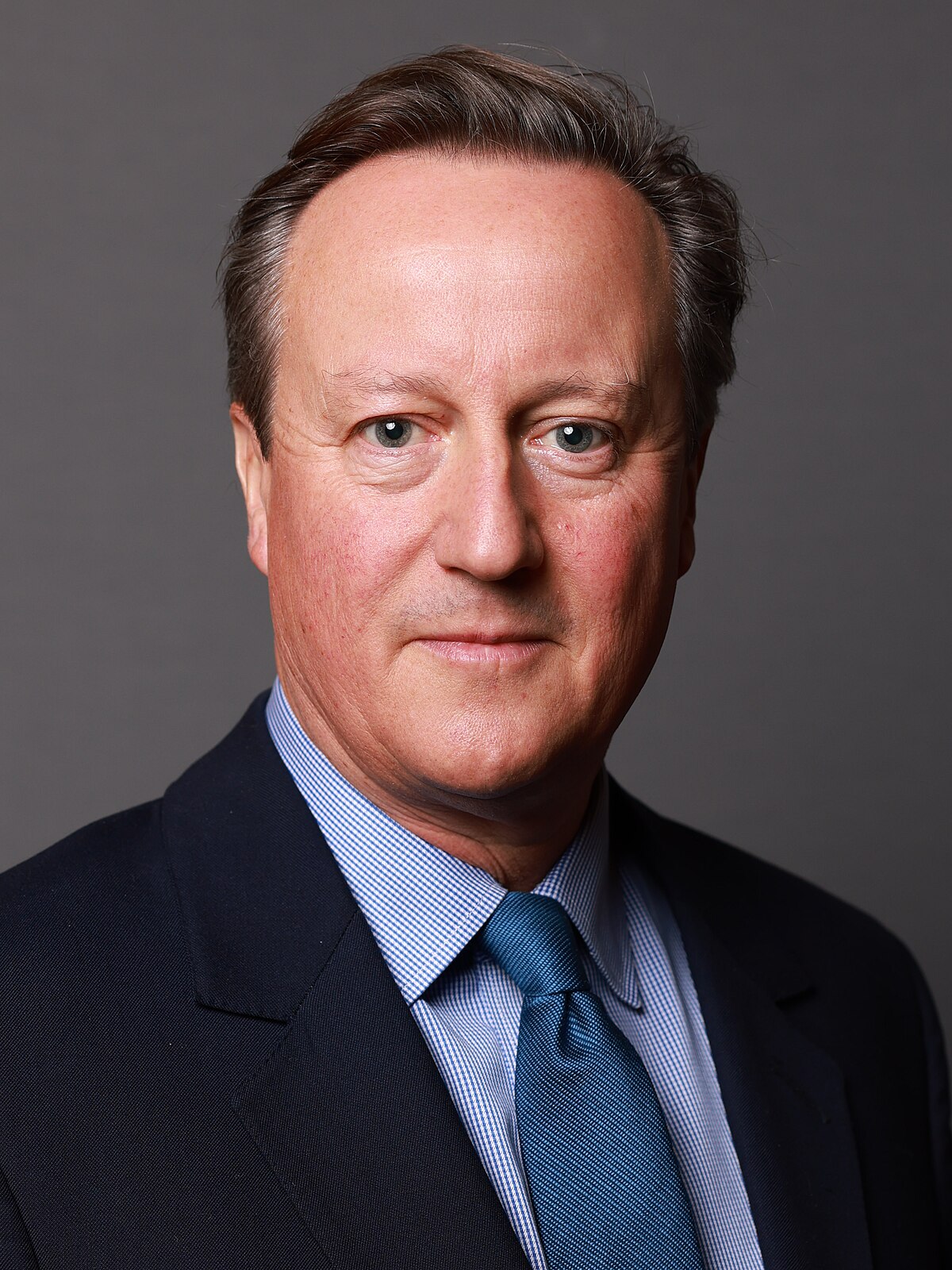
David William Donald Cameron, born October 9, 1966, in London, United Kingdom, stands as a prominent figure in British politics, renowned for his tenure as the Prime Minister of the United Kingdom from May 11, 2010, to July 13, 2016. As a leading voice of the Conservative Party, Cameron’s political career is marked by significant achievements and controversies. This detailed exploration delves into his early life, rise to prominence, and the key milestones of his career.
Early Life and Family Background
David Cameron was born into an affluent family with deep ties to British aristocracy. His father, Ian Donald Cameron, was a successful stockbroker in the City of London and a well-regarded businessman. The Cameron family heritage extends back to a lineage of successful traders, including David’s great-grandfather, who amassed wealth in the grain trade in the United States before returning to Scotland.
David Cameron’s mother, Mary Fleur Mount, was a respected figure in her own right, serving as a justice of the peace and being the daughter of Sir William Mount, 2nd Baronet Mount. This background places Cameron in a context of considerable privilege and influence, although his connection to the British royal family is more indirect. He is said to be a descendant of King William IV of the United Kingdom through his relationship with the actress Dorothea Jordan. However, this connection does not bestow any dynastic claims.
Cameron grew up in Peasemore, Berkshire, alongside his siblings: Alexander, Tania, and Clare. His early education was at Heatherdown and Winkfield, prestigious institutions that laid the foundation for his later academic achievements.
Education and Early Career
David Cameron’s academic journey continued at Eton College, where he distinguished himself academically, particularly in politics, economics, and art. Despite a brief controversy involving a fine for cannabis use during his teenage years, Cameron’s performance at Eton earned him a place at Oxford University.
At Oxford, Cameron studied at Brasenose College under the mentorship of liberal political theorist Vernon Bogdanor. His time at Oxford was marked by both academic excellence and controversial behavior, including membership in the exclusive Bullingdon Club, known for its lavish parties and destructive pranks. Despite these controversies, Cameron graduated with a degree in Philosophy, Politics, and Economics (PPE) in 1988.
Following his graduation, Cameron took a gap year, during which he worked for the Conservative MP Tim Rathbone and gained experience in the House of Commons. He also spent time in Hong Kong working for Jardine Matheson, a company linked to his father’s professional network. His experiences abroad provided valuable insights into global affairs and politics.
Rise in Politics and Early Challenges
After completing his gap year, Cameron began his career in politics. He joined the Conservative Research Department in 1988, where he contributed to policy development. His work was instrumental during the 1992 general election, where the Conservative Party, led by John Major, secured victory.
Cameron’s political career faced a significant challenge when he was involved in controversies within the Conservative Party. His tenure in the Conservative Research Department ended in 1993, and he subsequently worked as Director of Corporate Affairs at Carlton Communications. During this period, he played a key role in developing digital broadcasting in the UK.
Despite his success in the media sector, Cameron’s desire to return to politics was strong. He was drawn back into the political arena with a vision to rejuvenate the Conservative Party, which was perceived as outdated and in need of modernization.
Becoming Prime Minister
David Cameron’s return to politics culminated in his election as leader of the Conservative Party in December 2005, succeeding Michael Howard. His leadership marked a shift towards a more modern and centrist Conservative platform. Under his leadership, the Conservative Party made significant gains, positioning itself as a viable alternative to the Labour Party, led by Tony Blair.
In the 2010 general election, Cameron led the Conservatives to their best result since 1992. However, the party fell short of an outright majority, leading to a coalition government with the Liberal Democrats, headed by Nick Clegg. Cameron became Prime Minister on May 11, 2010, making him the youngest Prime Minister of the UK since Lord Liverpool in 1812.
During his tenure, Cameron focused on various domestic and international issues. His government introduced austerity measures aimed at reducing the budget deficit, which included significant cuts to public spending. These measures were controversial and had mixed reactions from the public and political analysts.
Key Policies and Achievements
One of Cameron’s significant achievements was the implementation of the Big Society initiative, aimed at empowering local communities and reducing reliance on central government. He also oversaw the introduction of same-sex marriage legislation in England and Wales in 2013, a landmark move for LGBTQ+ rights in the UK.
Cameron’s leadership was also marked by his handling of the UK’s relationship with the European Union. In January 2013, he announced plans to renegotiate the UK’s EU membership terms and hold an in-out referendum. This move was aimed at addressing growing concerns about the UK’s place in Europe and appeasing various factions within his party.
The Brexit Referendum and Resignation
The 2016 EU referendum, commonly known as Brexit, was a pivotal moment in Cameron’s career. Despite his strong advocacy for the UK remaining in the EU, the referendum resulted in a 52% vote for leaving the EU. The outcome was a significant political defeat for Cameron and the Conservative Party, which had campaigned for a “Remain” vote.
Following the referendum result, Cameron announced his resignation as Prime Minister, stating that the country required new leadership to navigate the process of leaving the EU. His resignation took effect on July 13, 2016, and he was succeeded by Theresa May, who became the second female Prime Minister of the UK.
Post-Political Life
Since stepping down as Prime Minister, David Cameron has remained active in various capacities. He has taken on roles in the private sector and contributed to public debates on political and economic issues. Cameron has also written a memoir detailing his experiences as Prime Minister and his views on the major challenges he faced during his tenure.
His post-political career has been characterized by his continued influence in political circles and his involvement in charitable activities. Cameron’s contributions to public life and his reflections on his time in office provide valuable insights into the complexities of contemporary British politics.
Legacy and Impact
David Cameron’s legacy is a complex one, marked by significant achievements and contentious policies. His tenure as Prime Minister saw the introduction of important social reforms and efforts to modernize the Conservative Party. However, his handling of the EU referendum and the ensuing Brexit process has been a defining aspect of his legacy.
Cameron’s impact on British politics is evident in his efforts to modernize the Conservative Party and his role in shaping contemporary debates on the UK’s relationship with the EU. His tenure reflects both the challenges and opportunities faced by political leaders in navigating a rapidly changing political landscape.
Conclusion
David Cameron’s journey from an affluent background to becoming one of the most prominent figures in British politics is a testament to his political acumen and determination. His achievements as Prime Minister, alongside the challenges he faced, have left a lasting mark on the political landscape of the United Kingdom. As a key figure in recent British history, Cameron’s career continues to be a subject of significant interest and analysis.


