
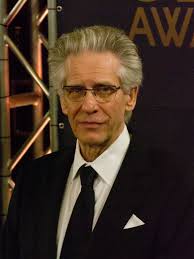
David Cronenberg, born on March 15, 1943, in Toronto, Ontario, Canada, is a legendary filmmaker known for his distinctive style and unsettling explorations of the human body, technology, and the dark recesses of the human psyche. With a career spanning over five decades, Cronenberg has cemented his place in the pantheon of cinema’s most influential directors. His work, often categorized under the genre of “body horror,” delves into themes of transformation, disease, and the merging of human and machine, making him a pioneer in the exploration of these complex themes on the big screen.
Early Life and Influences
David Paul Cronenberg was born into a Jewish family in Toronto. His father, Milton Cronenberg, was a writer and editor, and his mother, Esther Sumberg, was a musician. Growing up in a household that valued creativity and intellectual pursuit, Cronenberg was exposed to literature, art, and music from an early age. This environment undoubtedly shaped his future career as a filmmaker, where he would blend literary influences with a visual storytelling style.
Cronenberg initially pursued a degree in science at the University of Toronto but later switched to English literature. His love for both the sciences and humanities would later manifest in his films, which often explore the intersection between biology and technology, as well as the philosophical implications of these interactions. During his time at university, Cronenberg began experimenting with filmmaking, creating short films that showcased his early fascination with surreal and macabre subjects.
Early Career and Breakthrough
Cronenberg’s early work in the 1960s and 1970s was marked by a series of short films and low-budget features that established him as a unique voice in Canadian cinema. His first significant works, Stereo (1969) and Crimes of the Future (1970), were experimental films that delved into themes of telepathy, mind control, and the mutation of the human body—topics that would become central to his later work.
These early films were influenced by Cronenberg’s interest in science fiction and horror literature, particularly the works of authors like William S. Burroughs and J.G. Ballard. Crimes of the Future explored the idea of a world where the human body undergoes spontaneous mutations, reflecting Cronenberg’s growing fascination with the concept of bodily transformation.
However, it was in the mid-1970s that Cronenberg began to gain international recognition with a series of horror films that would define his career. Shivers (1975), also known as They Came from Within, was a controversial film that introduced many of the themes that would become synonymous with Cronenberg’s work. The film’s exploration of a sexually transmitted parasite that turns its hosts into violent, sex-crazed beings shocked audiences and critics alike, but it also established Cronenberg as a daring and provocative filmmaker.
The Rise of Body Horror
The success of Shivers paved the way for Cronenberg’s further exploration of “body horror,” a subgenre of horror that focuses on the grotesque transformation and degeneration of the human body. In films like Rabid (1977) and The Brood (1979), Cronenberg continued to push the boundaries of horror, combining visceral special effects with psychological depth.
Rabid tells the story of a woman who, after undergoing experimental surgery, develops a taste for human blood and spreads a deadly plague. The film was both a commercial success and a critical stepping stone for Cronenberg, solidifying his reputation as a master of body horror. The Brood, meanwhile, delved into the psychological aspects of body horror, exploring the idea of repressed emotions manifesting physically in the form of monstrous offspring.
Cronenberg’s work during this period was notable for its use of practical effects to create disturbingly realistic portrayals of bodily transformation. This emphasis on the physicality of horror, combined with his intellectual approach to the genre, set Cronenberg apart from his contemporaries and earned him a dedicated following.
Mainstream Success and Iconic Films
The 1980s marked a turning point in Cronenberg’s career, as he began to achieve mainstream success while maintaining his unique artistic vision. Scanners (1981) was one of his first films to gain significant attention in the United States, thanks in part to its infamous “head explosion” scene, which remains one of the most iconic moments in horror cinema.
However, it was with Videodrome (1983) and The Fly (1986) that Cronenberg truly cemented his status as a major filmmaker. Videodrome is a surreal and disturbing exploration of the relationship between media, technology, and the human mind. The film follows a television executive who becomes obsessed with a mysterious broadcast signal that seems to cause hallucinations and physical changes in its viewers. Videodrome was ahead of its time in its exploration of themes that are even more relevant today, such as the effects of media consumption on reality and identity.
The Fly, a remake of the 1958 science fiction classic, is perhaps Cronenberg’s most commercially successful film. Starring Jeff Goldblum and Geena Davis, the film tells the story of a scientist who, after a teleportation experiment goes wrong, slowly transforms into a grotesque human-fly hybrid. The Fly was praised for its emotional depth, with Cronenberg using the horror of transformation as a metaphor for disease, aging, and the loss of humanity.
Exploring New Territories
While Cronenberg continued to make films that explored themes of body horror, he also began to branch out into new territories in the 1990s and 2000s. Films like Naked Lunch (1991), based on the novel by William S. Burroughs, and Crash (1996), based on the novel by J.G. Ballard, demonstrated Cronenberg’s ability to adapt challenging literary works while maintaining his distinct directorial voice.
Naked Lunch is a surreal and fragmented narrative that blurs the lines between reality and hallucination, exploring the creative process and the artist’s struggle with addiction. The film’s abstract and non-linear structure made it a difficult film for mainstream audiences, but it was praised by critics for its boldness and Cronenberg’s commitment to bringing Burroughs’ unfilmable novel to the screen.
Crash, on the other hand, was perhaps Cronenberg’s most controversial film. The movie explores the lives of people who become sexually aroused by car crashes, a concept that shocked audiences and led to significant controversy, including being banned in several countries. Despite—or perhaps because of—its provocative subject matter, Crash won the Special Jury Prize at the Cannes Film Festival and has since become a cult classic.
Later Career and Legacy
In the 2000s and 2010s, Cronenberg continued to evolve as a filmmaker, exploring new genres and themes while maintaining the intellectual rigor and visual style that defined his earlier work. A History of Violence (2005) and Eastern Promises (2007) marked a departure from his body horror roots, instead focusing on crime and the nature of violence. Both films were critically acclaimed, with A History of Violence being nominated for two Academy Awards and Eastern Promises earning praise for its unflinching portrayal of the Russian mafia.
Cronenberg’s work during this period also included A Dangerous Method (2011), which explored the relationship between Carl Jung, Sigmund Freud, and their patient Sabina Spielrein, and Cosmopolis (2012), an adaptation of Don DeLillo’s novel about a billionaire’s existential journey across Manhattan. These films showcased Cronenberg’s continued interest in the psychological and philosophical aspects of human existence, even as he moved away from the explicit horror of his earlier work.
In 2014, Cronenberg released Maps to the Stars, a satirical look at Hollywood and the dark side of fame. The film, which starred Julianne Moore, Mia Wasikowska, and Robert Pattinson, was well-received and won Moore the Best Actress award at the Cannes Film Festival. Maps to the Stars was a fitting exploration of the themes of identity, transformation, and the human condition that had defined Cronenberg’s career.
Conclusion: The Legacy of David Cronenberg
David Cronenberg’s legacy as a filmmaker is marked by his fearless exploration of the human body, mind, and soul. His films have consistently pushed the boundaries of what is acceptable in cinema, challenging audiences to confront their deepest fears and desires. Whether through the visceral horror of The Fly or the cerebral complexities of Cosmopolis, Cronenberg has remained a singular voice in the world of cinema.
Cronenberg’s influence can be seen in the work of countless filmmakers who have followed in his footsteps, and his films continue to be studied and revered by cinephiles and academics alike. As a director who has never shied away from controversial or challenging material, Cronenberg has left an indelible mark on the landscape of modern cinema.
At the Venice Film Festival in 2019, Cronenberg hinted at the possibility of stepping away from filmmaking, expressing concerns about the future of cinema in an era dominated by digital platforms. Regardless of whether he continues to make films, Cronenberg’s body of work stands as a testament to his genius and his uncompromising vision.
David Cronenberg is not just a filmmaker; he is a cinematic philosopher, a master of the macabre, and a pioneer of body horror. His films are a journey into the unknown, a dive into the dark recesses of the human condition, and a challenge to the very nature of reality.


