
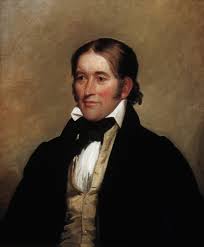
Davy Crockett, often referred to as the “King of the Wild Frontier,” is one of the most iconic figures in American history. Born on August 17, 1786, in Limestone, Tennessee, Crockett’s life was marked by his exploits as a frontiersman, soldier, and politician. His story has been immortalized in folklore, literature, and film, making him a symbol of American independence and rugged individualism. This article delves deep into the life of Davy Crockett, exploring his age, rise to fame, and the key highlights of his life that continue to resonate in American culture.
Early Life and Struggles
Davy Crockett was born into a family that struggled with severe economic hardships. His parents, having lost their home and possessions due to a flood, were left in a precarious financial situation. Davy’s father, who ran a tavern, was strict and demanding, often treating young Davy harshly. This tough upbringing, however, prepared Crockett for the challenges he would face later in life.
At the age of 12, Crockett ran away from home to escape his father’s harsh discipline. He worked as a cattle driver and laborer, traveling across different states. Despite having little formal education, Crockett learned to read and write as a young adult, a skill that would later prove crucial in his political career.
Crockett’s early years were defined by his love for hunting and the wilderness. He became an expert marksman and hunter, skills that earned him a reputation throughout Tennessee. His exploits as a hunter, particularly his success in hunting bears, would later contribute to his legendary status as a frontiersman.
Military Service and Political Beginnings
In 1813, at the age of 27, Davy Crockett joined the Tennessee militia to fight against the Creek Indians during the Creek War, a conflict that was part of the larger struggle known as the War of 1812. Under the command of General Andrew Jackson, Crockett served as a scout and participated in several key battles, including the Battle of Tallushatchee. His bravery and resourcefulness during the war earned him recognition and respect from his peers.
After the war, Crockett returned to Tennessee, where he began his political career. He was elected as a justice of the peace and later served as a colonel in the local militia. Crockett’s popularity among the people grew, and in 1821, he was elected to the Tennessee State Legislature. His time in the legislature was marked by his advocacy for the rights of squatters and poor settlers, a stance that endeared him to the common folk but put him at odds with the political elite.
In 1827, Crockett was elected to the U.S. House of Representatives, where he served as a congressman for three terms. During his time in Congress, Crockett was known for his plainspoken manner and his opposition to President Andrew Jackson’s policies, particularly the Indian Removal Act, which forced Native American tribes from their ancestral lands. Crockett’s stance against the act was a rare and courageous position at the time, reflecting his sense of justice and fairness.
Fame and Folklore
Davy Crockett’s fame as a frontiersman and politician grew rapidly during the 1830s. He became a folk hero, thanks in part to the publication of his autobiography, “A Narrative of the Life of David Crockett,” in 1834. The book, written in a conversational style, captured the imagination of the American public and solidified Crockett’s status as a national figure.
Crockett’s life and exploits were further popularized by stage plays, almanacs, and later, by Hollywood films and television shows. He was often depicted wearing a coonskin cap, a symbol that became synonymous with his image, although historical records suggest that Crockett never actually wore such a cap. The embellishments of his life story in popular culture contributed to the creation of the larger-than-life persona that persists to this day.
One of the most famous quotes attributed to Crockett is, “Be sure you are right, then go ahead,” which encapsulates his philosophy of life and his approach to leadership. This quote, along with others, became part of the American lexicon, further cementing Crockett’s place in history.
The Alamo and Final Stand
Despite his fame, Crockett’s political career faced challenges. After losing his seat in Congress in 1835, he famously declared, “You may all go to hell, and I will go to Texas,” expressing his frustration with the political establishment. True to his word, Crockett left Tennessee and headed to Texas, which was then fighting for independence from Mexico.
Crockett joined the Texian forces and became part of the small garrison stationed at the Alamo, a mission-turned-fortress in San Antonio. The Battle of the Alamo, which took place in March 1836, was a pivotal event in the Texas Revolution. The defenders, numbering fewer than 200, faced a much larger Mexican army led by General Antonio López de Santa Anna.
Davy Crockett’s role in the battle has been the subject of much debate and speculation. Some accounts suggest that Crockett fought bravely to the end, while others claim that he was captured and executed by Mexican forces after the battle. Regardless of the specifics, Crockett’s death at the Alamo became a symbol of sacrifice and heroism in the struggle for Texas independence.
The phrase “Remember the Alamo” became a rallying cry for the Texian forces, who eventually defeated Santa Anna’s army and secured Texas’ independence. Crockett’s legacy as a martyr for freedom was thus firmly established, and he was posthumously celebrated as one of the heroes of the Texas Revolution.
Legacy and Cultural Impact
Davy Crockett’s legacy extends far beyond his lifetime. He has been remembered and honored in countless ways, from statues and monuments to schools and towns named after him. His life story has been retold in books, movies, and television shows, ensuring that his name remains a significant part of American folklore.
One of the most famous portrayals of Crockett came in the 1950s, when Walt Disney produced a television series about his life. The show, starring Fess Parker as Crockett, became a cultural phenomenon and introduced the frontiersman to a new generation of Americans. The catchy theme song, “The Ballad of Davy Crockett,” became a hit, and the coonskin cap became a popular item among children.
Crockett’s image as the quintessential American frontiersman has also been used to promote various products and brands, further embedding his persona in popular culture. His story resonates with the American values of independence, bravery, and self-reliance, making him an enduring symbol of the nation’s pioneering spirit.
Historical Context and Nuances
Understanding Davy Crockett’s life and legacy requires a deeper look at the historical context in which he lived. The late 18th and early 19th centuries were a time of westward expansion in the United States, a period marked by conflict, displacement of Native American tribes, and the struggle for control over new territories.
Crockett’s life was shaped by these broader historical forces. As a frontiersman, he embodied the spirit of exploration and the desire for new opportunities that drove many Americans to move westward. However, this expansion often came at the expense of Native American communities, a reality that Crockett himself grappled with, particularly during his time in Congress.
His opposition to the Indian Removal Act, despite its political unpopularity, reflects a complex understanding of the rights and dignity of Native Americans, an issue that remains a contentious part of American history. Crockett’s stance on this issue highlights the contradictions and moral dilemmas faced by those who lived on the frontier.
Moreover, Crockett’s involvement in the Texas Revolution and his death at the Alamo are also significant in understanding the broader context of American expansionism and the fight for independence. The struggle for Texas independence was part of a larger pattern of American settlers seeking to assert their rights and sovereignty in new territories, often in conflict with established governments and indigenous populations.
Conclusion
Davy Crockett’s life is a testament to the enduring appeal of the American frontier myth. His journey from humble beginnings in Tennessee to his death at the Alamo embodies the values of courage, resilience, and a relentless pursuit of freedom. Crockett’s story, while often romanticized, offers valuable insights into the complexities of American history and the ongoing struggle for justice and equality.
As a figure who straddled the line between myth and reality, Crockett continues to captivate the imagination of people around the world. His legacy serves as a reminder of the power of storytelling in shaping our understanding of the past and inspiring future generations to pursue their own frontiers, wherever they may be.


