
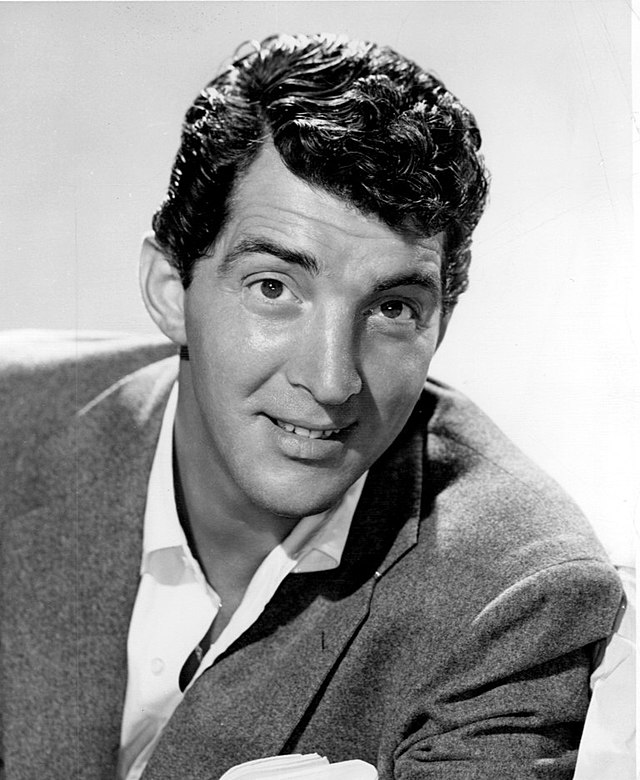
Dean Martin, born Dino Paul Crocetti on June 7, 1917, in Steubenville, Ohio, was an American entertainer whose career spanned more than five decades. Known as the “King of Cool,” Martin was a singer, actor, and comedian who became one of the most beloved figures in American entertainment history. His suave demeanor, smooth voice, and effortless charm made him a cultural icon, and his contributions to music, film, and television continue to resonate with audiences today. This article explores the life of Dean Martin, providing detailed insights into his early years, rise to fame, and the key highlights of his illustrious career.
Early Life and Beginnings
Dean Martin was born to Italian immigrant parents in a small, working-class town in Ohio. His father, Gaetano Crocetti, hailed from Montesilvano, Abruzzo, while his mother, Angela Barra, had roots in Campania. Growing up in a bilingual household, young Dino spoke only Italian until the age of five, which made his early schooling challenging, particularly as he struggled with English spelling and grammar.
Martin’s early life was characterized by a blend of hard work and a rebellious spirit. He left school at 16 and took on a variety of odd jobs, including working as a gas station attendant and as a boxer under the name “Kid Crochett.” Although his boxing career was short-lived and largely unsuccessful—he won only one of his 12 matches—it was during this time that Martin began to realize his true calling was in entertainment.
In the early 1930s, Martin started singing in local nightclubs, honing his craft and developing the smooth, crooning style that would eventually make him famous. He adopted the stage name “Dean Martin,” a more American-sounding moniker that was easier for audiences to remember and pronounce. The name “Martin” was a nod to the Italian tenor Nino Martini, whose success in America inspired many Italian-American performers.
Rise to Fame: The Birth of a Star
Dean Martin’s big break came in the mid-1940s when he teamed up with comedian Jerry Lewis. The duo made their debut as a comedy team on July 25, 1946, at the 500 Club in Atlantic City, New Jersey. Their act, which combined Martin’s smooth singing with Lewis’s slapstick comedy, was an instant hit, and the two quickly became one of the most popular comedy teams in the country.
For the next decade, Martin and Lewis dominated the entertainment industry. They starred in 16 films together, including hits like “My Friend Irma” (1949) and “Hollywood or Bust” (1956), and they were regulars on television with their show “The Colgate Comedy Hour.” Their partnership was wildly successful, but it was also tumultuous. By 1956, personal and professional differences had strained their relationship, and the duo parted ways on July 24, 1956.
Solo Success: Music, Film, and The Rat Pack
Many critics and industry insiders believed that Martin’s career would falter without Lewis, but he quickly proved them wrong. As a solo artist, Martin achieved success in multiple arenas, including music, film, and television.
In the mid-1950s, Martin scored a massive hit with the song “That’s Amore,” a light-hearted ode to Italy that became one of his signature tunes. Written by Harry Warren and Jack Brooks, the song captured Martin’s Italian-American heritage and showcased his smooth, romantic vocal style. The success of “That’s Amore” solidified Martin’s reputation as one of the leading crooners of his generation, alongside contemporaries like Frank Sinatra and Perry Como.
As his music career flourished, Martin also made a successful transition to acting. He surprised critics with his dramatic performances in films like “The Young Lions” (1958), where he starred alongside Marlon Brando and Montgomery Clift, and “Rio Bravo” (1959), where he held his own opposite Hollywood legend John Wayne. These roles demonstrated Martin’s versatility as an actor and helped him shed the image of being just a comedic performer.
During the 1960s, Martin became a central figure in the Rat Pack, a group of entertainers that included Frank Sinatra, Sammy Davis Jr., Peter Lawford, and Joey Bishop. The Rat Pack was known for their suave style, camaraderie, and hedonistic lifestyle, and they became synonymous with the glamour of Las Vegas. Martin’s association with the Rat Pack further enhanced his image as the “King of Cool,” and he starred in several Rat Pack films, including “Ocean’s 11” (1960), “Sergeants 3” (1962), and “Robin and the 7 Hoods” (1964).
In addition to his work with the Rat Pack, Martin continued to enjoy success as a recording artist. He released several hit albums throughout the 1960s, including “Dino: Italian Love Songs” (1962) and “Everybody Loves Somebody” (1964). The latter’s title track became Martin’s biggest hit, reaching number one on the Billboard Hot 100 chart and knocking the Beatles’ “A Hard Day’s Night” off the top spot.
Television Stardom: The Dean Martin Show
In 1965, Dean Martin made a triumphant return to television with “The Dean Martin Show,” a weekly variety show that aired on NBC. The show was a huge success, running for nine years and earning Martin a Golden Globe Award for Best Actor in a Television Series – Musical or Comedy in 1967.
The Dean Martin Show was known for its relaxed, informal style, which reflected Martin’s laid-back persona. The show featured musical performances, comedy sketches, and appearances by some of the biggest stars of the era. Martin’s charm and charisma made him the perfect host, and he became known for his playful, often improvisational banter with guests.
One of the most famous elements of The Dean Martin Show was the “Celebrity Roasts,” where Martin and a panel of comedians would humorously “roast” a guest of honor. These roasts became so popular that they continued as standalone specials after the show ended, cementing Martin’s legacy as a master of comedic timing and delivery.
Personal Life: Marriages and Fatherhood
Dean Martin’s personal life was as colorful as his professional career. He was married three times and had eight children, including his son Dean Paul Martin, who became a pop singer and actor. Martin’s first marriage was to Elizabeth Anne McDonald in 1941, with whom he had four children: Stephen, Claudia, Barbara, and Deana. The couple divorced in 1949.
In 1949, Martin married Jeanne Biegger, a former Orange Bowl queen, with whom he had three children: Dean Paul, Ricci, and Gina. This marriage was the longest of Martin’s life, lasting until 1973. After his divorce from Biegger, Martin married his third wife, Catherine Hawn, in 1973, adopting her daughter, Sasha. However, this marriage was short-lived, and they divorced in 1976.
Despite his public persona as a hard-drinking, womanizing playboy, those who knew Martin well described him as a devoted father and a private, introverted man. He was deeply affected by the tragic death of his son Dean Paul, who died in a plane crash in 1987 at the age of 35. The loss of his son marked a turning point in Martin’s life, and he gradually withdrew from public life in the years that followed.
Later Years and Legacy
In the final years of his life, Dean Martin’s health began to decline due to a combination of heavy smoking, alcohol use, and a series of illnesses. He made his last public appearances in the late 1980s and early 1990s, including a highly publicized reunion tour with Frank Sinatra and Sammy Davis Jr. However, Martin’s heart was not in the tour, and he dropped out after just a few shows.
Dean Martin passed away on December 25, 1995, at the age of 78, from acute respiratory failure caused by emphysema. His death marked the end of an era, but his legacy as one of the greatest entertainers of the 20th century lives on. He was laid to rest in the Westwood Village Memorial Park Cemetery in Los Angeles, California, with the epitaph “Everybody Loves Somebody Sometime” inscribed on his tombstone—a fitting tribute to a man whose voice and charm brought joy to millions.
Martin’s influence on popular culture remains significant. He is remembered as a pioneer of the modern-day crooner and as a trailblazer in the entertainment industry. His recordings continue to be enjoyed by new generations, and his films, particularly his work with the Rat Pack, have become classics.
In recognition of his contributions to the entertainment industry, Martin received numerous accolades during his lifetime, including three stars on the Hollywood Walk of Fame—one each for his work in film, television, and music. He was posthumously awarded the Grammy Lifetime Achievement Award in 2009, further cementing his place in the pantheon of American music legends.
Conclusion: Dean Martin’s Enduring Appeal
Dean Martin’s life was a testament to the power of charisma, talent, and versatility. From his early days as a nightclub singer to his reign as one of Hollywood’s most beloved stars, Martin’s career was marked by success across multiple forms of entertainment. His ability to transition from comedy to drama, from music to film, and from stage to screen made him a true Renaissance man in the world of show business.
Martin’s enduring appeal lies in his unique blend of cool confidence and genuine warmth. He brought a sense of ease and relaxation to his performances that made him relatable to audiences, while his impeccable style and wit set him apart as a true icon of his era. Even today, more than two decades after his death, Dean Martin remains a symbol of timeless charm and effortless cool.
As we look back on the life and career of Dean Martin, it’s clear that his contributions to the entertainment industry were nothing short of monumental. His voice, his style, and his personality continue to captivate and inspire, ensuring that the legacy of the “King of Cool” will endure for generations to come.


