
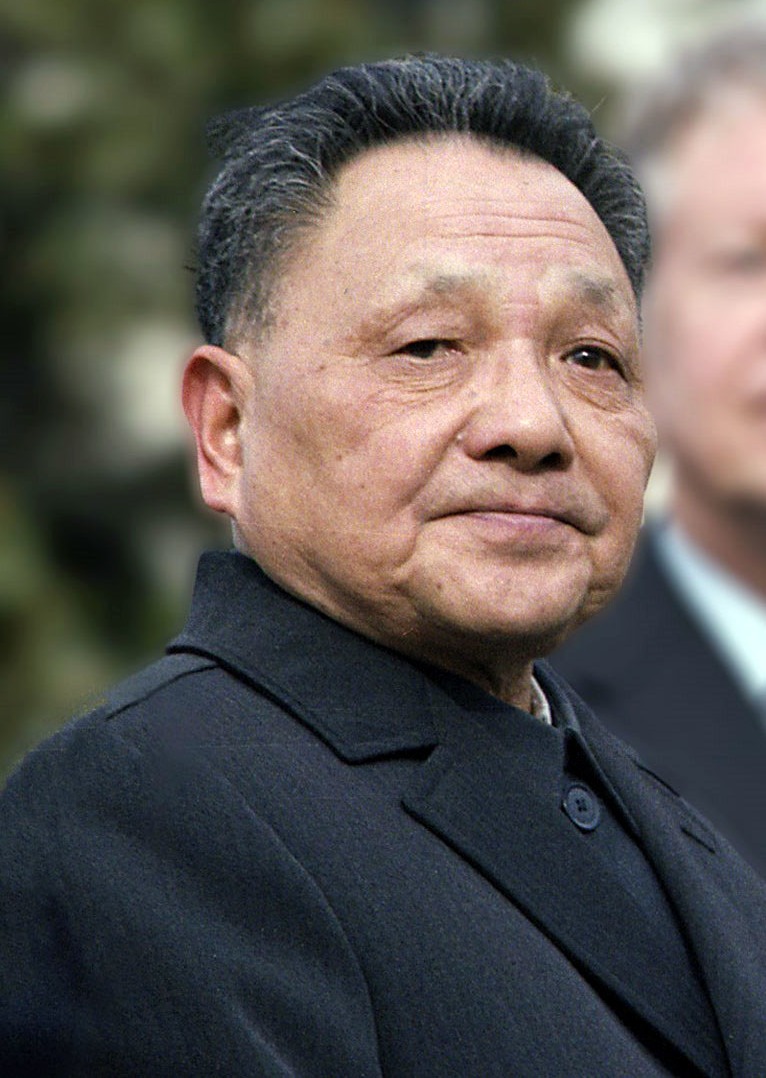
Deng Xiaoping, born Deng Xixian on August 22, 1904, in Paifangcun, Sichuan Province, China, was a paramount Chinese leader who played a pivotal role in transforming China into one of the world’s leading economic powers. As the architect of China’s modern economic reforms, Deng is often credited with introducing the policies that led to the country’s rapid industrialization and integration into the global economy. His leadership marked a significant departure from the policies of his predecessor, Mao Zedong, particularly in terms of economic strategy and openness to the outside world.
Early Life and Education
Deng Xiaoping was born into a family with deep roots in Chinese traditions. His father was a vibrant figure who married four times and had numerous children. Deng was born to Tan Shi Deng, his father’s second wife, in the small village of Xiexing. The family enjoyed a relatively prosperous lifestyle, rooted in the rural economy of the region. Deng’s early education was shaped by his father, who ensured that he received a Confucian education, including private tutoring in calligraphy, a skill Deng cherished throughout his life.
In 1916, at the age of 12, Deng moved to Chongqing, where he studied under a revolutionary mentor who prepared him for a study-abroad program in France. This opportunity came in 1920 when Deng traveled to Paris as part of a work-study program that would prove transformative for his political and ideological development.
Formation of Political Ideals in France
Deng Xiaoping’s time in France was crucial in shaping his political ideology. During his stay, he was exposed to the ideas of Marxism and socialism, joining the Socialist Youth League in 1922 and the Chinese Communist Party (CCP) two years later. His experience in France was not only about learning but also about survival. Deng worked in various menial jobs to support himself while attending classes and engaging in political activities.
In 1926, Deng moved to Moscow to further his studies and immerse himself in the mechanisms of communist governance. This period in Moscow deepened his understanding of Marxist theory and equipped him with the knowledge and skills that would later prove invaluable as he navigated the complex political landscape of China.
Return to China and Early Political Career
Deng returned to China in the late 1920s, at a time when the country was embroiled in civil strife and foreign occupation. He quickly became an active member of the CCP, taking on leadership roles within the party. Deng’s political career saw him participate in key historical events, such as the Long March of 1934-1935, where he served as a political commissar, and the War of Resistance against Japan during World War II.
During the Chinese Civil War, Deng played a significant role in the liberation of Nanjing and the eventual victory of the Communist forces. His early career was marked by his unwavering commitment to the CCP and its goals, which earned him positions of increasing responsibility within the party.
The Rise and Fall during Mao’s Era
By 1956, Deng Xiaoping had risen to the upper echelons of the CCP, becoming the General Secretary of the Central Committee. However, his political ascent was not without challenges. Deng’s pragmatic approach to governance and his willingness to question Mao Zedong’s policies put him at odds with the Chairman, particularly during the Cultural Revolution (1966-1976).
The Cultural Revolution was a period of intense political and social upheaval in China, initiated by Mao to reassert his control over the CCP and the country. Deng, who advocated for economic development over ideological purity, was purged from his positions, labeled as a “capitalist roader,” and subjected to public humiliation. He and his family endured severe persecution during this time, with his son Deng Pufang being thrown from a window by Red Guards, resulting in permanent paralysis.
Despite the hardships, Deng was not completely out of the political picture. By 1973, as the Cultural Revolution began to lose momentum, Deng was rehabilitated and reinstated as Vice Premier of the State Council. His return to power marked the beginning of the end for the Cultural Revolution and the start of a new era for China.
The Architect of Modern China: Economic Reforms
Following Mao’s death in 1976 and the arrest of the Gang of Four, Deng Xiaoping emerged as the de facto leader of China, despite never holding the official title of head of state or government. His leadership was characterized by a pragmatic approach to economic development, famously encapsulated in his saying, “It doesn’t matter whether a cat is black or white, as long as it catches mice.” This metaphor highlighted Deng’s belief that practical results, rather than strict ideological adherence, should guide economic policy.
Deng initiated a series of reforms known as the “Open Door Policy,” which aimed to modernize China’s economy by opening it up to foreign investment, introducing market mechanisms, and encouraging private enterprise within a socialist framework. The reforms began with the rural areas, where Deng dismantled the collectivized farming system and allowed farmers to sell surplus produce on the open market. This led to a significant increase in agricultural productivity and set the stage for broader economic liberalization.
In the early 1980s, Deng expanded these reforms to the urban industrial sector. He established Special Economic Zones (SEZs) in coastal regions, which became hubs of foreign investment and economic experimentation. These zones attracted multinational corporations, leading to rapid industrial growth and the development of China’s export-oriented economy.
Deng’s policies resulted in unprecedented economic growth, lifting millions out of poverty and transforming China into one of the world’s largest economies. His vision of “Socialism with Chinese characteristics” allowed for the coexistence of a socialist political structure with a largely capitalist economy, a model that continues to define China today.
Political Challenges and the Tiananmen Square Incident
While Deng Xiaoping’s economic policies were successful, they were not without controversy. His leadership faced significant challenges, particularly concerning political liberalization. Deng was willing to reform the economy but remained staunchly opposed to political pluralism or democratization.
The most significant test of his leadership came in 1989 with the Tiananmen Square protests. Students and intellectuals, inspired by the reforms and increased exposure to Western ideas, began demanding greater political freedoms and an end to corruption. The protests grew into a large-scale movement, culminating in a mass gathering in Tiananmen Square, Beijing.
Deng, viewing the protests as a threat to the stability and unity of the nation, decided to suppress them by force. On June 4, 1989, the Chinese military was ordered to clear the square, resulting in a violent crackdown that left hundreds, possibly thousands, dead. The Tiananmen Square Massacre, as it came to be known, drew international condemnation and remains a highly sensitive topic in China.
Despite the global outcry, Deng maintained that the crackdown was necessary to preserve the CCP’s rule and prevent chaos. He believed that economic development required a stable political environment, even if it meant restricting political freedoms. The events of Tiananmen Square cast a long shadow over Deng’s legacy, highlighting the tension between his economic pragmatism and political authoritarianism.
Legacy and Impact
Deng Xiaoping retired from his official positions in the early 1990s, though he continued to wield significant influence behind the scenes. His later years were marked by declining health, and he gradually withdrew from public life. Deng passed away on February 19, 1997, at the age of 92, leaving behind a legacy that continues to shape China’s trajectory.
Deng’s legacy is a complex one. He is revered as the leader who lifted China out of poverty and set it on the path to becoming a global superpower. His economic reforms transformed China from a closed, agrarian society into a dynamic, industrialized nation integrated into the global economy. The rapid growth and modernization that China experienced under his leadership are often cited as one of the most significant achievements in modern history.
However, Deng’s legacy is also marred by the authoritarian measures he employed to maintain political control. The suppression of political dissent, exemplified by the Tiananmen Square Massacre, remains a controversial aspect of his rule. Critics argue that while Deng’s economic policies were successful, they came at the cost of political freedoms and human rights.
In the years following his death, China has continued to follow the path of economic reform and opening up that Deng set in motion. His approach to governance—balancing economic liberalization with political control—has become a defining feature of China’s political system. The “Deng Xiaoping Theory” is enshrined in the Chinese Constitution, reflecting his enduring influence on the country’s political and economic landscape.
Conclusion
Deng Xiaoping was a leader of immense significance, whose policies reshaped China and had a profound impact on the world. His vision of “Socialism with Chinese characteristics” allowed China to achieve unprecedented economic growth while maintaining the Communist Party’s grip on power. Deng’s legacy is one of both great achievement and deep controversy, reflecting the complexities of leading a nation through a period of transformative change.
As China continues to navigate the challenges of the 21st century, Deng Xiaoping’s influence remains a guiding force. His ideas on economic reform, governance, and the role of the state in society continue to inform China’s policies and its position on the global stage. Deng’s life and leadership offer valuable lessons on the power of pragmatism, the importance of stability, and the delicate balance between economic development and political control.


