
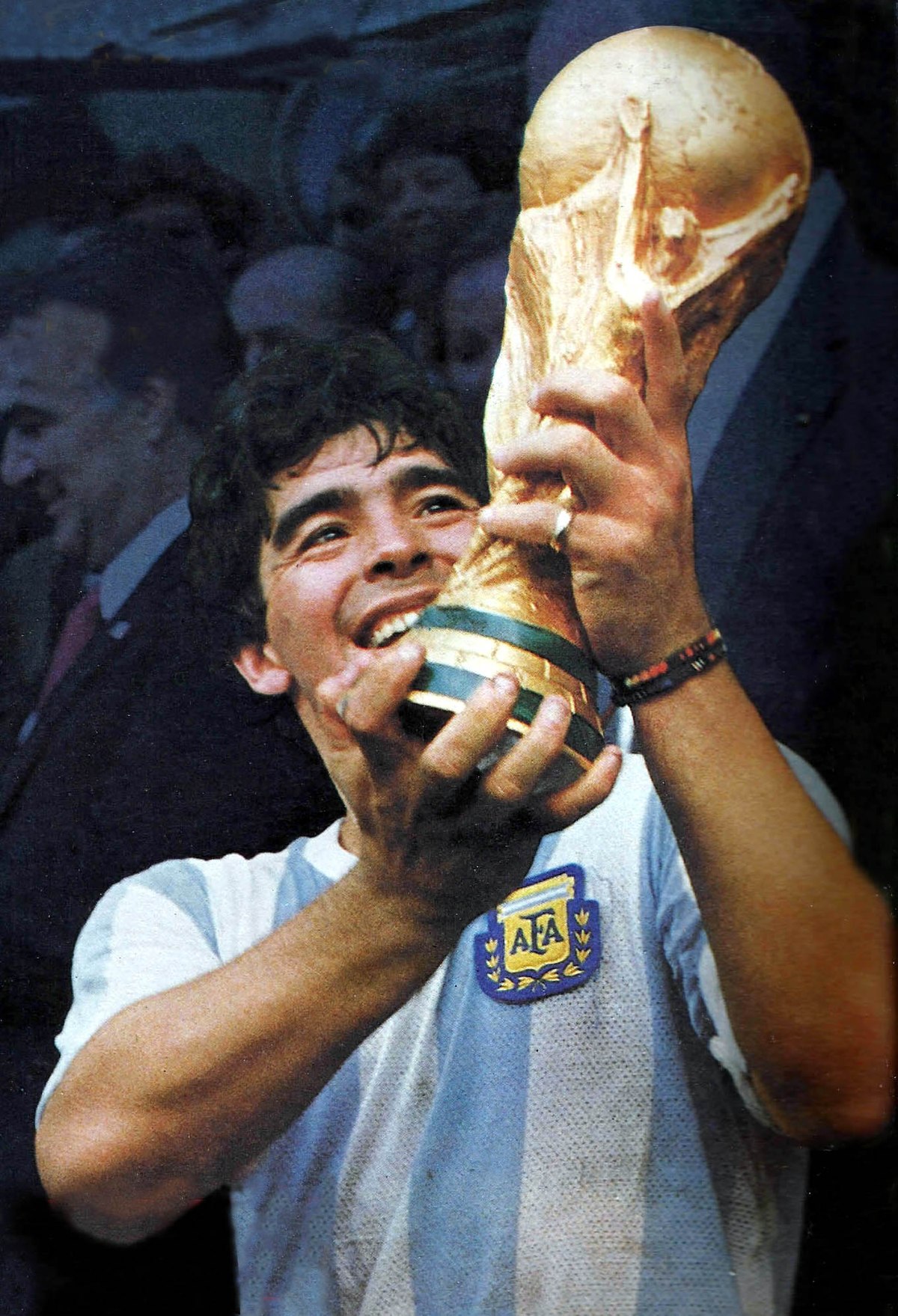
Diego Armando Maradona, born on October 30, 1960, in the impoverished neighborhood of Villa Fiorito, Buenos Aires, Argentina, is one of the most iconic figures in the history of football. Maradona’s life is a tale of extraordinary talent, immense fame, and intense struggles, both on and off the pitch. His journey from the dusty streets of Buenos Aires to global stardom is a testament to his unique skills and relentless spirit. This article delves into the life of Maradona, exploring his age, fame, and key life highlights.
Early Life and Introduction to Football
Maradona grew up in a difficult environment, where football became more than just a game—it was his escape. From a young age, he demonstrated an exceptional ability to control and maneuver the ball, a skill he honed playing on the streets. These early experiences, playing in cramped spaces surrounded by cars and passersby, laid the foundation for his extraordinary dribbling skills and his ability to navigate through any defense.
Maradona’s football journey began in earnest when he joined the youth team of Argentinos Juniors. His talent was undeniable, and it wasn’t long before he was playing for the first team. By the age of 16, Maradona was already making waves in the professional football scene in Argentina.
The Golden Boy: “El Pibe de Oro”
Maradona’s exceptional talent earned him the nickname “El Pibe de Oro” (The Golden Boy), a moniker that would stick with him throughout his career. His rise in the football world was meteoric. At just 16, he was called up to the Argentina national team, although he was not included in the squad for the 1978 World Cup due to his young age. Despite this setback, Maradona continued to impress, and by the time the 1982 World Cup in Spain came around, he was a key player for his country.
1982 World Cup: The Global Stage
The 1982 World Cup was Maradona’s first major international tournament, and while Argentina did not have a standout performance, Maradona himself showed flashes of brilliance. He scored two goals during the tournament, but his temper got the better of him in crucial matches against Brazil and Italy, where he was unable to perform at his best and was eventually sent off.
Despite the mixed results, Maradona had established himself as a player to watch on the global stage. His performances attracted the attention of top European clubs, and it wasn’t long before he was snapped up by Barcelona in a then-record transfer deal.
Barcelona and Early European Career
Maradona’s time at Barcelona was marked by both brilliance and frustration. He showed his incredible talent on numerous occasions, but his career in Spain was marred by injuries and controversy. One of the most significant setbacks was a severe ankle injury inflicted by Andoni Goicoechea, a defender for Athletic Bilbao, which sidelined Maradona for a considerable time.
Despite these challenges, Maradona’s talent shone through, and he was determined to prove himself. However, his time in Barcelona was short-lived, and after two seasons, he moved to Napoli in Italy in another record-breaking transfer.
Napoli: The Legend of Maradona
Maradona’s move to Napoli in 1984 marked the beginning of what many consider the most important chapter of his career. In Naples, Maradona found a second home, and the city embraced him like a hero. The club’s investment in him paid off handsomely, as Maradona led Napoli to unprecedented success.
Under Maradona’s leadership, Napoli won two Serie A titles (1987 and 1990), a Coppa Italia, a UEFA Cup, and a Supercoppa Italiana. His impact on the club and the city was so profound that a popular chant emerged among Napoli fans, “Maradona is better than Pelé.” Maradona’s time at Napoli solidified his status as one of the greatest footballers of all time.
1986 World Cup: The Pinnacle of Glory
The 1986 World Cup in Mexico is often remembered as Maradona’s tournament. It was here that he reached the pinnacle of his career, leading Argentina to World Cup glory. Maradona scored five goals and provided five assists during the tournament, but it was his performance in the quarter-final against England that has become legendary.
In that match, Maradona scored two of the most famous goals in football history. The first, known as the “Hand of God,” was a controversial goal where Maradona used his hand to punch the ball into the net. The second goal, dubbed the “Goal of the Century,” saw Maradona dribble from his own half, beating five English players before slotting the ball into the net. These moments epitomized Maradona’s genius and his ability to turn the course of a game single-handedly.
Argentina went on to win the World Cup, defeating West Germany 3-2 in the final, with Maradona playing a pivotal role. His performances earned him the tournament’s Golden Ball, awarded to the best player of the competition.
The Decline: Scandals and Struggles
After reaching the heights of 1986, Maradona’s career began to decline. The 1990 World Cup in Italy saw Argentina reach the final again, but they were defeated by West Germany. Maradona’s emotional outburst after the match, where he claimed it was a conspiracy against him, was an early sign of the troubles that would plague him in the following years.
In 1991, Maradona tested positive for cocaine, leading to a 15-month ban from football. This marked the beginning of a series of personal and professional struggles that would overshadow his career. Maradona’s drug use became a public issue, and his battles with addiction, weight gain, and legal troubles made headlines around the world.
Despite a brief resurgence, including a memorable goal in the 1994 World Cup against Greece, Maradona’s career was effectively over. He retired from professional football in 1997, but his off-field struggles continued to make news.
Post-Retirement and Coaching Career
After retiring, Maradona struggled to adjust to life away from the limelight. He had brief stints as a coach, including a spell with the Argentine national team from 2008 to 2010. However, his coaching career was nowhere near as successful as his playing days.
Maradona’s personal life remained tumultuous, with ongoing health issues and public controversies. He was hospitalized multiple times due to his health problems, many of which were related to his years of substance abuse.
The Legacy of Diego Maradona
Despite his struggles, Maradona’s legacy as one of the greatest footballers of all time remains intact. His influence on the game is undeniable, and his ability to inspire and entertain fans around the world is unmatched. Maradona was a player who could change the course of a match with a single moment of brilliance, and his impact on the sport is still felt today.
Maradona’s death on November 25, 2020, from a heart attack, marked the end of an era. He was 60 years old. His passing was mourned by millions around the world, and his legacy was celebrated in tributes from fans, players, and football clubs globally.
Honors and Awards
Throughout his career, Maradona received numerous awards and honors, highlighting his extraordinary talent and contribution to football. Some of his most notable accolades include:
- 1979: FIFA Youth World Cup Champion with Argentina
- 1986: FIFA World Cup Champion and Golden Ball winner
- 1987: Serie A Champion with Napoli
- 1990: Serie A Champion with Napoli
- 1995: FIFA Ballon d’Or Prix d’Honneur
- 1999: FIFA Goal of the Century for his second goal against England in 1986
- 1999: Voted FIFA Player of the Century (alongside Pelé)
Conclusion
Diego Maradona’s life was a blend of extraordinary talent and intense personal struggles. His journey from the slums of Buenos Aires to the pinnacle of world football is a story of determination, skill, and the ability to rise above adversity. Maradona’s impact on football is undeniable, and his legacy as one of the greatest players of all time will continue to inspire future generations.
Maradona was more than just a footballer; he was a cultural icon, a symbol of hope for many, and a figure whose life story continues to captivate and inspire.


