
Introduction
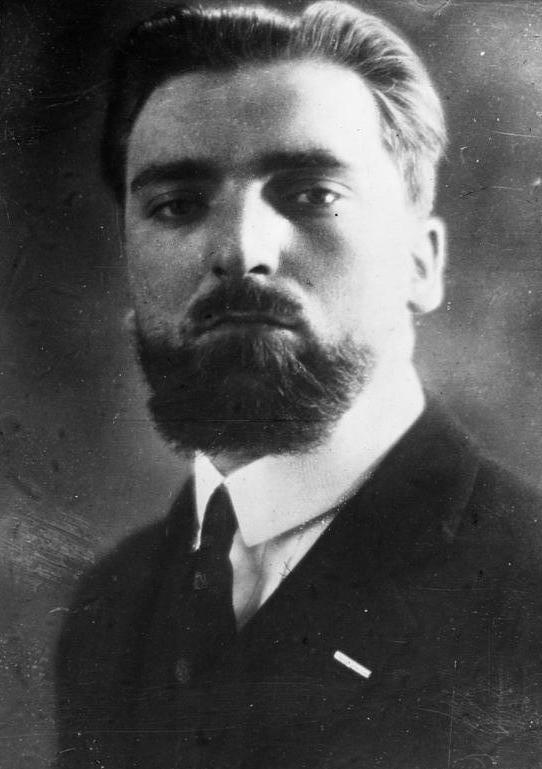
Dino Grandi is a name that resonates with a particular era in Italian history, marked by turmoil, political shifts, and significant ideological battles. Born on June 4, 1895, in Mordano, a small village in the province of Bologna, Italy, Grandi’s life was one of profound influence and controversy. As a key figure in the Fascist movement in Italy, Grandi’s actions and decisions played a crucial role in shaping the nation’s trajectory during one of its most volatile periods.
Early Life and Education
Dino Grandi was born into a family of landowners in the Romagna region, a background that provided him with both the resources and the drive to pursue higher education. He enrolled in the Faculty of Law at the University of Bologna in 1913. During his academic years, he began his career as a journalist, writing for Il Resto del Carlino, a well-known Italian newspaper. This early exposure to journalism not only honed his communication skills but also introduced him to the world of politics.
Political Beginnings
Grandi’s political journey began on the left, a somewhat surprising starting point given his later alignment with Fascism. However, the outbreak of World War I marked a significant turning point in his ideological evolution. Alongside Benito Mussolini, Grandi became an ardent interventionist, advocating for Italy’s active participation in the war as a means of asserting its importance on the global stage.
When the war broke out, Grandi was called to arms, and after the conflict ended in 1919, he graduated with a degree in political economy. Although he initially remained in the army, he soon shifted his focus to law, establishing a career as an attorney in Imola. It was during this period that Grandi’s political fervor began to take shape, characterized by a passionate and often confrontational rhetoric that made him a target for his political opponents.
Rise in the Fascist Movement
Dino Grandi’s association with the Fascist movement began in earnest in the early 1920s. He was instrumental in founding the Fascist groups in Emilia-Romagna, where he quickly rose to the position of regional secretary. His aggressive stance and willingness to align with the more radical elements of the movement earned him both support and notoriety. This period was marked by his involvement in various violent confrontations, a hallmark of the early Fascist strategy to consolidate power.
In the political elections of May 15, 1921, Grandi was elected as a deputy. However, his election was annulled a year later, alongside those of other prominent Fascists like Giuseppe Bottai and Roberto Farinacci, due to technicalities regarding the age requirements for election. Despite this setback, Grandi continued to gain influence within the Fascist ranks.
A Contender to Mussolini
One of the most intriguing aspects of Dino Grandi’s political career was his potential as an alternative leader to Benito Mussolini. During the early 1920s, Grandi, alongside Italo Balbo, attempted to persuade the celebrated poet and war hero Gabriele D’Annunzio to take leadership of the Fascist movement, effectively sidelining Mussolini. D’Annunzio, however, declined the offer, leaving Grandi in a precarious position as Mussolini’s primary internal rival.
Mussolini, ever astute in consolidating his power, thwarted this challenge by offering his resignation to the Fascist executive committee—a move he knew would not be accepted. This clever maneuver eliminated Grandi as a serious threat, and from that point on, Mussolini’s dominance within the movement was assured. Despite this, Grandi continued to hold significant sway among the Fascist squads and remained a key figure in the regime.
Diplomatic Career and International Influence
As Mussolini sought to solidify his regime, Grandi’s role evolved. In the summer of 1921, he led the agrarian Fascist squads in a rebellion against the leadership of the Fasci, and in July 1922, he directed a force of 2,000 Fascists in the occupation of Ravenna. These actions demonstrated his deep ties to the Fascist paramilitary wing, yet over time, Grandi would become known as one of the “moderates” within the regime.
From 1924 to 1929, Grandi served as Undersecretary of the Interior and then as Undersecretary of Foreign Affairs. His most prominent diplomatic role came in 1929 when he was appointed as Italy’s Foreign Minister, a position he held until 1932. During this time, Grandi’s approach to international relations was markedly more cautious and pragmatic compared to Mussolini’s aggressive stance. His diplomatic skills were evident as he worked to represent Italy’s interests abroad, most notably in his subsequent role as Ambassador to the United Kingdom from 1932 to 1939.
Grandi’s tenure in London was a significant period in his career. He developed strong relationships with British politicians and closely observed Winston Churchill’s evolving stance towards Italy. His efforts in diplomacy were recognized not only by the Italian state, which bestowed upon him the title of Count of Mordano, but also by the House of Savoy, with King Victor Emmanuel III granting him the prestigious Collar of the Annunziata, effectively making him a “cousin of the King.”
The Fall of Mussolini
Despite his diplomatic successes, Dino Grandi’s most famous contribution to Italian history came in the summer of 1943. As the tide of World War II turned against Italy, Grandi, in what was almost certainly a coordinated effort with King Victor Emmanuel III, orchestrated a political coup against Mussolini. On July 25, 1943, Grandi proposed the “Ordine del giorno Grandi” at the meeting of the Grand Council of Fascism. This motion effectively called for the removal of Mussolini from power, a move that was crucial in the eventual collapse of the Fascist regime.
Grandi’s role in Mussolini’s downfall was both decisive and dangerous. By convincing other members of the Grand Council to support the motion, he set in motion the events that led to Mussolini’s arrest. However, this act of defiance made Grandi a marked man. In early 1944, during the Verona trial, Grandi was sentenced to death in absentia for his role in Mussolini’s ousting. Foreseeing the consequences of his actions, Grandi had already fled Italy, first to Spain and then to Portugal, where he lived until 1948.
Post-War Life and Legacy
After World War II, Dino Grandi’s life took a different turn. During the 1950s, he became an informant for the American authorities, particularly for Clare Boothe Luce, the U.S. Ambassador to Italy. Grandi often acted as an intermediary in political and industrial dealings between Italy and the United States. He eventually moved to Latin America, spending most of his later years in Brazil before returning to Italy in the 1960s. In his later years, he lived a quieter life, managing a farm in the Modena countryside.
Dino Grandi passed away on May 21, 1988, in Bologna, Italy. His life, marked by both significant political influence and controversy, remains a subject of historical interest and debate.
Conclusion
Dino Grandi’s life is a complex narrative of ambition, power, and ideological shifts. From his early days as a fervent supporter of Mussolini to his later role in the dictator’s downfall, Grandi’s actions left an indelible mark on Italian history. His diplomatic efforts, particularly in London, highlighted his capability to navigate the treacherous waters of international politics, while his involvement in the coup against Mussolini showcased his willingness to challenge even the most entrenched leaders.
Today, Grandi’s legacy is viewed through a nuanced lens, reflecting the complexities of his time and the often contradictory nature of his actions. As a figure who played a pivotal role in some of the most critical moments of 20th-century Italian history, Dino Grandi remains a subject of both admiration and criticism, a testament to the multifaceted nature of political life.


