
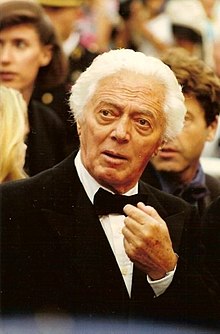
Dino Risi, born on December 23, 1916, in Milan, Italy, is celebrated as one of the most influential directors in the history of Italian cinema. Known primarily for his role in developing the genre of “commedia all’italiana,” Risi’s films are marked by their sharp social commentary, humor, and an insightful portrayal of Italian life in the post-war era. Over his long and prolific career, Risi directed numerous films that have become classics, leaving an indelible mark on the landscape of Italian and global cinema.
Early Life and Education
Dino Risi was born into a well-off family in Milan. His father was a professor of clinical psychology, and his upbringing was marked by intellectual rigor and a strong appreciation for the arts. Risi initially followed a path that seemed far removed from the world of cinema, studying medicine at the University of Milan. However, the pull of filmmaking proved irresistible, and Risi soon found himself gravitating toward the world of cinema.
Risi’s entry into the film industry came somewhat indirectly. His early career was shaped by the tumultuous events of World War II. After the armistice in 1943, Risi took refuge in Switzerland, where he studied film direction under Jacques Feyder. This experience profoundly influenced his approach to filmmaking, giving him a strong foundation in cinematic technique and narrative structure.
Early Career and Breakthrough
Risi began his career in cinema in the early 1940s, working as an assistant director to established filmmakers such as Mario Soldati and Alberto Lattuada. His first significant foray into filmmaking came with his work on documentaries, which provided him with an opportunity to hone his skills as a director. These early works were crucial in shaping his style, which combined a documentary-like realism with a deep understanding of human nature.
Risi’s first feature film, Vacanze col Gangster (1952), marked the beginning of a long and illustrious career in cinema. The film, though not a major success, showcased Risi’s ability to blend comedy with social commentary—a combination that would become his trademark in later years. However, it was his 1956 film Poveri ma Belli that established Risi as a significant figure in Italian cinema. This film, a light-hearted romantic comedy set in post-war Rome, was a box office hit and cemented Risi’s reputation as a master of the “commedia all’italiana” genre.
Rise to Prominence: Commedia all’Italiana
The 1950s and 1960s were a golden era for Italian cinema, and Risi was at the forefront of this cultural renaissance. His films during this period, such as Il Sorpasso (1962) and I Mostri (1963), are widely regarded as some of the finest examples of “commedia all’italiana.” This genre, which blends comedy with elements of drama and satire, was particularly effective in exploring the social and political changes occurring in Italy during the post-war period.
Il Sorpasso, perhaps Risi’s most famous film, is a quintessential example of his work. Starring Vittorio Gassman and Jean-Louis Trintignant, the film is a road movie that explores the contrast between the hedonistic, fast-paced lifestyle of the 1960s and the more traditional, reserved values of the older generation. The film’s sharp wit, memorable characters, and incisive social commentary made it a critical and commercial success, solidifying Risi’s status as one of Italy’s leading directors.
Another landmark film from this period is I Mostri, a series of vignettes that satirize various aspects of Italian society. The film’s dark humor and biting critique of Italian culture showcased Risi’s ability to address serious themes while maintaining a comedic tone. This approach made his films accessible to a broad audience while also appealing to critics who appreciated the depth of his social commentary.
Collaboration with Vittorio Gassman
One of the most significant collaborations in Risi’s career was with actor Vittorio Gassman. The two worked together on numerous films, and their partnership became one of the most celebrated in Italian cinema. Gassman, with his charismatic screen presence and versatility, was the perfect foil for Risi’s incisive direction. Together, they created some of the most memorable characters and scenes in the history of Italian film.
Films such as Il Sorpasso, Il Mattatore (1959), and Profumo di Donna (1974) are testament to the chemistry between Risi and Gassman. In Profumo di Donna, Gassman plays a blind, retired army captain who embarks on a journey of self-discovery. The film, which was later remade in Hollywood as Scent of a Woman, is a poignant exploration of themes such as disability, dignity, and human connection. Gassman’s performance earned him international acclaim, and the film was nominated for an Academy Award for Best Foreign Language Film.
Later Career and Legacy
As the 1970s and 1980s progressed, Risi continued to make films, although the changing landscape of Italian cinema presented new challenges. The “commedia all’italiana” genre began to wane in popularity, and Risi adapted by exploring different themes and styles. Films like La Moglie del Prete (1970) and Telefoni Bianchi (1976) reflect this period of experimentation and transition in his career.
Telefoni Bianchi, in particular, stands out as a significant work from Risi’s later career. The film, which examines the relationship between cinema and fascism in Italy, is a satirical look at the “white telephone” films of the 1930s and 1940s—glamorous, escapist movies that were popular during the fascist era. Risi’s film uses this backdrop to comment on the political and social realities of the time, blending humor with a sharp critique of the past.
In the 1980s and 1990s, Risi continued to work, although his output slowed. His final feature film, Giovani e Belli (1996), starring Anna Falchi, was a return to the themes of youth and vitality that had characterized his earlier work. While not as acclaimed as his earlier films, it demonstrated Risi’s enduring ability to capture the essence of Italian life and culture.
In recognition of his contributions to cinema, Risi received numerous accolades throughout his career. In 1993, the Cannes Film Festival honored him with a retrospective, showcasing his most significant works. This recognition was a testament to his lasting impact on the world of film and his role in shaping the “commedia all’italiana” genre.
Awards and Honors
Dino Risi’s influence on Italian cinema is undeniable, and his work has been celebrated both in Italy and internationally. In 2002, he was awarded the Golden Lion for Lifetime Achievement at the Venice Film Festival, one of the highest honors in the film industry. This award recognized not only his individual achievements but also his role in defining an entire genre of cinema.
In 2004, Risi was bestowed the title of Knight Grand Cross, Italy’s highest civilian honor, by then-President Carlo Azeglio Ciampi. This award was a recognition of his contributions to Italian culture and his influence on generations of filmmakers and audiences.
Personal Life and Death
Dino Risi’s personal life was marked by the same complexity and depth that characterized his films. He was known for his sharp intellect, wit, and a keen understanding of human nature—qualities that he brought to both his work and his personal interactions. Despite the often light-hearted nature of his films, Risi was a man of deep thought and reflection, qualities that endeared him to his peers and collaborators.
Risi passed away on June 7, 2008, at the age of 91 in Rome. His death marked the end of an era for Italian cinema, but his legacy lives on through his films, which continue to be celebrated and studied for their contribution to the art of filmmaking.
The Legacy of Dino Risi
Dino Risi’s legacy in cinema is profound. He was a master of blending comedy with social commentary, and his films continue to resonate with audiences today. His ability to capture the nuances of Italian life, the complexities of human relationships, and the absurdities of societal norms make his work timeless. Risi’s films are not just a reflection of Italian culture but are also a mirror held up to the universal human experience.
As one of the pioneers of “commedia all’italiana,” Risi helped to define a genre that has had a lasting influence on global cinema. His films have inspired countless directors and writers, both in Italy and abroad, and his work remains a touchstone for those interested in the intersection of comedy and social critique.
Risi’s influence extends beyond the screen. He was a cultural icon, a figure whose work captured the spirit of a nation in transition. His films are a record of Italy’s post-war transformation, documenting the hopes, dreams, and struggles of a society grappling with change. In this sense, Risi’s work is not just entertainment but also an important historical document.
Conclusion
Dino Risi’s contribution to cinema is immeasurable. As a director, he brought to life stories that were both entertaining and thought-provoking, using humor as a tool to explore deeper social and cultural issues. His films remain relevant today, offering insights into the human condition and the society in which we live.
Risi’s ability to combine comedy with a critical eye made him one of the most important filmmakers of his generation. His work continues to be celebrated for its artistic merit, its cultural significance, and its enduring appeal. As we look back on his life and career, it is clear that Dino Risi was not just a director but a storyteller of the highest order, whose films will continue to be enjoyed and studied for generations to come.


