
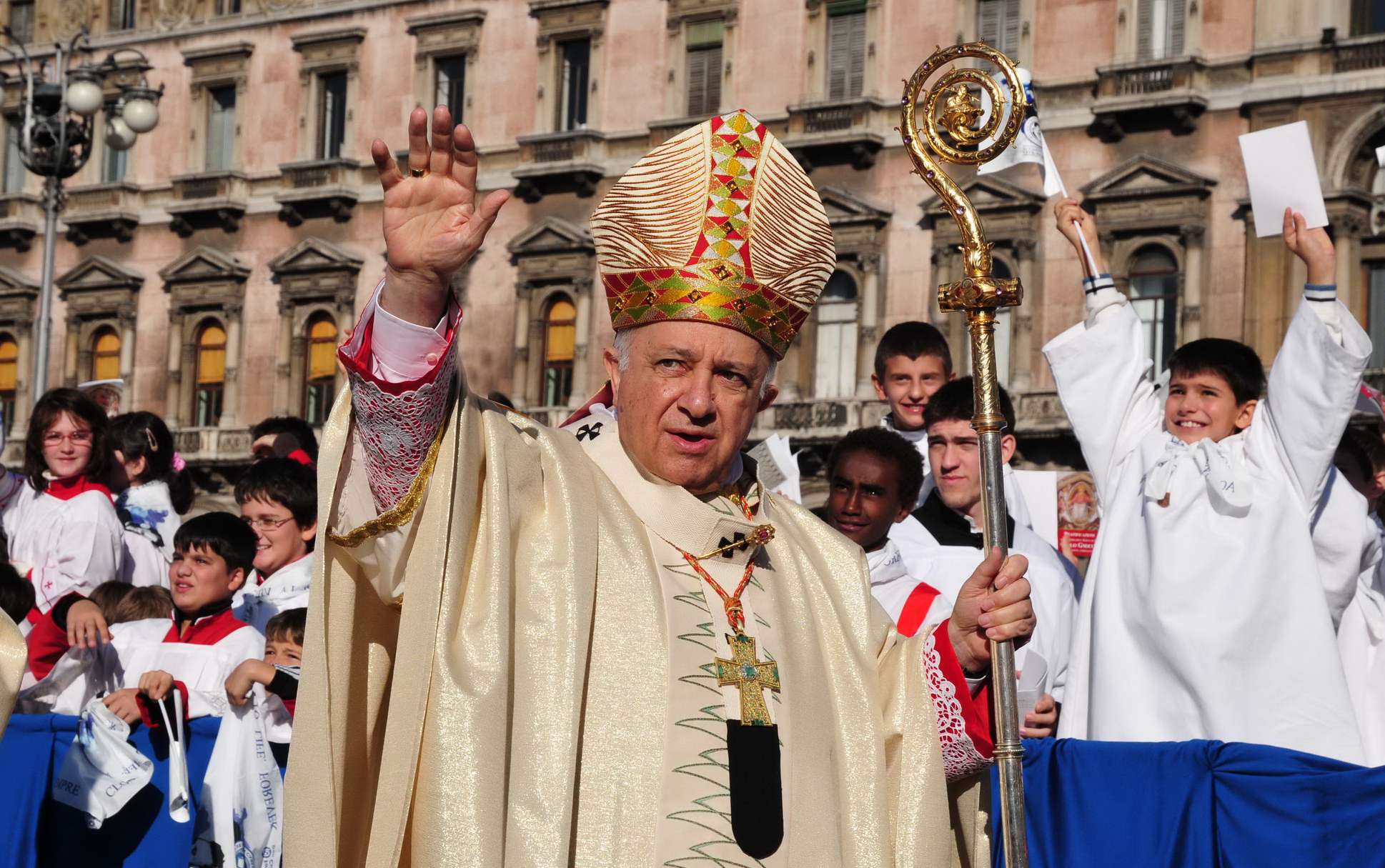
Dionigi Tettamanzi was a prominent figure within the Catholic Church, known for his deep theological insights, pastoral care, and leadership roles in some of Italy’s most significant archdioceses. His life and work left a lasting impact on both the Church and the communities he served. This article delves into the life, career, and legacy of Cardinal Dionigi Tettamanzi, exploring the milestones that defined his journey and the influence he wielded as a religious leader.
Early Life and Education
Born on March 14, 1934, in Renate, a small town in the province of Milan, Italy, Dionigi Tettamanzi grew up in a devout Catholic family. His early life was deeply rooted in the traditions and teachings of the Church, which laid the foundation for his future vocation. Tettamanzi pursued his early education at the local seminary, demonstrating a profound interest in theology and ecclesiastical studies from a young age.
He was ordained a priest on June 28, 1957, after completing his theological studies. His early years as a priest were marked by a dedication to pastoral work, where he served various parishes and gained a reputation for his compassionate and thoughtful approach to ministry. Tettamanzi’s intellectual prowess did not go unnoticed, and he was soon encouraged to further his studies, eventually earning a doctorate in theology.
Rise to Prominence: Key Appointments and Contributions
Tettamanzi’s rise within the ecclesiastical hierarchy was marked by a series of important appointments that showcased his theological acumen and leadership abilities. In 1982, he was appointed as a consultor to the Pontifical Council for the Family, a position that allowed him to contribute to the Church’s teachings and policies on family life—a subject that would remain close to his heart throughout his career.
Three years later, in 1985, he became a consultor for the Pontifical Council for Health Care Workers, followed by his appointment as a consultor for the Congregation for the Doctrine of the Faith in 1989. These roles placed Tettamanzi at the center of some of the most critical discussions and decisions within the Vatican, particularly in areas related to doctrine and pastoral care.
In 1989, Pope John Paul II appointed Tettamanzi as the Archbishop of Ancona-Osimo, marking his first significant leadership role within the Church. His episcopal consecration was carried out by Cardinal Carlo Maria Martini, then Archbishop of Milan, on September 23, 1989. Tettamanzi’s tenure in Ancona-Osimo was short-lived, but it was during this time that he began to establish himself as a leader who combined deep theological understanding with a strong commitment to pastoral care.
Leadership in the Italian Episcopal Conference
Tettamanzi’s leadership qualities were further recognized when he was appointed as the Secretary-General of the Italian Episcopal Conference (CEI) on March 14, 1991. In this role, Tettamanzi played a crucial part in shaping the direction of the Church in Italy during a period of significant social and political change. His work involved coordinating the efforts of Italy’s bishops and representing the Italian Church in its relations with both the Vatican and the Italian government.
One of Tettamanzi’s most notable contributions during this time was his work on family issues, an area where he was considered an expert. He authored numerous documents and guidelines aimed at supporting families and addressing the challenges they faced in modern society. His commitment to this cause earned him widespread respect and recognition, both within the Church and beyond.
Archbishop of Genoa and Cardinalate
On April 20, 1995, Tettamanzi was appointed Archbishop of Genoa, one of Italy’s most significant archdioceses. Just over a month later, on May 25, 1995, he was also named Vice-President of the Italian Episcopal Conference for the five-year period from 1995 to 2000. His leadership in Genoa was characterized by a focus on social justice and the needs of the marginalized, reflecting his deep concern for the well-being of all members of society.
Tettamanzi’s influence within the Church continued to grow, and on February 21, 1998, he was elevated to the rank of Cardinal by Pope John Paul II. As a cardinal, Tettamanzi was given the title of Saints Ambrose and Charles, linking him to two of Milan’s most revered saints. His cardinalate marked the beginning of a period during which Tettamanzi would play a key role in some of the Church’s most important events and decisions.
Archbishop of Milan: A Return to His Roots
The pinnacle of Tettamanzi’s ecclesiastical career came in 2002 when he was appointed Archbishop of Milan, succeeding Cardinal Carlo Maria Martini. Milan is one of the most prestigious and influential archdioceses in the Catholic Church, and Tettamanzi’s appointment was seen as both a recognition of his leadership and a return to his roots, as he had previously served in the Milan area.
As Archbishop of Milan, Tettamanzi was responsible for overseeing one of the largest and most diverse dioceses in the world. His tenure was marked by a strong emphasis on pastoral care, social justice, and interfaith dialogue. He was particularly focused on addressing the challenges posed by the rapidly changing social and economic landscape of Milan, a city that was experiencing significant growth and transformation.
In 2008, Tettamanzi took a bold step by establishing the “Family-Work Fund,” a charitable initiative aimed at supporting families affected by the global financial crisis. The fund, which was financed by a portion of the Church’s revenue from the “otto per mille” (eight per thousand) tax system, provided critical assistance to those who were struggling to make ends meet. This initiative was widely praised and underscored Tettamanzi’s commitment to using the Church’s resources to support those in need.
Theological Contributions and Writings
Throughout his career, Tettamanzi was a prolific writer and theologian. He authored numerous books, essays, and pastoral letters, many of which focused on the intersection of faith and contemporary issues. His writings often addressed topics such as family life, social justice, and the role of the Church in a secular world.
One of Tettamanzi’s most significant theological contributions was his work on the concept of solidarity, which he viewed as a fundamental principle of Christian social teaching. He believed that the Church had a responsibility to stand in solidarity with the poor, the marginalized, and the oppressed, and he consistently advocated for policies and initiatives that reflected this commitment.
Tettamanzi’s writings were not only influential within the Church but also had a broader impact on Italian society. His work on family issues, in particular, resonated with many Italians who were grappling with the challenges of modern life. He was seen as a voice of reason and compassion, offering guidance and support to those who were struggling to navigate the complexities of contemporary society.
Participation in the 2013 Conclave
As a cardinal, Tettamanzi was eligible to participate in the conclave following the resignation of Pope Benedict XVI in 2013. Although he was not considered a frontrunner for the papacy, his participation in the conclave was significant, as it reflected his status as one of the Church’s most respected leaders. The conclave ultimately elected Pope Francis, a decision that Tettamanzi welcomed, given his shared commitment to social justice and pastoral care.
Following the conclave, Tettamanzi continued to serve as Archbishop of Milan until his retirement in 2011, although he remained active in the Church until his health began to decline. Even in retirement, Tettamanzi remained a respected figure, known for his wisdom, humility, and deep spiritual insight.
Later Years and Legacy
Dionigi Tettamanzi’s later years were marked by declining health, and he made his final public appearance on March 25, 2017, during Pope Francis’s visit to Milan. Despite his physical limitations, Tettamanzi continued to inspire those around him with his unwavering faith and dedication to the Church.
Tettamanzi passed away on August 5, 2017, at the age of 83, in Triuggio, Italy, where he had retired after stepping down as Archbishop of Milan. His death was mourned by many within the Church and beyond, as people remembered his contributions to theology, his compassionate leadership, and his commitment to social justice.
Conclusion: A Life of Service and Compassion
Dionigi Tettamanzi’s life and career were characterized by a deep commitment to the teachings of the Catholic Church and a profound concern for the well-being of others. As a priest, bishop, and cardinal, he dedicated himself to serving the Church and addressing the challenges of contemporary society. His leadership was marked by a focus on pastoral care, social justice, and the needs of the marginalized, reflecting his belief that the Church must always stand with those who are most in need.
Tettamanzi’s legacy lives on through the many initiatives he established, the writings he left behind, and the countless lives he touched during his decades of service. He remains an enduring example of what it means to lead with compassion, wisdom, and a deep sense of responsibility to others.


