
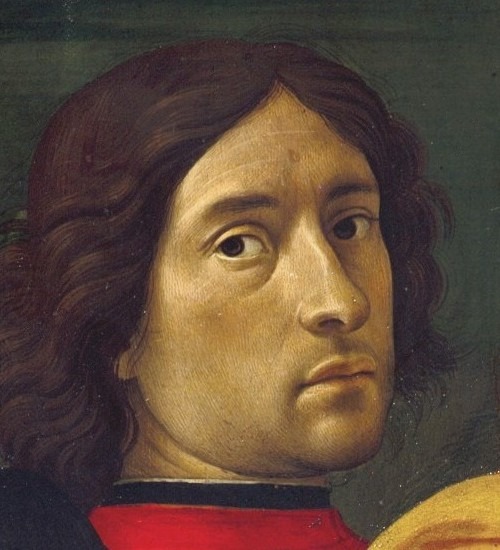
Domenico Ghirlandaio, born Domenico di Tommaso Bigordi on January 11, 1449, in Florence, Italy, was a master painter of the early Renaissance period. Known for his remarkable realism and attention to detail, Ghirlandaio played a pivotal role in the development of Florentine art during the late 15th century. His work is celebrated for its blend of religious themes with vivid depictions of contemporary life in Florence, making him one of the most important artists of his time. This article delves into Ghirlandaio’s life, his artistic journey, and the significant impact he had on the world of art.
Early Life and Artistic Beginnings
Domenico Ghirlandaio was born into a family of artisans in Florence, a city that was rapidly becoming the epicenter of the Renaissance. His father, Tommaso Bigordi, was a goldsmith, a profession that likely influenced young Domenico’s attention to detail and precision in his later works. The nickname “Ghirlandaio,” which means “garland maker,” was reportedly given to Domenico because of his father’s talent for creating intricate garlands to adorn the heads of Florentine women.
Ghirlandaio’s initial artistic training came under the tutelage of the painter Alessio Baldovinetti. Baldovinetti was known for his meticulous approach to painting, which included a focus on texture and naturalism—traits that Ghirlandaio would adopt and refine in his own work. However, Ghirlandaio’s style was also heavily influenced by the giants of the early Renaissance, including Giotto, Masaccio, and Andrea del Castagno, whose emphasis on human emotion and perspective helped shape his artistic vision.
The Flourishing of a Master: Major Works and Artistic Contributions
By the time Ghirlandaio reached his early thirties, he had already established himself as a prominent painter in Florence. His reputation was built on his ability to combine the detailed realism of Flemish painting with the grandeur of Italian Renaissance art. This unique style made his works highly sought after by the Florentine bourgeoisie, who became his primary patrons.
One of Ghirlandaio’s early major commissions was the fresco cycle in the Church of Santa Trìnita in Florence, completed between 1483 and 1486. This cycle, depicting the “Life of St. Francis,” is a testament to Ghirlandaio’s skill in narrative composition and his ability to integrate scenes of contemporary Florentine life into religious settings. The frescoes are notable for their vivid portrayal of 15th-century Florence, complete with detailed architectural backgrounds and lifelike portraits of prominent citizens.
Ghirlandaio’s work was not limited to Florence. In the early 1480s, he was called to Rome by Pope Sixtus IV to contribute to the decoration of the newly built Sistine Chapel. Here, he painted the fresco “The Calling of the Apostles Peter and Andrew” (1481–82), a work that exemplifies his mastery of perspective and his ability to convey complex religious narratives with clarity and precision. This opportunity to work in Rome allowed Ghirlandaio to interact with other leading artists of the time, including Botticelli and Perugino, further enriching his style.
Realism and Portraiture: Ghirlandaio’s Signature Style
One of the defining characteristics of Domenico Ghirlandaio’s work is his commitment to realism. Unlike many of his contemporaries, who often idealized their subjects, Ghirlandaio embraced the imperfections and individuality of the people he portrayed. His portraits are marked by their lifelike quality and the careful attention to detail, from the texture of skin and hair to the intricate folds of clothing.
This realism is particularly evident in his famous fresco cycle in the Sassetti Chapel of Santa Trìnita, which depicts the “Life of St. Francis” (1485). The frescoes are populated with recognizable figures from Florentine society, including the powerful Sassetti family, who commissioned the work. Ghirlandaio’s ability to blend sacred narratives with contemporary life not only served to elevate his patrons but also provided a vivid historical record of Florence during the Renaissance.
Another significant work that showcases Ghirlandaio’s talent for portraiture is the “Adoration of the Magi” (1485), housed in the Church of Santa Trìnita. This altarpiece, commissioned by the Tornabuoni family, features detailed and realistic portraits of the family members. The figures are arranged in a harmonious composition, set against a backdrop that merges the sacred and the everyday. The use of rich colors and intricate detailing in the garments and faces of the figures highlights Ghirlandaio’s meticulous approach and his deep understanding of human character.
Influence of Northern European Art
Ghirlandaio was also influenced by the art of Northern Europe, particularly the works of Flemish painters like Hugo van der Goes. The Flemish influence is evident in Ghirlandaio’s attention to detail, especially in his rendering of textures and materials, such as the reflective surfaces of metal and glass, and the intricate patterns of fabrics. This Northern European influence can be seen in works like “An Old Man and His Grandson” (1480), which is housed in the Louvre in Paris.
This painting, often celebrated for its emotional depth and realism, depicts an elderly man with a disfigured nose tenderly holding his young grandson. The painting’s power lies in its unflinching portrayal of the man’s age and physical imperfections, contrasted with the innocence and purity of the child. This work is a testament to Ghirlandaio’s ability to convey complex human emotions and relationships through his art.
The Tornabuoni Chapel: A Masterpiece of Florentine Art
One of Ghirlandaio’s most ambitious and celebrated projects was the decoration of the Tornabuoni Chapel in the Church of Santa Maria Novella in Florence, completed between 1485 and 1490. This monumental fresco cycle, commissioned by Giovanni Tornabuoni, one of the wealthiest men in Florence, depicts the “Life of the Virgin” and the “Life of St. John the Baptist.”
The Tornabuoni Chapel frescoes are considered Ghirlandaio’s magnum opus, combining his skills in portraiture, narrative storytelling, and architectural composition. The frescoes are filled with detailed depictions of contemporary Florentine life, including portraits of the Tornabuoni family and other notable figures. The cycle is remarkable not only for its artistic quality but also for its documentation of the social and cultural life of Florence at the time.
The “Birth of the Virgin” scene, in particular, is celebrated for its architectural setting, which reflects the grandeur of Renaissance Florence. The fresco also features a portrait of Ghirlandaio himself, subtly included in the background, highlighting the artist’s connection to the city and its people.
Ghirlandaio’s Legacy and Influence
Domenico Ghirlandaio’s influence extended far beyond his own lifetime. His workshop was one of the most prolific in Florence, producing numerous altarpieces, portraits, and frescoes that were in high demand among the city’s elite. Ghirlandaio’s ability to train and mentor young artists was another significant aspect of his legacy. Among his most famous pupils was Michelangelo Buonarroti, who would go on to become one of the greatest artists of all time.
Ghirlandaio’s emphasis on realism, his integration of contemporary life into religious scenes, and his meticulous attention to detail had a lasting impact on the development of Renaissance art. His works served as a bridge between the early Renaissance emphasis on linear perspective and the High Renaissance focus on idealized beauty and harmony.
In the centuries that followed, Ghirlandaio’s works continued to be celebrated for their historical significance as well as their artistic merit. Art historians and critics have often noted how Ghirlandaio’s frescoes provide a vivid snapshot of life in 15th-century Florence, making them invaluable not only as works of art but also as historical documents.
Conclusion: A Master of the Renaissance
Domenico Ghirlandaio’s contributions to the art world are profound. His works stand as a testament to the artistic achievements of the Italian Renaissance, reflecting the cultural and social milieu of Florence during one of its most vibrant periods. Ghirlandaio’s ability to blend religious themes with everyday life, his commitment to realism, and his role as a mentor to the next generation of artists make him a pivotal figure in the history of art.
As we look back on Ghirlandaio’s life and career, it is clear that his work continues to resonate, offering insights not only into the art of the Renaissance but also into the lives of the people who inhabited that world. Through his paintings and frescoes, Domenico Ghirlandaio has left an indelible mark on the world of art, one that continues to inspire and captivate audiences to this day.


