
Introduction
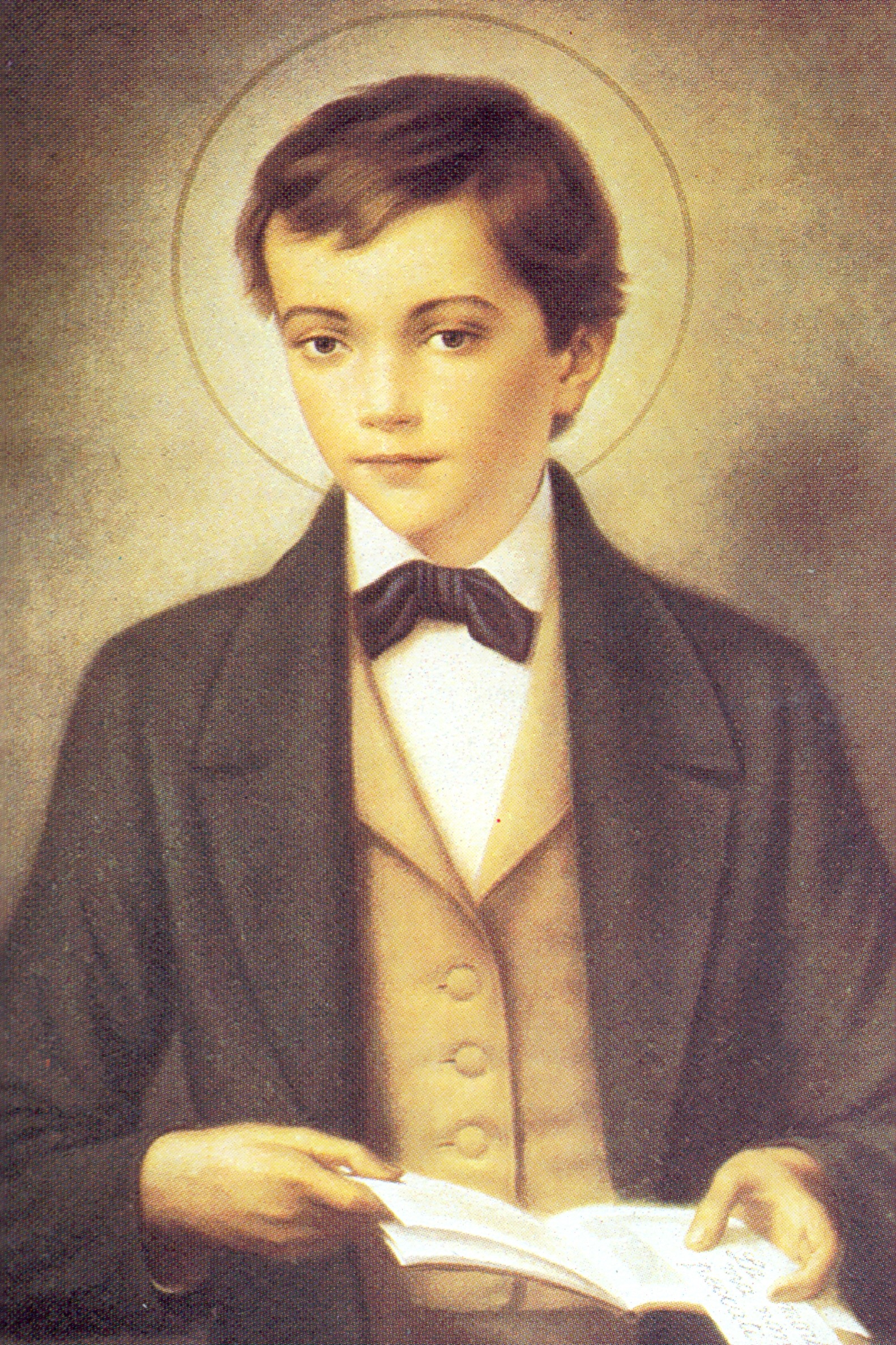
Domenico Savio, a name that resonates with deep religious devotion and youthful sanctity, has left an indelible mark on the history of the Catholic Church. Born on April 2, 1842, in San Giovanni, a small hamlet near Turin, Italy, Domenico’s life, though tragically short, is a profound testament to faith, humility, and unwavering commitment to spiritual ideals. His journey, marked by a series of extraordinary events and a fervent dedication to religious life, culminated in his canonization, making him one of the youngest saints in the history of the Church.
In this article, we delve into the life of Domenico Savio, exploring the key moments that shaped his journey, the virtues that earned him sainthood, and the lasting impact he continues to have on the Catholic community. From his early years in a humble family to his profound association with Don Bosco, we trace the steps of a boy whose life was nothing short of a divine mission.
Early Life and Religious Awakening
Domenico Savio was the second of ten children in a devout Catholic family. His father, Carlo, was a blacksmith, and his mother, Brigida, worked as a seamstress. From a young age, Domenico displayed an extraordinary inclination towards spirituality. By the age of seven, he had already set spiritual goals for himself, committing to frequent confession and maintaining a close friendship with Jesus and the Virgin Mary. His first communion at the tender age of seven further solidified his devotion, setting the stage for his future path in religious life.
The early years of Domenico’s life were spent in Morialdo, a small village where his family relocated shortly after his birth. It was here that Domenico’s deep religious fervor began to manifest. He was often found in prayer, and his commitment to living a life free from sin was evident even at such a young age. His piety was not merely a reflection of his upbringing but seemed to be a calling that he embraced with full awareness and intention.
Meeting Don Bosco and the Path to Sainthood
In 1853, Domenico Savio’s life took a significant turn when he met Don Bosco, a priest who would later be canonized and known for his work with youth. Impressed by Domenico’s virtues and spiritual maturity, Don Bosco invited him to join the Oratory of St. Francis de Sales in Turin. At the age of twelve, Domenico moved to Turin, where he would spend the next few years under the guidance of Don Bosco.
At the Oratory, Domenico’s spirituality blossomed. He chose Don Bosco as his confessor and spiritual mentor, a decision that would have a profound impact on his life. Domenico’s commitment to spiritual growth was evident in his practice of general confession, where he would confess his sins weekly, despite his young age. His dedication to living a holy life was further demonstrated by his willingness to take on responsibilities that were far beyond his years.
One of the most famous stories from Domenico’s time at the Oratory is the incident where he took responsibility for a prank that he did not commit. When the students in his class filled the stove with stones and snow, the teacher demanded to know the culprit. Despite being innocent, Domenico stepped forward to take the blame, citing the innocence of Jesus as his reason. This act of selflessness and humility is just one example of the depth of his character and his commitment to living a life modeled after Christ.
The Formation of the Company of the Immaculate Conception
Domenico’s time at the Oratory was also marked by his efforts to encourage others to embrace a life of piety. Following the proclamation of the dogma of the Immaculate Conception in 1854, Domenico was inspired to do something more to honor the Virgin Mary. He gathered a group of his friends and founded the Company of the Immaculate Conception, a society dedicated to promoting piety and charity in the name of Mary.
The Company’s primary goals were to encourage frequent confession and to promote acts of charity. Domenico drafted a set of rules for the group, which he presented publicly in the church nine months before his death. This organization not only reflected Domenico’s deep devotion to Mary but also his desire to lead others towards a life of holiness. His leadership and vision for the Company were precursors to the significant role he would play in the spiritual lives of many, even after his death.
The Final Days and Legacy
Domenico Savio’s life was tragically cut short when he fell ill during a cholera outbreak in the summer of 1856. Despite his illness, Domenico continued to serve others, embodying the spirit of self-sacrifice that had defined his life. Sadly, his condition worsened, and he passed away at the young age of fifteen on March 9, 1857, in the arms of his family in Mondonio.
Don Bosco, who had been a close mentor to Domenico, documented his life and virtues, recognizing the young boy’s extraordinary sanctity. Domenico Savio was declared a hero of Christian virtue in 1933, beatified by Pope Pius XII on March 5, 1950, and canonized on June 12, 1954. His canonization made him the youngest non-martyred saint in the history of the Church, a testament to the profound impact he had despite his brief life.
Domenico’s remains are housed in the Basilica of Mary Help of Christians in Turin, where he is venerated as a saint. His feast day is celebrated on May 6, a date chosen to avoid the solemnity of Lent, during which his death anniversary falls. Domenico is recognized as the patron saint of altar servers and pregnant women, the latter due to a miracle attributed to him shortly before his death.
Miracles and Sainthood
Two miracles are attributed to Domenico Savio, both of which played a significant role in his canonization. The first miracle involves the saving of his sister’s life during childbirth. Six months before his death, Domenico had a premonition that his mother would experience a difficult labor. He requested permission from Don Bosco to visit his family, and upon arriving home, he was told that his mother was in labor and facing complications. Despite the concern of those around him, Domenico embraced his mother and left shortly thereafter. Remarkably, the childbirth proceeded without any further issues, and his sister was born healthy. His mother later discovered a small ribbon with a piece of cloth in the shape of a habit around her neck, which Domenico had left as a token of protection. Domenico later attributed the safe delivery to the intercession of the Virgin Mary.
The second miracle, though less documented, contributed to the growing recognition of Domenico’s sanctity and his role as an intercessor for those in need.
Conclusion
Domenico Savio’s life is a remarkable example of youthful piety and unwavering faith. His story continues to inspire countless individuals, particularly young people, to pursue a life of holiness and dedication to God. Despite his short life, Domenico’s impact on the Catholic Church and its followers is immeasurable. His journey from a small village in Italy to becoming one of the youngest saints in the Church serves as a powerful reminder that sanctity is not reserved for the old or the wise but is accessible to all who pursue a life of virtue and faith.
In the years since his canonization, Domenico Savio has become a symbol of youthful sanctity, a patron for the young, and a beacon of hope for those who seek to live a life devoted to God. His legacy, preserved in the teachings of the Church and the hearts of the faithful, continues to inspire new generations to follow in his footsteps, striving for a life of piety, charity, and unwavering faith.


