
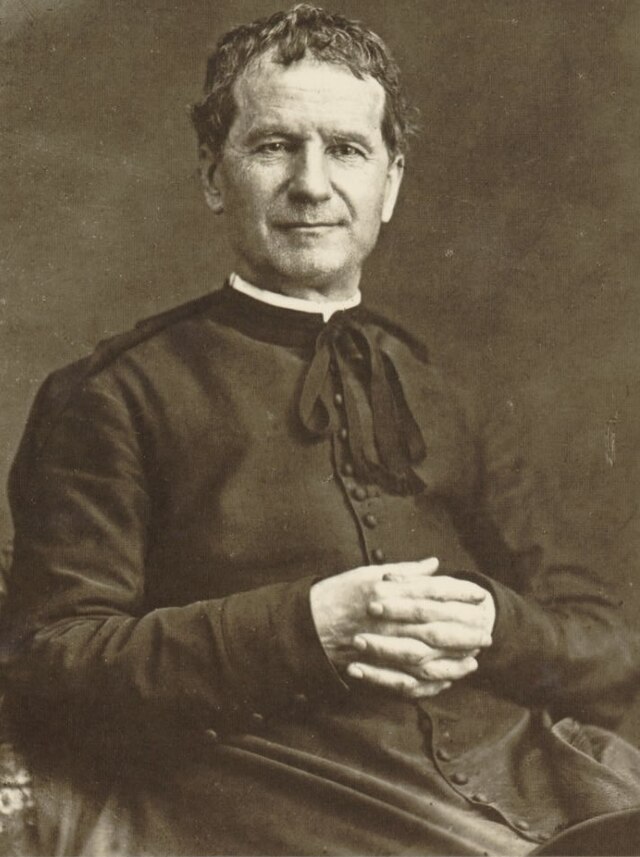
Don Bosco, born Giovanni Melchiorre Bosco on August 16, 1815, in Becchi, a small hamlet near Castelnuovo d’Asti, Italy, is one of the most revered figures in the history of education and Catholicism. His life was marked by his unwavering dedication to the welfare of young people, particularly those who were marginalized, poor, or at risk. Today, Don Bosco is remembered not only as an extraordinary educator but also as the founder of the Salesian Order, which continues his mission of serving youth worldwide.
Early Life and Formation of His Mission
Giovanni Bosco was born into a poor farming family in the Piedmont region of Italy. His father died when he was just two years old, leaving his mother, Margherita Occhiena, to raise him and his two older brothers. Despite the hardships of rural poverty, Margherita instilled in her children a strong sense of faith and a deep compassion for others. These early experiences of hardship and loss would profoundly shape Giovanni’s later mission.
From a young age, Giovanni showed a remarkable aptitude for learning and a strong desire to become a priest. His mother supported his vocation, even though it meant great personal sacrifice. Giovanni’s path to the priesthood was not easy; he had to work various jobs to support his education, including serving as a farmhand, tailor, waiter, and even an apprentice to a blacksmith. His determination to overcome these obstacles is a testament to his deep faith and commitment to his calling.
After entering the seminary, Giovanni was ordained a priest in 1841. From that moment, he became known as “Don Bosco,” with “Don” being a traditional Italian honorific for priests. As a newly ordained priest, Don Bosco was immediately struck by the dire conditions facing many young people in Turin, the bustling industrial city where he began his ministry. The city was filled with children and adolescents who were homeless, unemployed, and often involved in crime. This situation deeply troubled Don Bosco, and he resolved to dedicate his life to helping these young people.
Founding the Oratory and the Salesian Order
Don Bosco’s work with youth began in earnest when he started gathering young boys on the streets of Turin, offering them education, spiritual guidance, and a place of refuge. He initially rented a small shed, known as the “Pinardi House,” in the Valdocco district of Turin, where he established his first oratory in 1846. The oratory was not just a place of worship but a comprehensive community center where boys could receive education, learn a trade, and find a supportive community.
The oratory quickly grew, attracting hundreds of boys from across the city. Don Bosco’s approach to education was revolutionary for its time. He believed in the preventive system, a method based on reason, religion, and loving-kindness. Unlike the repressive methods commonly used in the education of the time, which relied heavily on punishment, Don Bosco’s system emphasized building positive relationships between educators and students, fostering a sense of responsibility, and encouraging moral and spiritual development.
As the oratory expanded, Don Bosco realized he needed help to continue his work. He inspired a group of his young followers to join him in his mission, leading to the formation of the Salesian Society in 1859, named after St. Francis de Sales, whom Don Bosco greatly admired for his gentle and approachable style of ministry. The Salesians were dedicated to the education and care of young people, especially those who were poor and disadvantaged.
In 1872, Don Bosco, with the help of Maria Domenica Mazzarello, founded the Salesian Sisters, officially known as the Daughters of Mary Help of Christians. This order focused on the education of girls and young women, mirroring the work Don Bosco had begun with boys. The Salesian Sisters quickly spread across Italy and beyond, furthering Don Bosco’s mission of providing education and spiritual guidance to youth.
Expansion of the Salesian Mission
Don Bosco’s work quickly gained national and international attention. His innovative approach to education, combined with his deep spiritual insight, made him a figure of significant influence in 19th-century Italy. Despite his growing fame, Don Bosco remained humble and focused on his mission. He was known for his deep personal holiness, his ability to relate to people from all walks of life, and his unwavering commitment to the young people he served.
The Salesian Society grew rapidly, and by the time of Don Bosco’s death in 1888, there were Salesian houses in multiple countries across Europe and Latin America. Don Bosco’s vision was for the Salesians to go wherever there was a need for their work, particularly in areas where young people were most vulnerable.
One of the key aspects of Don Bosco’s work was his focus on vocational training. He believed that providing young people with practical skills was essential for helping them escape poverty and build a better future. The Salesian schools and workshops he established offered training in a variety of trades, including carpentry, printing, tailoring, and mechanics. These institutions not only provided education but also helped young people secure stable employment, laying the foundation for their future success.
Challenges and Perseverance
Don Bosco’s work was not without its challenges. He faced significant opposition from both secular authorities and some members of the Church who were skeptical of his methods and his focus on the poor. Additionally, the financial strain of supporting his growing ministry was a constant concern. However, Don Bosco’s faith and determination never wavered. He tirelessly sought donations and support, often traveling across Europe to raise funds for his work.
Despite these challenges, Don Bosco’s work continued to flourish. His ability to inspire others was one of his greatest strengths. He not only attracted followers who joined the Salesian Society but also cultivated a network of lay supporters who shared his vision and contributed to the mission. This network of collaborators helped ensure the sustainability of his projects and allowed the Salesian mission to expand far beyond what Don Bosco could have achieved on his own.
Don Bosco’s Legacy and Canonization
Don Bosco passed away on January 31, 1888, in Turin. By the time of his death, he had transformed the lives of countless young people and laid the groundwork for a global movement dedicated to the care and education of youth. His legacy continues to thrive today through the work of the Salesians, who operate schools, orphanages, vocational training centers, and parishes in over 130 countries.
Don Bosco was beatified in 1929 and canonized as a saint by Pope Pius XI on Easter Sunday, April 1, 1934. His feast day is celebrated on January 31, the anniversary of his death. In 1958, Pope Pius XII declared Don Bosco the “Patron of Apprentices,” recognizing his tireless work in vocational training and his dedication to the welfare of young workers.
Don Bosco’s influence extends far beyond the Catholic Church. His preventive system of education has been studied and implemented by educators worldwide, and his commitment to social justice and the well-being of youth continues to inspire people of all faiths and backgrounds. The Salesian Order, now one of the largest religious congregations in the world, remains true to Don Bosco’s vision, adapting his methods to meet the needs of young people in the 21st century.
The Preventive System: A Revolutionary Approach to Education
One of Don Bosco’s most enduring contributions to the field of education is his preventive system. This educational philosophy was revolutionary in its time and remains influential today. The preventive system is built on three pillars: reason, religion, and loving-kindness. It seeks to prevent misbehavior and delinquency by creating a positive and supportive environment for young people.
The preventive system contrasts sharply with the repressive educational methods common in the 19th century, which relied heavily on punishment and strict discipline. Don Bosco believed that education should be a holistic process that nurtures not only the mind but also the heart and soul. He emphasized the importance of building trusting relationships between educators and students, encouraging open communication, and fostering a sense of community.
In practice, the preventive system involves creating a school environment where students feel valued and respected. Teachers are expected to be role models who guide students with patience and understanding rather than through fear and punishment. Religious instruction is also central to the preventive system, with the goal of helping young people develop a strong moral foundation that will guide their actions throughout life.
The success of the preventive system is evident in the lasting impact it has had on the lives of countless young people. Many of Don Bosco’s former students went on to lead successful and fulfilling lives, crediting their time in the Salesian schools with giving them the skills and values they needed to thrive. Today, the preventive system continues to be a guiding principle in Salesian schools and institutions around the world.
Conclusion: Don Bosco’s Enduring Impact
Don Bosco’s life and work stand as a testament to the power of faith, compassion, and education in transforming lives. His dedication to the welfare of young people, particularly those who were most vulnerable, has left an indelible mark on the world. Through the Salesian Order and the countless individuals he inspired, Don Bosco’s mission continues to thrive, offering hope and opportunity to new generations.
As we reflect on Don Bosco’s life, it is clear that his legacy is not just a historical one but a living reality. His teachings and methods remain relevant today, offering valuable insights into how we can create a more just and compassionate society. Whether through education, vocational training, or spiritual guidance, Don Bosco’s work reminds us of the importance of caring for the young and the marginalized, ensuring that everyone has the opportunity to reach their full potential.
Don Bosco’s story is a powerful reminder that one person’s vision and dedication can change the world. His life serves as an inspiration to all who seek to make a positive difference in the lives of others, and his legacy continues to shine as a beacon of hope and love.


