
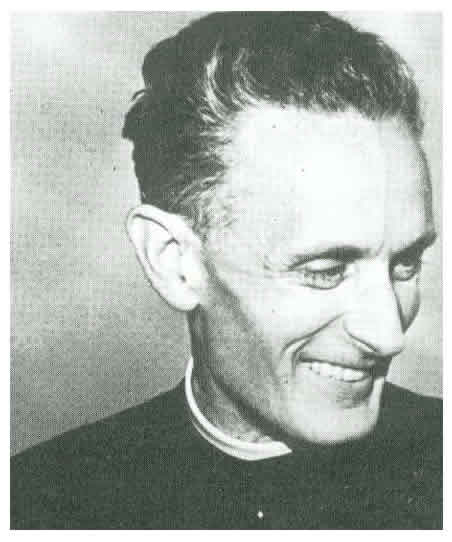
Don Carlo Gnocchi, born on October 25, 1902, in San Colombano al Lambro near Lodi, Italy, is a name that resonates with compassion, dedication, and an unwavering commitment to the welfare of the less fortunate. His life story is one of profound service, marked by his efforts to support war orphans and the disabled, particularly those affected by the atrocities of World War II. This article delves into the life of Don Carlo Gnocchi, exploring the events that shaped his character, his rise to fame as a compassionate priest, and the legacy he left behind.
Early Life and Path to Priesthood
Carlo Gnocchi was born into a modest family. His father, Enrico Gnocchi, was a marble worker, and his mother, Clementina Pasta, was a seamstress. Tragedy struck early in Carlo’s life when he lost his father at the tender age of five. This loss forced the family to move to Milan, where they faced further sorrow as Carlo’s two brothers, Mario and Andrea, succumbed to tuberculosis.
Despite these early hardships, Carlo’s frail health did not deter him from pursuing a life dedicated to spiritual and humanitarian service. He spent considerable time in convalescence due to his weak constitution, often staying with his aunt in Montesiro, a small village in the Brianza region. It was during these formative years that Carlo felt a strong calling to the priesthood.
Carlo Gnocchi entered the seminary under the guidance of Cardinal Andrea Ferrari, and in 1925, he was ordained as a priest by the Archbishop of Milan, Eugenio Tosi. He celebrated his first mass on June 6, 1925, in Montesiro, marking the beginning of a life dedicated to serving others.
Early Ministry and Educational Work
Don Carlo Gnocchi’s first assignment as a priest was as an assistant in various oratories, first in Cernusco Sul Naviglio near Milan, and then in the populous parish of San Pietro in Sala, Milan. His work with the youth quickly earned him a reputation as an exceptional educator and spiritual guide. His dedication to his flock and his innovative approach to pastoral care did not go unnoticed, and soon he was appointed as the spiritual director of the prestigious Gonzaga Institute in Milan, a role he took on in 1936 under the recommendation of Cardinal Ildefonso Schuster.
During his time at the Gonzaga Institute, Don Carlo Gnocchi not only continued his pastoral duties but also immersed himself in pedagogical studies, writing several essays on education. His work extended beyond the walls of the institute as he became the spiritual guide for university students, particularly those of the Second Legion in Milan, many of whom were students at the Catholic University of Milan.
World War II and the Russian Campaign
The outbreak of World War II in 1940 marked a significant turning point in Don Carlo Gnocchi’s life. Italy’s involvement in the war saw many of his young parishioners and students conscripted into the military and sent to the front lines. True to his pastoral commitment, Don Carlo chose to accompany them, volunteering as a military chaplain with the Alpine Battalion “Val Tagliamento.” His first deployment was to the Greek-Albanian front.
Following the conclusion of the campaign in the Balkans, Don Carlo returned briefly to Milan but soon found himself redeployed, this time to the Russian front with the Tridentina Division in 1942. The experiences he endured during the brutal winter retreat of 1943 left an indelible mark on him. The suffering and death he witnessed among the soldiers, as well as the last confessions and prayers he administered, fueled his determination to dedicate his life to a greater cause.
It was during this harrowing retreat that Don Carlo Gnocchi conceived the idea of creating a charitable foundation to care for the war’s most vulnerable victims—children who had lost their families or had been maimed by the conflict. This vision would eventually lead to the establishment of the “Pro Juventute Foundation” after the war.
Post-War Efforts and the Pro Juventute Foundation
After surviving the war and returning to Italy in 1943, Don Carlo Gnocchi embarked on a mission to support the families of fallen soldiers, providing both moral and material assistance. His dedication to this cause extended to helping political refugees and partisans escape to Switzerland, actions that put him at great personal risk. He was eventually arrested by the SS on charges of espionage and anti-regime activities, but his resolve remained unshaken.
In 1945, Don Carlo began to actualize his wartime vision by taking on the role of director at the Institute for War Invalids in Arosio, near Como. It was here that he welcomed the first group of war orphans and disabled children, laying the groundwork for what would become a nationwide initiative. His tireless work earned him the affectionate title of “Father of the Mutilated Children” (Padre dei Mutilatini), as he dedicated himself to their rehabilitation and care.
The demand for his services quickly outgrew the facilities at Arosio, leading to the establishment of additional centers. By 1947, he had secured a large house in Cassano Magnano, Varese, to accommodate more children. His work gained formal recognition in 1949 when the “Federazione Pro Infanzia Mutilata” (Federation for Disabled Children), which he had founded, was officially recognized by the Italian government. In the same year, Alcide De Gasperi, Italy’s Prime Minister, appointed Don Carlo as a consultant to the Presidency of the Council of Ministers on issues related to war orphans and disabled children.
The Pro Juventute Foundation, established in 1951, became the primary organization through which Don Carlo Gnocchi’s charitable work was channeled. This foundation, recognized by a decree from the President of the Republic on February 11, 1952, expanded rapidly, opening new centers across Italy in cities such as Parma, Pessano, Turin, Inverigo, Rome, Salerno, and Pozzolatico. Each center provided specialized care and rehabilitation services for disabled children, many of whom were victims of war.
Legacy and Final Years
Don Carlo Gnocchi’s final years were marked by his relentless pursuit of his vision to create a modern rehabilitation center that would embody his innovative approach to care. In September 1955, he laid the cornerstone for this new facility near the Meazza Stadium (San Siro) in Milan, in the presence of Giovanni Gronchi, the President of Italy. Unfortunately, Don Carlo was diagnosed with a terminal illness, which would prevent him from seeing the completion of his final project.
On February 28, 1956, Don Carlo Gnocchi passed away in Milan’s Columbus Clinic, succumbing to cancer. His death was met with an outpouring of grief from the Italian public. His funeral, held on March 1, was a grand affair, with over 100,000 people attending, including children from the institutions he had founded, soldiers, and ordinary citizens. The Archbishop of Milan, Giovanni Battista Montini (later Pope Paul VI), presided over the service, highlighting the profound impact Don Carlo had on the community.
One of Don Carlo Gnocchi’s final acts of charity was the donation of his corneas to two blind youths, Silvio Colagrande and Amabile Battistello. At the time, organ transplantation was not yet regulated by Italian law, making this gesture both pioneering and controversial. The successful transplants, performed by Professor Cesare Galeazzi, had a significant impact on public opinion and accelerated the legislative process concerning organ donation in Italy.
Beatification and Continuing Influence
Don Carlo Gnocchi’s life of service and sacrifice did not go unrecognized by the Catholic Church. In 1987, Cardinal Carlo Maria Martini initiated the process of beatification, acknowledging Don Carlo’s reputation for holiness and his contributions to society. The diocesan phase of the beatification process concluded in 1991, and on December 20, 2002, Pope John Paul II declared him Venerable.
The beatification of Don Carlo Gnocchi took place on October 25, 2009, a ceremony that was presided over by Cardinal Dionigi Tettamanzi in Milan. This event further solidified Don Carlo’s legacy as a figure of profound spiritual and humanitarian significance.
Conclusion
Don Carlo Gnocchi’s life is a testament to the power of compassion, resilience, and unwavering commitment to the welfare of others. From his humble beginnings in a small village in Italy to his role as a national hero and a symbol of charity, Don Carlo’s journey is one that continues to inspire generations. His work with war orphans and disabled children, his innovative approach to rehabilitation, and his selfless acts of kindness have left an indelible mark on Italian society and the world.
Today, the Pro Juventute Foundation, which he founded, continues to operate, providing care and rehabilitation services to those in need. Don Carlo Gnocchi’s legacy is not only preserved through these ongoing efforts but also through the lives he touched and the hope he instilled in countless individuals.


