
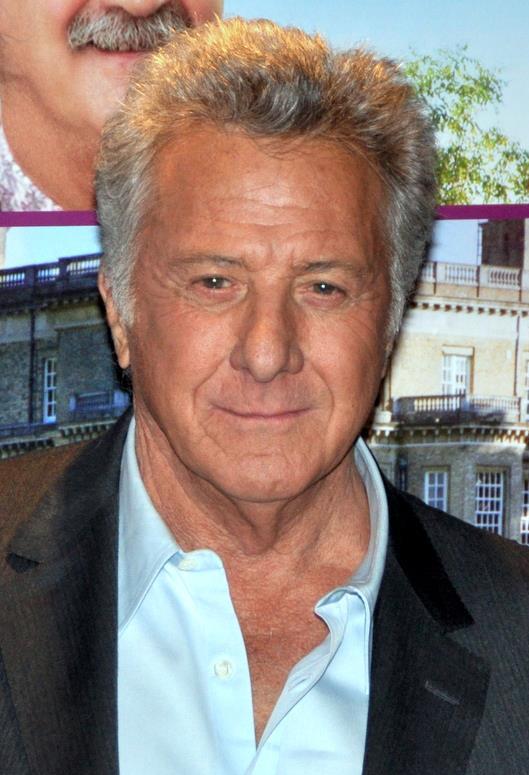
Dustin Hoffman is one of the most celebrated and versatile actors in Hollywood history. Born on August 8, 1937, in Los Angeles, California, Hoffman’s journey to stardom is a testament to his exceptional talent, dedication, and unyielding pursuit of artistic excellence. This article delves into the life, career, and highlights of Dustin Hoffman, exploring how he became a cinematic icon and a symbol of the American film industry.
Early Life and Artistic Beginnings
Dustin Hoffman was born to Lillian (née Gold) and Harry Hoffman, a former jazz pianist who worked as a prop supervisor at Columbia Pictures. Despite being born into a family with connections to the entertainment industry, Hoffman’s early years were far from glamorous. His initial foray into the arts was through music; he enrolled in the Los Angeles Conservatory of Music with hopes of becoming a concert pianist. However, his lack of musical talent soon became apparent, leading him to shift his focus to acting.
Hoffman’s passion for acting was ignited at the Pasadena Playhouse, a prestigious theater school in California. Here, he met fellow aspiring actor Gene Hackman, with whom he formed a lifelong friendship. The two young actors, struggling to make ends meet, moved to New York City in the late 1950s to pursue their dreams on the stage. Hoffman studied under the legendary acting coach Lee Strasberg at the Actors Studio, where he honed his craft in method acting, a technique that would define his career.
Rise to Fame: The Graduate and Beyond
Hoffman’s big break came in 1967 with the release of “The Graduate,” directed by Mike Nichols. Hoffman’s portrayal of Benjamin Braddock, a disillusioned college graduate seduced by an older woman, was nothing short of revolutionary. His performance resonated with the counterculture movement of the 1960s, capturing the angst and confusion of a generation. The film was a massive success, and Hoffman’s nuanced, naturalistic acting style earned him his first Academy Award nomination.
“The Graduate” was more than just a successful film; it was a cultural phenomenon that established Hoffman as a leading actor in Hollywood. His portrayal of Benjamin Braddock was both relatable and groundbreaking, challenging the traditional image of a Hollywood leading man. Instead of the typical rugged, handsome hero, Hoffman brought a sense of vulnerability and realism to the role, redefining what it meant to be a leading actor.
The 1970s: A Decade of Iconic Roles
The 1970s were a defining decade for Dustin Hoffman. Following the success of “The Graduate,” Hoffman took on a series of challenging roles that showcased his versatility and commitment to his craft. In 1969, he starred in “Midnight Cowboy” as Ratso Rizzo, a con artist with dreams of a better life. The film, directed by John Schlesinger, was a critical and commercial success, and Hoffman’s performance earned him another Academy Award nomination.
Hoffman’s ability to transform into his characters was further demonstrated in “Lenny” (1974), where he portrayed the controversial comedian Lenny Bruce. His portrayal of Bruce was raw and intense, capturing the comedian’s tortured genius and the societal pressures that led to his downfall. The role earned Hoffman yet another Oscar nomination, cementing his reputation as one of the finest actors of his generation.
In 1976, Hoffman starred in two films that would become classics: “Marathon Man” and “All the President’s Men.” In “Marathon Man,” Hoffman played a graduate student who unwittingly becomes involved in a Nazi war criminal’s sinister plot. His intense performance in the film, particularly the infamous torture scene, remains one of the most memorable in his career. “All the President’s Men,” directed by Alan J. Pakula, saw Hoffman portraying Carl Bernstein, one of the journalists who uncovered the Watergate scandal. The film was a critical success and further solidified Hoffman’s status as a Hollywood heavyweight.
Kramer vs. Kramer and Tootsie: Awards and Accolades
The late 1970s and early 1980s marked a period of critical acclaim and awards for Hoffman. In 1979, he starred in “Kramer vs. Kramer” alongside Meryl Streep. The film, which dealt with the emotional and legal complexities of divorce and child custody, was a box office hit and received widespread acclaim. Hoffman’s portrayal of Ted Kramer, a father fighting for custody of his son, was both heart-wrenching and deeply human. His performance earned him his first Academy Award for Best Actor, a recognition that was long overdue.
In 1982, Hoffman took on the role of Michael Dorsey in “Tootsie,” a comedy about a struggling actor who disguises himself as a woman to land a role in a soap opera. The film was a critical and commercial success, and Hoffman’s performance as both Michael and his alter ego Dorothy Michaels was praised for its humor, sensitivity, and complexity. “Tootsie” was not only a comedy but also a commentary on gender roles and the struggles of women in the entertainment industry. Hoffman received another Oscar nomination for his performance, further cementing his legacy as a versatile and talented actor.
Rain Man and Continued Success
The late 1980s brought Hoffman another iconic role in “Rain Man” (1988), where he played Raymond Babbitt, an autistic savant. The film, directed by Barry Levinson, was a massive success and won four Academy Awards, including Best Picture. Hoffman’s portrayal of Raymond was hailed as one of the most accurate and sensitive depictions of autism in film, and it earned him his second Oscar for Best Actor. The role required Hoffman to immerse himself completely in the character, studying autism extensively to deliver a performance that was both authentic and respectful.
Hoffman’s success continued into the 1990s with roles in films like “Hook” (1991), where he played the titular character opposite Robin Williams’ Peter Pan, and “Wag the Dog” (1997), a political satire in which he starred alongside Robert De Niro. While these films were not as critically acclaimed as some of his earlier work, they demonstrated Hoffman’s ability to balance serious drama with more lighthearted, commercial roles.
Personal Life and Off-Screen Controversies
Dustin Hoffman’s personal life has been as complex and intriguing as his on-screen roles. He has been married twice, first to Anne Byrne from 1969 to 1980, with whom he had two children, and then to Lisa Gottsegen in 1980, with whom he has four children. Hoffman’s dedication to his family has always been a priority, and he has often spoken about the challenges of balancing his career with his responsibilities as a father.
Despite his success, Hoffman has not been without controversy. He has been known for his intense and sometimes difficult behavior on set, with several directors and co-stars describing him as demanding and perfectionistic. In recent years, Hoffman has also faced allegations of sexual misconduct, which he has denied. These allegations have undoubtedly cast a shadow over his career, but they have also sparked important conversations about power dynamics and accountability in Hollywood.
Legacy and Impact on Hollywood
Dustin Hoffman’s impact on Hollywood cannot be overstated. Over the course of his career, he has redefined what it means to be a leading man in American cinema. His willingness to take on challenging, unconventional roles has paved the way for future generations of actors to explore a wider range of characters and stories.
Hoffman’s influence extends beyond his acting. His commitment to his craft and his refusal to compromise his artistic integrity have made him a role model for aspiring actors. Despite the controversies that have marred his later years, there is no denying that Dustin Hoffman’s contributions to cinema have left an indelible mark on the industry.
Conclusion
Dustin Hoffman’s career is a testament to his talent, determination, and passion for acting. From his early days as a struggling actor in New York to his rise as one of Hollywood’s most respected and influential figures, Hoffman has continually pushed the boundaries of what is possible in film. His performances have resonated with audiences for decades, and his legacy as a true Hollywood icon is secure.
Whether portraying a disillusioned college graduate, a desperate father, or an autistic savant, Dustin Hoffman has consistently delivered performances that are both powerful and unforgettable. His ability to bring depth and humanity to his characters has made him one of the most beloved and admired actors of all time.


