
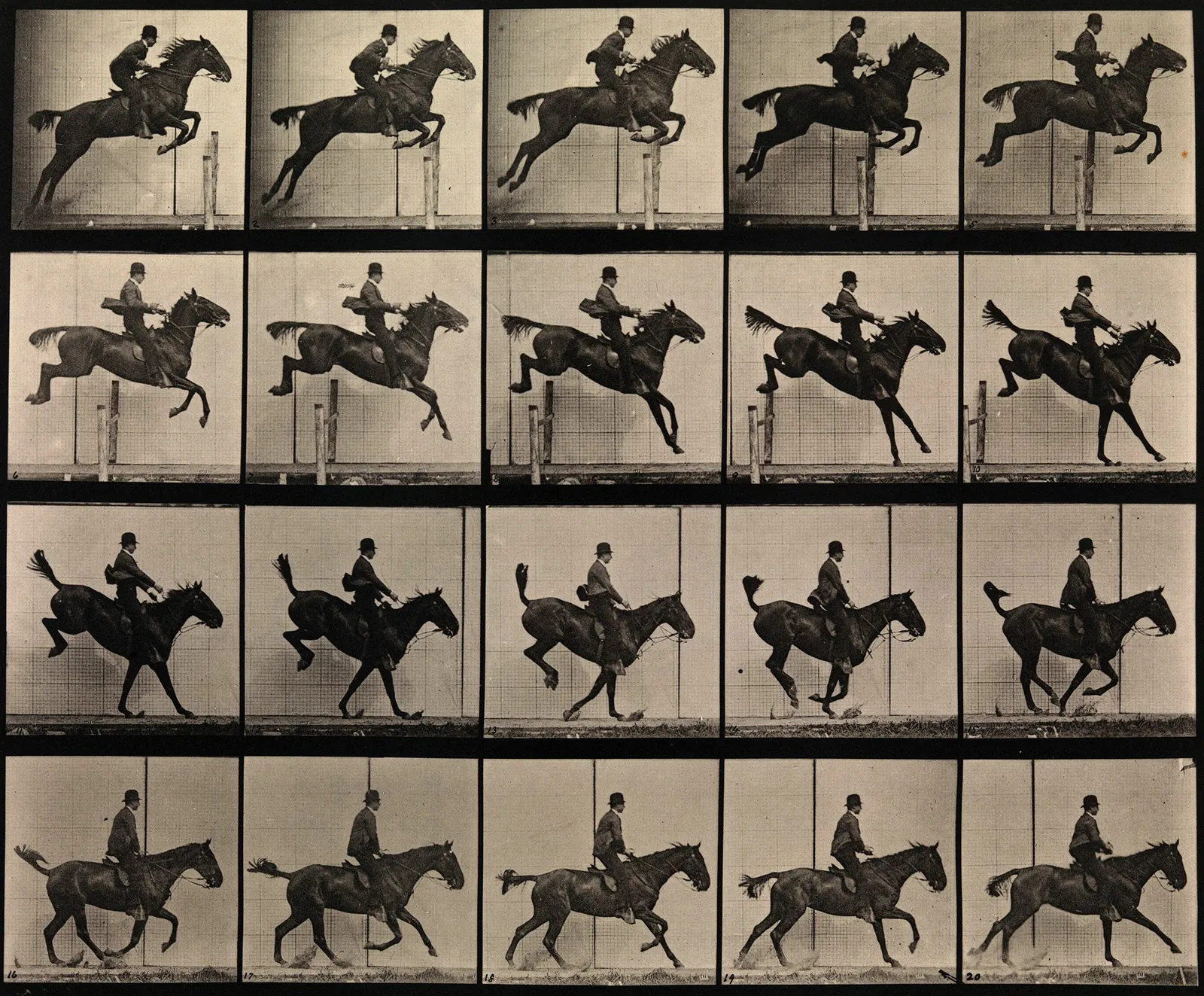
Eadweard Muybridge, born Edward James Muggeridge on April 9, 1830, in Kingston upon Thames, England, is widely regarded as one of the most innovative and influential pioneers in the history of photography and motion studies. His work laid the foundation for the development of motion pictures and significantly influenced both scientific inquiry and the arts. Muybridge’s life, marked by both extraordinary achievements and personal tragedy, is a compelling story of creativity, innovation, and determination.
Early Life and Career Beginnings
Eadweard Muybridge was born into a modest family in England. From an early age, he demonstrated a keen interest in the emerging technologies of the time, particularly in photography. His initial career, however, began in a different field; Muybridge worked as a bookseller and publisher before eventually transitioning into photography, a medium that would come to define his legacy.
In the early 1860s, Muybridge immigrated to the United States, settling in San Francisco, California, where he quickly established himself as a professional photographer. His early works, particularly his stunning landscape photographs of Yosemite National Park and the cityscapes of San Francisco, garnered considerable acclaim. These images, often published under the pseudonym “Helios,” showcased his technical prowess and artistic sensibility, helping to establish him as a leading figure in the burgeoning field of photography.
The Horse in Motion: A Revolutionary Breakthrough
Muybridge’s fame and enduring legacy are most closely associated with his groundbreaking work in motion photography, a field he almost single-handedly pioneered. In 1872, Leland Stanford, a wealthy businessman and former governor of California, approached Muybridge with a challenge. Stanford, an avid horse breeder, believed that there was a moment during a horse’s gallop when all four of its hooves were off the ground simultaneously. This theory, however, was the subject of much debate, as it was impossible to confirm with the naked eye due to the speed of the horse’s movement.
Muybridge accepted the challenge and began experimenting with techniques to capture motion in a series of photographs. After years of experimentation and technical setbacks, Muybridge succeeded in 1878. Using a series of 24 cameras lined up along the racetrack, each triggered by a tripwire as the horse passed, Muybridge captured the sequence of images that would become known as “The Horse in Motion.” These photographs conclusively demonstrated that during a horse’s gallop, all four hooves do indeed leave the ground simultaneously, albeit not in the way artists had traditionally depicted.
This breakthrough was not just a victory for Stanford but a revolutionary moment in the history of photography and motion studies. Muybridge’s work provided a new way of understanding movement and laid the groundwork for the development of motion pictures. His innovative use of multiple cameras to capture successive stages of motion was a precursor to the cinematographic techniques that would later be developed by the likes of Thomas Edison and the Lumière brothers.
Personal Tragedy and Legal Troubles
Despite his professional successes, Muybridge’s life was marred by personal tragedy and scandal. In 1874, Muybridge discovered that his wife, Flora, had been having an affair with a man named Harry Larkyns, who was the mayor of San Francisco at the time. Consumed by jealousy and rage, Muybridge confronted Larkyns and shot him dead on October 17, 1874.
Muybridge was arrested and charged with murder. However, during the trial, his defense argued that the killing was a “justifiable homicide” due to the intense provocation caused by the affair. In a surprising turn of events, Muybridge was acquitted, and the case was later dramatized in the 1982 opera “The Photographer” by Philip Glass, highlighting the intense emotional turmoil that marked this period of his life.
Innovations in Motion Photography: The Zoopraxiscope
Following his acquittal, Muybridge returned to his work with renewed vigor, continuing to refine his techniques for capturing motion. One of his most significant contributions to the field was the invention of the Zoopraxiscope in 1879. This device, a precursor to modern movie projectors, allowed Muybridge to project sequential images in rapid succession, creating the illusion of motion. The Zoopraxiscope was a critical step in the evolution of motion pictures, demonstrating how photography could be used not just to capture still images but to recreate the dynamics of movement.
The Zoopraxiscope quickly became a sensation, with Muybridge traveling across Europe and the United States to showcase his invention. He gave lectures and demonstrations at universities, scientific institutions, and exhibitions, further cementing his reputation as a leading figure in the field of photography. His lectures often featured sequences of animals and humans in motion, including his famous studies of a horse’s gallop, athletes in action, and people engaged in everyday activities.
Legacy in Science and Art
Muybridge’s work had a profound impact on both science and art. His motion studies provided invaluable insights into the biomechanics of movement, influencing fields as diverse as sports science, anatomy, and even robotics. By meticulously capturing the nuances of human and animal motion, Muybridge contributed to a deeper understanding of how bodies move, leading to advancements in biomechanics and the study of kinesiology.
In the art world, Muybridge’s photographs challenged traditional representations of movement and influenced a generation of artists. Painters such as Edgar Degas and Thomas Eakins studied Muybridge’s motion sequences to improve their depiction of movement in their work. Degas, in particular, used Muybridge’s studies to inform his paintings of dancers and horses, bringing a new level of realism and dynamism to his art.
The impact of Muybridge’s work extended beyond traditional visual arts. The accuracy with which he captured movement exposed the limitations of earlier artistic conventions, forcing artists to reconsider how they represented the natural world. Muybridge’s photographs were not merely scientific studies; they were also works of art that revealed the hidden beauty and complexity of motion, forever changing the way it was perceived and represented.
Later Years and Final Contributions
In the final decades of his life, Muybridge continued to explore the possibilities of motion photography. He published several important works, including “Animal Locomotion” in 1887, a comprehensive study featuring thousands of motion photographs of various subjects, from horses to humans. This monumental work remains one of the most significant contributions to the study of motion and has been used as a reference by scientists, artists, and filmmakers for over a century.
Muybridge returned to England in 1894, where he continued to lecture and demonstrate his work. Although his later years were quieter, his contributions to photography and motion studies were widely recognized. Muybridge’s influence extended beyond his lifetime, with his techniques and discoveries continuing to shape the development of photography, film, and visual media.
On May 8, 1904, Eadweard Muybridge passed away in his hometown of Kingston upon Thames. He died at the age of 74, leaving behind a legacy that would influence generations of photographers, scientists, and artists.
Legacy and Historical Context
Eadweard Muybridge’s life and work cannot be fully appreciated without considering the historical context in which he operated. The 19th century was a time of rapid technological advancements, particularly in photography, which was still a relatively new medium. Muybridge was among the first to recognize the potential of photography not just as a tool for capturing still images but as a means of exploring and understanding motion.
Muybridge’s work emerged at a time when society was becoming increasingly interested in the scientific study of movement and anatomy. His photographs provided a visual record that was more precise and detailed than anything that had come before, challenging existing theories and assumptions about how animals and humans moved. This intersection of art and science in Muybridge’s work was a reflection of the broader trends of the period, where technological advancements were increasingly being applied to artistic and scientific inquiries.
Moreover, Muybridge’s contributions to the development of motion pictures cannot be overstated. His experiments with sequential photography and the invention of the Zoopraxiscope were direct precursors to the motion picture camera. The techniques he developed paved the way for the emergence of cinema, making him a pivotal figure in the history of visual media.
Conclusion: A Pioneer of Motion
Eadweard Muybridge’s life was a testament to the power of innovation and perseverance. From his early days as a landscape photographer to his groundbreaking work in motion studies, Muybridge consistently pushed the boundaries of what was possible with photography. His ability to capture the fleeting moments of motion transformed our understanding of movement and laid the groundwork for the development of film and animation.
Muybridge’s legacy is one of both artistic and scientific achievement. He was a man who saw the potential in a new technology and used it to explore the world in ways that had never been done before. His work not only influenced the scientific study of motion but also changed the course of visual art, challenging artists to rethink how they represented movement and time.
Today, Eadweard Muybridge is remembered as one of the most important figures in the history of photography. His contributions continue to be celebrated, and his influence can be seen in the work of photographers, filmmakers, and artists around the world. Muybridge’s story is a reminder of the impact that one individual can have on multiple fields, leaving a legacy that endures long after their lifetime.


