
Introduction
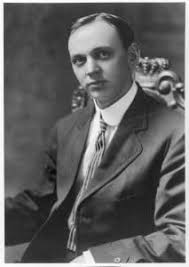
Edgar Cayce, often referred to as the “Sleeping Prophet,” is one of the most intriguing and enigmatic figures of the 20th century. Born on March 18, 1877, in Hopkinsville, Kentucky, Cayce became renowned for his unique ability to diagnose illnesses and offer remedies while in a self-induced trance state. His life and work have left an indelible mark on the fields of alternative medicine, spirituality, and esoteric studies. This article delves into the life of Edgar Cayce, exploring his age, the rise to fame, and the key highlights that define his extraordinary legacy.
Early Life and the First Glimpse of the Extraordinary
Edgar Cayce was born into a modest farming family in rural Kentucky. From a young age, Cayce exhibited an unusual sensitivity and a deep sense of spirituality, which set him apart from his peers. At the age of 13, Cayce had a profound spiritual experience that would shape the rest of his life. He claimed to have had a vision of an angelic being who asked him what he desired most. Cayce’s response was simple yet powerful: “To help others, especially children.”
This encounter was a pivotal moment in Cayce’s life, igniting a desire to serve others that would guide his actions throughout his life. However, it wasn’t until later that Cayce’s extraordinary abilities began to manifest in ways that would defy conventional understanding.
The Emergence of the Sleeping Prophet
Edgar Cayce’s journey as a healer and prophet began in an unexpected way. As a young man, Cayce was struck by a severe throat ailment that left him unable to speak above a whisper. Despite consulting numerous doctors, none could provide a cure. In desperation, Cayce turned to self-hypnosis, a practice he had begun to explore out of curiosity. While in a trance state, Cayce began to speak clearly and with authority, diagnosing his condition and prescribing a remedy that eventually restored his voice.
This incident marked the beginning of Cayce’s exploration of his trance-induced abilities. Word of his unique gift quickly spread, and people from all walks of life began to seek him out for help. Cayce would enter a self-induced trance, during which he claimed to access information from what he described as the “Akashic Records,” a metaphysical compendium of all knowledge and history, often referred to as the “Book of Life.”
The Healing Sessions: Diagnosis from a Distance
One of the most remarkable aspects of Edgar Cayce’s work was his ability to diagnose and prescribe treatments for individuals he had never met, often located hundreds or even thousands of miles away. Cayce’s “readings,” as they were called, were conducted while he was in a deep trance. During these sessions, he would describe in detail the physical ailments of the person in question and recommend specific remedies, ranging from diet and lifestyle changes to the use of obscure herbal treatments and physical therapies.
Cayce’s readings were astonishingly accurate, often diagnosing conditions that had baffled conventional doctors. For instance, he once prescribed a treatment for a young girl named Aime Dietrich, who had suffered from severe convulsions after contracting influenza. Despite the failure of traditional medical treatments, Cayce was able to pinpoint the underlying cause of her condition—a previous injury—and recommended a series of osteopathic treatments that eventually cured her.
Another well-documented case involved Cayce diagnosing a man with tuberculosis and prescribing a treatment regimen that successfully cured him. These and many other cases contributed to Cayce’s growing reputation as a healer with an uncanny ability to access knowledge beyond the reach of ordinary senses.
The Expansion of Cayce’s Work: From Healing to Prophecy
While Edgar Cayce is perhaps best known for his medical readings, his work extended far beyond the realm of physical health. As his reputation grew, Cayce began to explore a wide range of topics during his trance sessions, including spirituality, reincarnation, dreams, ancient civilizations, and even future prophecies.
One of the most controversial aspects of Cayce’s work was his advocacy of the concept of reincarnation. Despite being a devout Christian, Cayce’s readings frequently referenced past lives, both his own and those of the individuals he was helping. These readings provided detailed accounts of previous incarnations, often connecting them to the challenges and circumstances of the individual’s current life. This was a radical departure from the orthodox Christian beliefs of the time, but Cayce maintained that his readings were guided by a higher spiritual truth.
Cayce also made several predictions about the future, some of which were remarkably accurate. He predicted the stock market crash of 1929 and the onset of World War II, among other events. However, not all of his prophecies came to pass, leading some to view his work with skepticism. Despite this, Cayce’s predictions continue to be studied and debated by scholars and enthusiasts alike.
The Founding of the Association for Research and Enlightenment
In 1931, Edgar Cayce’s work reached a new level of organization and influence with the founding of the Association for Research and Enlightenment (A.R.E.) in Virginia Beach, Virginia. The A.R.E. was established to study and disseminate the vast body of knowledge contained in Cayce’s readings. Over the years, it has grown into a global organization dedicated to exploring spirituality, health, and personal growth.
The A.R.E. houses nearly 15,000 documented readings, covering a wide array of subjects. Approximately 60% of these readings focus on diagnosing and treating physical ailments, while the remaining 40% delve into spiritual growth, dream interpretation, reincarnation, and esoteric subjects like Atlantis and ancient Egypt. The A.R.E. also sponsors ongoing research into Cayce’s work, as well as educational programs and study groups around the world.
Cayce’s legacy is not only preserved through the A.R.E. but also through the many books, documentaries, and studies that have been produced based on his life and work. His teachings continue to inspire individuals seeking a deeper understanding of themselves and the world around them.
The Ethical and Spiritual Dimensions of Cayce’s Work
Throughout his life, Edgar Cayce was guided by a strong sense of ethics and spirituality. Despite the potential for financial gain, Cayce never sought to profit from his abilities. He often conducted readings free of charge, relying on donations to support his work and sustain his family. This selflessness earned him the respect and admiration of those who sought his help.
Cayce’s deep Christian faith was the foundation of his life and work. He was a lifelong student of the Bible, and his readings often incorporated biblical teachings and principles. Cayce believed that his abilities were a gift from God, and he used them to fulfill his mission of helping others. His emphasis on prayer, meditation, and the power of positive thought were central themes in his readings, reflecting his belief in the interconnectedness of physical, mental, and spiritual well-being.
The Final Years and Enduring Legacy
Edgar Cayce continued to give readings and help others until his death on January 3, 1945. The demands of his work took a toll on his health, and in his later years, Cayce suffered from severe exhaustion. Despite this, he remained committed to his mission, conducting readings up until shortly before his passing.
Cayce’s legacy endures through the continued work of the A.R.E. and the countless individuals who have been influenced by his teachings. His holistic approach to health, which emphasizes the importance of treating the whole person—body, mind, and spirit—has had a lasting impact on the field of alternative medicine. Additionally, his explorations into spirituality, reincarnation, and ancient wisdom continue to inspire those who seek to understand the deeper mysteries of life.
Conclusion
Edgar Cayce was a man of extraordinary gifts, whose life and work transcended the boundaries of conventional understanding. From his humble beginnings in rural Kentucky to his emergence as one of the most celebrated psychics of the 20th century, Cayce’s journey was marked by a deep commitment to helping others and exploring the mysteries of the human condition. His readings, which spanned topics from health and healing to spirituality and prophecy, continue to captivate and inspire people around the world.
Cayce’s enduring influence is a testament to the power of his vision and the timeless relevance of his teachings. As we continue to explore the intersections of science, spirituality, and healing, the life and work of Edgar Cayce serve as a reminder of the potential within each of us to access higher knowledge and use it for the betterment of humanity.


