
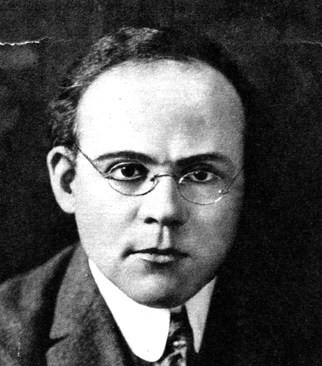
Edgar Lee Masters, an iconic American poet, was born on August 23, 1868, in Garnett, Kansas. His life, marked by early tragedy, literary brilliance, and eventual decline, encapsulates the complexities of an artist who gained fame and faced the challenges that came with it. This article delves into the life of Edgar Lee Masters, exploring his age, rise to fame, and key life highlights, while providing a nuanced understanding of his contributions to American literature.
Early Life and Formative Years
Edgar Lee Masters was born to Emma J. Dexter and Wallace Masters, who had moved to Garnett for a brief period to start a legal practice. However, the family soon returned to the paternal grandparents’ farm near Petersburg in Menard County, Illinois. It was here that Masters spent his formative years, a period marked by profound personal loss. In 1878, Masters’ younger brother passed away, and the following year, his closest friend was tragically killed in a train accident. These early experiences with death and loss would later deeply influence his writing.
In 1880, the Masters family moved to Lewiston, Maine, where Edgar attended high school. During this time, he began to express his literary talents, contributing articles to the Chicago Daily News. The cultural atmosphere of Lewiston, coupled with the proximity to the Oak Hill Cemetery and the Spoon River, would later become significant sources of inspiration for his most famous work, the Spoon River Anthology.
The Road to Literary Fame
Masters’ journey to literary fame was not without its challenges. In 1889 and 1890, he attended Knox Academy, a preparatory program at Knox College, but was forced to abandon his studies due to financial difficulties. Despite these setbacks, Masters pursued a career in law, working in his father’s legal office before earning admission to the Illinois bar.
By 1893, Masters had established himself as a partner in the Chicago law firm of Kickham Scanlan. This period marked the beginning of his dual career as a lawyer and a writer. In 1898, Masters married Helen M. Jenkins, the daughter of a fellow attorney, and the couple had three children together. However, his personal life was tumultuous, with a strained marriage and a tumultuous affair that led to professional disputes and personal turmoil.
It was during these years of personal and professional instability that Masters began to channel his experiences and observations into poetry. His work reflected his disillusionment with the societal norms of his time, particularly the hypocrisy and narrow-mindedness he perceived in small-town America. This disillusionment culminated in the creation of the Spoon River Anthology, a collection of free-verse epitaphs that gave voice to the deceased residents of a fictional town, revealing their secrets, regrets, and unfulfilled desires.
Published in 1915, the Spoon River Anthology became an instant success, catapulting Masters to literary fame. The work was groundbreaking in its candid portrayal of small-town life, offering a stark contrast to the idealized depictions commonly found in American literature of the time. However, while the anthology brought Masters widespread recognition, it also led to his estrangement from the very society he critiqued, costing him his position in Chicago’s legal and social circles.
Life After Spoon River: Struggles and Legacy
Following the success of the Spoon River Anthology, Masters continued to write, but he struggled to replicate the critical and commercial success of his earlier work. In 1924, he published The New Spoon River, a sequel to his most famous anthology, but it was met with lukewarm reception. This disappointment, coupled with ongoing financial difficulties, led Masters to abandon his legal career in favor of full-time writing.
Despite his early success, Masters’ later years were marked by a decline in both his literary output and personal circumstances. He moved to New York City, where he resided at the Chelsea Hotel, relying on loans from friends to sustain himself. During this period, Masters’ writing spanned various genres, including poetry, biographies, historical essays, and novels, but none matched the acclaim of his work from the early 20th century.
In recognition of his contributions to American literature, Masters received several prestigious awards, including the Mark Twain Silver Medal in 1936, the Poetry Society of America Prize, and the Academy of American Poets Fellowship in 1942, and the Shelley Memorial Award in 1944. These honors underscored his lasting impact on the literary world, even as his personal fortunes waned.
Masters’ personal life continued to be fraught with difficulties. His health began to deteriorate, and he moved to North Carolina with his wife in search of a more temperate climate. Despite his declining physical condition, Masters remained creatively active, although his later works never recaptured the brilliance of Spoon River.
Edgar Lee Masters passed away on March 5, 1950, at the age of 81, in relative obscurity. He died of pneumonia and was buried in Oakland Cemetery in Petersburg, Illinois. His tombstone bears an epitaph taken from his poem “To-morrow is My Birthday” from the collection Toward the Gulf:
Good friends, let’s to the fields… | After a little walk and by your pardon, | I think I’ll sleep, there is no sweeter thing. | Nor fate more blessed than to sleep. | I am a dream out of a blessed sleep | Let’s walk, and hear the lark.
This poignant epitaph reflects Masters’ lifelong preoccupation with the themes of death, rest, and the passage of time—an apt summation of his literary legacy.
Historical Context and Literary Significance
To fully appreciate the significance of Edgar Lee Masters and his work, it’s essential to consider the historical context in which he wrote. The late 19th and early 20th centuries were a period of significant social and cultural change in the United States. The country was transitioning from a predominantly rural society to an increasingly urbanized and industrialized nation. This shift brought about profound changes in American life, leading to a growing sense of disillusionment with traditional values and institutions.
Masters’ Spoon River Anthology can be seen as a response to these changes. Through his portrayal of the fictional town of Spoon River, Masters provided a critical examination of the American small-town experience, exposing the underlying tensions, hypocrisies, and unspoken truths that characterized life in rural communities. His work resonated with readers who were grappling with the contradictions of modern life, and it offered a new way of understanding the complexities of American society.
Moreover, Masters’ use of free verse in the Spoon River Anthology was a significant departure from the more formal poetic styles that had dominated American literature up to that point. His conversational, almost confessional tone, and his focus on ordinary people’s lives paved the way for later developments in American poetry, particularly the rise of modernism.
The Enduring Legacy of Edgar Lee Masters
Although Edgar Lee Masters is often remembered primarily for the Spoon River Anthology, his broader body of work and his impact on American literature should not be overlooked. Masters’ exploration of the human condition, his willingness to confront uncomfortable truths, and his innovative use of poetic form have left a lasting mark on the literary landscape.
Today, the Spoon River Anthology remains a seminal work, studied in literature classes across the United States and beyond. Its influence can be seen in the works of later American poets and writers who have continued to explore the themes of mortality, community, and the complexities of the human experience.
In conclusion, Edgar Lee Masters’ life and work offer a fascinating glimpse into the struggles and triumphs of an American poet who dared to challenge the conventions of his time. His legacy endures not only in the pages of his most famous work but also in the ongoing dialogue about the role of the artist in society and the power of literature to reveal the hidden truths of the human experience.


