
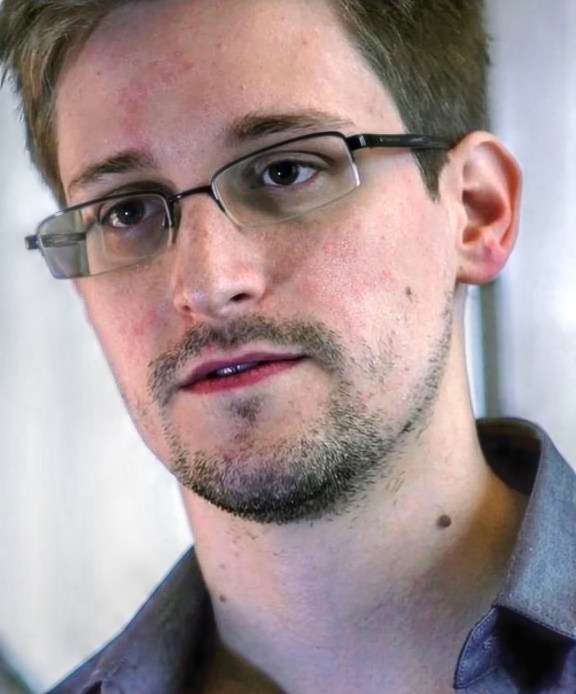
Edward Snowden, a name that resonates with notions of secrecy, surveillance, and the power of information in the modern world, is a figure whose impact on global discourse around privacy and government transparency is profound. Born on June 21, 1983, in Elizabeth City, North Carolina, Snowden’s journey from a young man with a keen interest in technology to a globally recognized whistleblower is nothing short of remarkable.
Early Life and Education
Edward Joseph Snowden was born to a family with deep roots in public service. His father was an officer in the United States Coast Guard, and his mother worked as a clerk at the Federal Court. Growing up in Wilmington, North Carolina, Snowden’s interest in technology was evident early on. However, his path was not straightforward. In 1999, Snowden moved with his family to Ellicott City, Maryland, where he enrolled at Anne Arundel Community College. His studies in computer science were promising, but a bout of illness forced him to take a break, ultimately leading him to leave college without completing his degree.
Snowden’s formal education may have been cut short, but his self-taught expertise in computer systems and his deep understanding of technology opened doors that would eventually lead him to some of the most secretive corners of the U.S. government.
Military Service and Entry into Intelligence
At the age of 20, in 2004, Snowden enlisted in the United States Army as a recruit for the Special Forces. Motivated by a desire to serve his country, particularly in the conflict in Iraq, his military career was unfortunately brief. Just four months into training, a serious accident resulted in the fracture of both his legs, leading to his discharge.
Undeterred, Snowden redirected his ambitions toward intelligence work. He took a job as a security guard at the University of Maryland’s Center for Advanced Study, a position that allowed him to enter the orbit of the National Security Agency (NSA). It wasn’t long before he was recruited by the Central Intelligence Agency (CIA) to work on cybersecurity, a role that would set the stage for his later actions.
A Rising Career in Intelligence
By 2007, Snowden’s skills had earned him a diplomatic cover in Geneva, Switzerland, where he was tasked with maintaining the security of the CIA’s computer networks. His work was not just technically demanding but also highly sensitive, involving the protection of some of the nation’s most critical information assets.
Despite his growing career and a comfortable salary, Snowden began to grow disillusioned with the operations he was part of, particularly as he became aware of the extensive surveillance programs that were being conducted without public knowledge or consent. This disillusionment was the seed that would grow into his later whistleblowing activities.
The Decision to Become a Whistleblower
In early 2013, Edward Snowden made a decision that would change his life—and arguably the world—forever. He reached out to Laura Poitras, a documentary filmmaker known for her work on issues related to government surveillance, and Glenn Greenwald, a journalist at The Guardian. Using the codename “Verax,” Snowden began to share classified information that revealed the vast scale of global surveillance operations conducted by the NSA and other intelligence agencies.
Snowden’s revelations included details about programs like PRISM, which allowed the NSA to collect data from major tech companies, and the monitoring of telephone metadata on a massive scale. The information he provided led to a series of explosive articles in The Guardian and The Washington Post, starting in June 2013.
The impact of these disclosures was immediate and far-reaching. Governments around the world were forced to confront the reality of the surveillance state, and public debates about privacy, security, and the role of government in the digital age were ignited. Snowden’s decision to reveal his identity shortly after the first articles were published only added to the drama, making him a symbol of both heroism and betrayal, depending on one’s perspective.
The Fallout and Life in Exile
On June 14, 2013, just days after his identity was revealed, the U.S. government filed charges against Snowden under the Espionage Act. Accused of unauthorized communication of national defense information and theft of government property, Snowden faced a life in hiding. With the help of WikiLeaks, he fled to Hong Kong and then to Russia, where he was granted asylum.
Snowden’s life in exile has been marked by both isolation and continued influence. From his location in Russia, he has remained an active participant in global discussions about privacy and government surveillance, often appearing via video link at conferences and events.
In 2015, the European Parliament called on its member states to protect Snowden from extradition, recognizing his role as a whistleblower and a defender of human rights. This was a significant moment of international recognition, although it did little to change his status with the U.S. government.
“Permanent Record” and Legacy
In 2019, Edward Snowden published his autobiography, Permanent Record, in which he detailed his journey from a young man interested in computers to a whistleblower living in exile. The book quickly became a bestseller, offering readers a deep insight into Snowden’s motivations, the decisions he made, and the consequences he continues to face.
Snowden’s story is one that raises fundamental questions about the balance between national security and individual privacy, the power of the state versus the rights of citizens, and the responsibilities of those who work within the system. His actions have led to significant changes in how governments and companies handle data and have sparked ongoing debates about the role of surveillance in modern society.
Edward Snowden Today
As of today, Edward Snowden continues to live in Russia, where he has been granted permanent residency. His influence remains strong, particularly among those who advocate for greater transparency and accountability in government. Snowden’s disclosures have led to various legal and policy changes in the United States and other countries, though many of the programs he exposed continue in some form.
Snowden’s life is a testament to the power of information and the profound impact that one individual can have on the world. His story is not just one of secrecy and surveillance but also of courage and the ongoing struggle for freedom in the digital age.


