
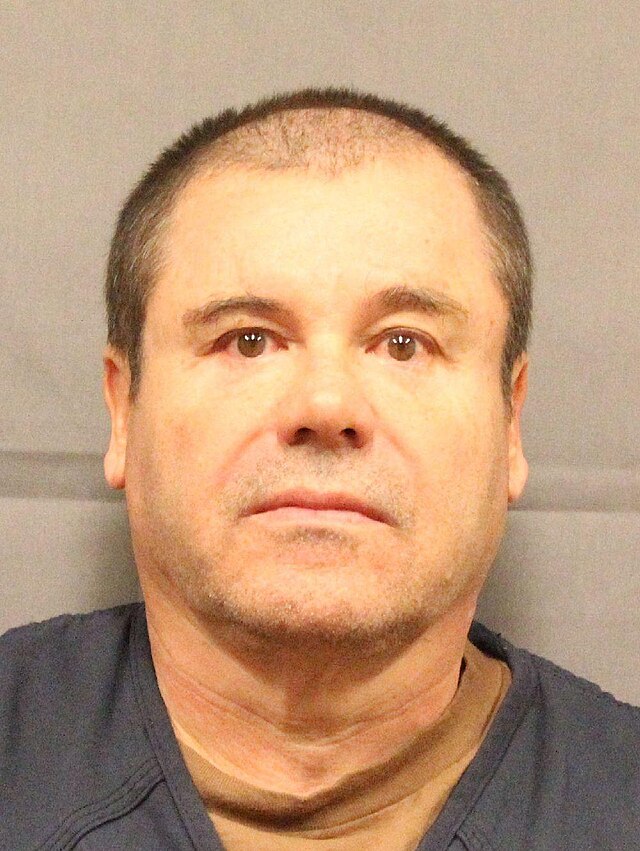
Joaquín Archivaldo Guzmán Loera, widely known as El Chapo, is one of the most infamous and powerful drug lords in history. Born on April 4, 1957, in the rural community of La Tuna, Badiraguato, in the Mexican state of Sinaloa, Guzmán’s life is a story of immense power, wealth, violence, and eventual downfall. His moniker, “El Chapo,” translates to “Shorty,” reflecting his relatively short stature of 5’6″, but his impact on global drug trafficking is anything but small. This article delves into the life, rise, and eventual capture of El Chapo, exploring the nuances of his criminal empire, his personal life, and the broader implications of his reign as the head of the Sinaloa Cartel.
Early Life and Background
Joaquín Guzmán was born into a poor family in the mountainous region of Sinaloa, a state that has long been a hotbed for drug cultivation and trafficking. His father, Emilio Guzmán Bustillos, was reportedly a cattle rancher and opium poppy farmer. This early exposure to the drug trade set the stage for Guzmán’s future career. Little is known about his early education, but it is widely believed that he left school at a young age to help his father in the fields.
By the age of 15, Guzmán had already begun cultivating marijuana, which he sold in nearby towns. This early start in the drug trade provided him with valuable experience and connections that would later help him rise to power within the drug trafficking world.
Rise to Power: The Sinaloa Cartel
In the 1980s, Guzmán began working for Miguel Ángel Félix Gallardo, also known as “El Padrino” (The Godfather), who was the head of the Guadalajara Cartel and one of the most powerful drug traffickers in Mexico at the time. Guzmán quickly rose through the ranks due to his cunning, ruthlessness, and ability to efficiently move large quantities of drugs across the border into the United States. His expertise in logistics earned him the nickname “El Rápido” (The Fast One) because of his ability to quickly and efficiently transport drugs.
After Félix Gallardo’s arrest in 1989, the Guadalajara Cartel splintered into smaller factions. Guzmán took advantage of the power vacuum and co-founded the Sinaloa Cartel, which would go on to become one of the most powerful drug trafficking organizations in the world. Under Guzmán’s leadership, the Sinaloa Cartel controlled much of the drug trafficking from Latin America to the United States, dealing primarily in cocaine, heroin, methamphetamine, and marijuana.
The Cartel’s Influence and Methods
The Sinaloa Cartel, under Guzmán’s leadership, was known for its sophisticated and brutal methods of operation. The cartel employed a vast network of tunnels to smuggle drugs across the U.S.-Mexico border, some of which were equipped with lighting, ventilation, and even rail tracks to move large quantities of drugs efficiently. These tunnels were a testament to the cartel’s ingenuity and Guzmán’s commitment to evading law enforcement.
Guzmán was also known for his ruthless approach to competition. The Sinaloa Cartel was involved in numerous violent confrontations with rival cartels, particularly the Tijuana Cartel and the Juárez Cartel. These conflicts resulted in countless deaths, contributing to the wave of violence that has plagued Mexico for decades. Guzmán’s willingness to use extreme violence to eliminate rivals and secure his position made him one of the most feared figures in the world of organized crime.
The 1993 Arrest and First Escape
In June 1993, Guzmán was captured for the first time in Guatemala and extradited to Mexico, where he was sentenced to 20 years in prison for drug trafficking, bribery, and conspiracy. However, his imprisonment did little to diminish his power. From inside the walls of the Puente Grande maximum-security prison in Jalisco, Guzmán continued to run the Sinaloa Cartel, with his brother, Arturo Guzmán Loera, known as “El Pollo,” managing operations on the outside.
In 2001, Guzmán achieved what many thought impossible: he escaped from Puente Grande. The details of his escape are as audacious as they are indicative of the deep corruption within Mexico’s prison system. Guzmán was reportedly smuggled out of the prison in a laundry cart with the help of over 70 accomplices, including 15 prison officials. This escape marked the beginning of his years on the run, during which he would continue to expand his drug empire.
The U.S. Pursuit and Continued Power
Following his escape, Guzmán became one of the most wanted men in the world. The U.S. government, recognizing the threat posed by Guzmán and the Sinaloa Cartel, offered a $5 million reward for information leading to his capture. Despite this, Guzmán managed to evade capture for over a decade, during which time the Sinaloa Cartel solidified its position as the dominant force in the drug trade.
Guzmán’s ability to remain at large was due in part to his use of false identities and his extensive network of loyal supporters, many of whom were willing to risk their lives to protect him. Reports suggest that during this time, Guzmán was spotted in various countries, including Bolivia, where his son was reportedly enrolled in an aviation school.
The 2014 Capture and Second Escape
In February 2014, after years of evading law enforcement, Guzmán was captured by Mexican authorities in Mazatlán, Sinaloa. His arrest was the result of a months-long operation involving Mexican marines and the U.S. Drug Enforcement Administration (DEA). Guzmán’s capture was hailed as a major victory in the war on drugs, and he was once again incarcerated in a maximum-security prison, this time at the Altiplano facility.
However, Guzmán’s time behind bars was short-lived. In July 2015, he orchestrated another dramatic escape, this time through a mile-long tunnel that had been dug leading from his cell to a house outside the prison. The tunnel was equipped with a motorcycle mounted on rails, which Guzmán used to speed to freedom. This escape was a major embarrassment for the Mexican government and further cemented Guzmán’s reputation as a criminal mastermind.
Final Capture and Extradition to the United States
Guzmán’s freedom after his second escape was even more short-lived. In January 2016, he was recaptured in Los Mochis, Sinaloa, after a fierce gun battle between his men and Mexican marines. This time, the Mexican government, under pressure from the United States, decided to extradite Guzmán to face charges in the U.S. legal system.
On January 19, 2017, Guzmán was extradited to the United States, where he faced a litany of charges, including drug trafficking, money laundering, and murder. His trial, held in New York City, was one of the most high-profile criminal cases in recent history. During the trial, which began in November 2018, prosecutors presented overwhelming evidence of Guzmán’s role as the leader of the Sinaloa Cartel, including testimony from former associates, intercepted communications, and financial records.
In February 2019, Guzmán was found guilty on all counts and was sentenced to life in prison plus 30 years. He is currently serving his sentence at the United States Penitentiary Administrative Maximum Facility in Florence, Colorado, also known as ADX Florence, the most secure federal prison in the United States.
Personal Life and Marriages
Despite his fearsome reputation, Guzmán’s personal life was marked by multiple marriages and numerous children. His first marriage was to Alejandrina María Salazar Hernández in 1977, with whom he had four children. He later married Emma Coronel Aispuro, a former beauty queen, in 2007. Emma Coronel, the daughter of a Sinaloa Cartel member, stood by Guzmán during his legal battles and even attended his trial in New York.
Guzmán’s relationships were not without controversy. During his trial, it was revealed that he had numerous mistresses, some of whom testified against him. These relationships and his ability to maintain a semblance of a family life, despite his criminal activities, added another layer of intrigue to the already complex image of El Chapo.
The Legacy of El Chapo
El Chapo’s legacy is one of violence, power, and the profound impact of the drug trade on Mexico and beyond. His ability to build and maintain a drug empire that rivaled those of the most infamous criminals in history has left an indelible mark on the world. The Sinaloa Cartel continues to operate, albeit under different leadership, and the drug-related violence that Guzmán helped to perpetuate remains a significant issue in Mexico.
Guzmán’s story also underscores the challenges of combating drug trafficking and the pervasive corruption that can enable such criminal enterprises to thrive. His escapes from prison, the vast network of tunnels used for smuggling, and the sheer scale of his operations highlight the complexities of the global drug trade and the difficulty of bringing powerful traffickers to justice.
In popular culture, El Chapo has become a symbol of the modern drug lord, with numerous books, documentaries, and television shows depicting his life. His story serves as both a cautionary tale and a testament to the lengths to which individuals will go to achieve power and wealth, often at a tremendous human cost.
Conclusion
Joaquín “El Chapo” Guzmán’s life is a testament to the dark allure of power and the far-reaching consequences of the global drug trade. From his humble beginnings in rural Mexico to his rise as the leader of the world’s most powerful drug cartel, Guzmán’s story is one of ambition, ruthlessness, and the ultimate downfall that comes with a life of crime.
While Guzmán now spends his days in a maximum-security prison, his influence continues to be felt in the ongoing battles between drug cartels and law enforcement. His legacy is a stark reminder of the human toll of the drug trade and the challenges that remain in the fight against organized crime.


