
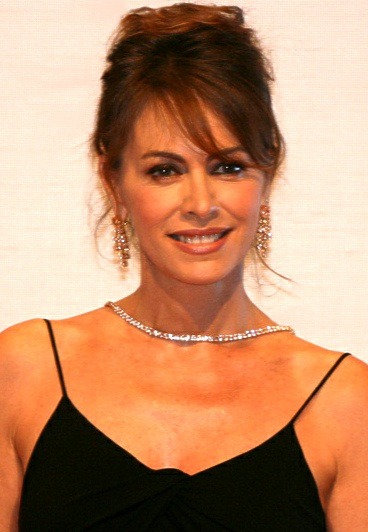
Elena Sofia Ricci, born Elena Sofia Barucchieri on March 29, 1962, in Florence, Italy, has become one of the most revered figures in Italian cinema and television. Daughter of Elena Ricci Poccetto, a set designer, and Paolo Barucchieri, an art historian, she was surrounded by creativity and intellectual pursuits from a young age. This environment undoubtedly played a significant role in shaping her artistic inclinations and future career as an actress.
Early Life and Theatrical Debut
Elena Sofia Ricci’s journey into the world of acting began at a very young age, making her theatrical debut early in life. Her first foray into cinema came with the film “Arrivano i gatti,” directed by Carlo Vanzina, where she shared the screen with well-known Italian actors Jerry Calà and Franco Oppini. This initial exposure to the film industry set the stage for what would become a prolific career.
Breakthrough and Rise to Fame
The real turning point in Ricci’s career came in 1984 when she starred in Pupi Avati’s “Impiegati.” Her performance in this film earned her the prestigious Globo d’Oro for Best New Actress, marking her as a significant new talent in the Italian film industry. Following this, she continued to collaborate with Avati in other notable films, such as “Sposi” and “Ultimo minuto,” where she starred alongside the legendary Ugo Tognazzi.
In 1987, Ricci further solidified her status as a leading actress with her role in the film “Io e mia sorella,” directed by Carlo Verdone. This performance won her several awards, including a Ciak d’Oro, a David di Donatello, and a Nastro d’Argento for Best Supporting Actress.
Career in the 1990s
The 1990s were a fruitful period for Ricci, who appeared in a variety of films showcasing her versatility as an actress. Some of her notable works during this decade include “Ma non per sempre,” “Persone perbene,” and “Non chiamarmi Omar.” She also collaborated with directors like Maurizio Nichetti in “Stefano Quantestorie” and Davide Ferrario in “Anime fiammeggianti.”
Her television career also flourished during this time. She starred alongside Marco Columbro in the popular television series “Caro Maestro,” which aired on Canale 5 and became a significant hit. Ricci’s ability to seamlessly transition between film and television made her a household name in Italy.
The 2000s: Continued Success and Iconic Roles
The new millennium saw Ricci taking on even more diverse roles. In 2004, she became one of the lead actresses in the Raiuno television series “Orgoglio,” where she played the noblewoman Anna Obrofari for three seasons. Her role in this series further endeared her to the Italian public and reinforced her status as one of the country’s most beloved actresses.
In 2006, she took on the role of Lucia Liguori in the highly successful Canale 5 series “I Cesaroni,” acting alongside Claudio Amendola. The series became a cultural phenomenon in Italy, and Ricci’s portrayal of Lucia was widely praised.
Ricci also explored significant biographical roles, such as portraying Francesca Morvillo, the wife of anti-Mafia judge Giovanni Falcone, in the television movie “Giovanni Falcone, l’uomo che sfidò Cosa Nostra.” Her performance in this role highlighted her ability to tackle complex characters and brought her critical acclaim.
Personal Life and Challenges
Ricci’s personal life has been marked by both joy and challenges. She was married to Luca Damiani for a year, and in 1996, she had her first daughter, Emma, from her relationship with actor and director Pino Quartullo. In 2003, she married Stefano Mainetti, a conductor and composer, and together they had a daughter, Maria, in 2004.
In 2019, Ricci made a shocking revelation about a traumatic experience from her childhood. She disclosed that she had been sexually abused at the age of 12 by a family friend. Ricci had kept this painful secret for many years to protect her mother from guilt, but she decided to speak out publicly after her mother’s death. She shared her story on the television program “Porta a Porta,” hosted by Bruno Vespa, where she courageously opened up about the ordeal and its impact on her life.
Recent Years and Continued Impact
As the 2010s progressed, Ricci continued to remain an influential figure in Italian cinema and television. She left “I Cesaroni” in 2011 and appeared in Ricky Tognazzi’s comedy “Tutta colpa della musica.” Her versatility was further demonstrated in the Raiuno series “Che Dio ci aiuti,” where she played the role of Suor Angela, a character that became iconic and beloved by viewers. The show’s success led to multiple seasons, each drawing millions of viewers.
In 2018, Ricci played Veronica Lario, the second wife of Silvio Berlusconi, in Paolo Sorrentino’s biographical film “Loro.” Her portrayal of Lario earned her a Nastro d’Argento and a David di Donatello for Best Actress, further cementing her reputation as one of Italy’s finest actresses.
Elena Sofia Ricci in the 2020s
Ricci’s career shows no signs of slowing down as she continues to take on challenging and diverse roles. In November 2020, she starred in the biographical television movie “Rita Levi-Montalcini,” portraying the Nobel Prize-winning scientist. This role was a testament to her ability to bring complex historical figures to life on screen.
In 2021, she narrated the life of Mariangela Melato in the Rai 3 docu-series “Illuminate.” This project was yet another example of Ricci’s dedication to celebrating the lives of significant Italian figures.
The following year, in 2022, Ricci played Teresa Battaglia in the Raiuno series “Fiori sopra l’inferno,” based on the novel by Ilaria Tuti. Her performance in this series was widely praised, adding another remarkable role to her already impressive portfolio.
Conclusion: A Legacy of Excellence
Elena Sofia Ricci’s career spans over four decades, during which she has consistently demonstrated her exceptional talent and versatility as an actress. From her early days in theater to becoming a beloved figure in Italian television and cinema, Ricci’s journey is one of dedication, resilience, and continuous reinvention.
Her ability to portray a wide range of characters, from historical figures to fictional heroines, has made her a beloved and respected figure in the entertainment industry. As she continues to take on new and challenging roles, there is no doubt that Elena Sofia Ricci’s legacy will endure, inspiring future generations of actors and actresses.
Her contributions to Italian cinema and television, coupled with her courage in sharing her personal struggles, have made her an icon, not only for her artistic achievements but also for her strength and resilience as an individual.


