
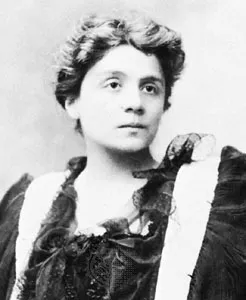
Eleonora Duse, born on October 3, 1858, in Vigevano, Italy, is widely regarded as one of the greatest actresses in the history of theater. Her profound sensitivity, natural acting style, and dedication to the craft of acting distinguished her from her contemporaries and left an indelible mark on the world of performance. Duse’s career, spanning the late 19th and early 20th centuries, coincided with a transformative period in the performing arts, during which she redefined the role of the actress and brought a new level of realism to the stage. This article explores her life, fame, and the key highlights that shaped her legacy as a theater icon.
Early Life and Introduction to Theater
Eleonora Duse was born into a family of traveling actors. Her father, Alessandro Duse, was a stage manager, and her mother, Angelica Cappelletto, was an actress. Duse’s entry into the world of theater was practically predetermined by her birth. She made her stage debut at the tender age of four, stepping in for a child actor in a production while her family was on tour. This early introduction to the stage marked the beginning of a lifelong commitment to the theater.
Growing up in the theater, Duse did not receive a formal education in the traditional sense. Instead, her learning took place on the road, in dressing rooms, and on stage. By the age of 12, she was already playing lead roles, often stepping in for her mother when illness prevented her from performing. One of her earliest significant roles was as Francesca in Francesca da Rimini, a play by Silvio Pellico, where she captivated audiences with her precocious talent.
Rise to Fame and Early Career Success
Duse’s early years in the theater were marked by a relentless drive to improve her craft. At 20, she joined the Ciotti-Belli-Blanes theater company, where she quickly gained recognition for her performances in leading roles. Her breakthrough came in 1879, at the age of 21, when she starred in Émile Zola’s Thérèse Raquin. Duse’s portrayal of the tragic heroine was met with critical acclaim, and she became a celebrated figure in Italian theater.
By the age of 23, Duse was a well-established actress, and at 29, she took on the role of a theater manager, becoming the head of her own company. This new position allowed her to select the plays she would perform and the actors who would join her on stage. Her early successes included La Principessa di Bagdad, La Signora delle Camelie, and La Moglie di Claudio. These performances solidified her reputation as a leading actress, known for her ability to bring deep emotional truth to her roles.
Artistic Philosophy and Style
Eleonora Duse was a pioneer in the movement toward naturalism in theater. At a time when exaggerated gestures and declamatory delivery were the norm, Duse introduced a more subtle and introspective approach to acting. She believed in living the characters she portrayed, allowing their emotions and experiences to merge with her own. This method resulted in performances that were deeply authentic and resonant with audiences.
Unlike many of her contemporaries, Duse rejected the use of heavy makeup and elaborate costumes, preferring a more understated and realistic presentation. She often appeared on stage without makeup, relying on the power of her expression and body language to convey the depth of her characters. Her minimalist approach extended to her preference for rehearsing in informal settings, such as hotel foyers, rather than on stage. This rejection of theatrical conventions made her a trailblazer in the art of acting and influenced generations of performers who followed.
Duse’s commitment to her craft was also evident in her choice of repertoire. She sought out challenging roles in plays by some of the most significant playwrights of her time, including Henrik Ibsen, William Shakespeare, and Gabriele D’Annunzio. Her performances in Ibsen’s A Doll’s House and The Lady from the Sea, as well as Shakespeare’s Antony and Cleopatra, were particularly noteworthy. These roles allowed her to explore complex, multifaceted female characters, further enhancing her reputation as a master of her art.
Relationship with Gabriele D’Annunzio
One of the most significant relationships in Duse’s life was with the Italian poet and playwright Gabriele D’Annunzio. The two met in the early 1890s, and their relationship was both professionally and personally intense. D’Annunzio wrote several plays with Duse in mind, including La Gioconda, La Città Morta, and Francesca da Rimini. Duse’s performances in these works were celebrated for their emotional intensity and depth.
However, the relationship between Duse and D’Annunzio was also fraught with tension. D’Annunzio was known for his egotism and demanding nature, which often clashed with Duse’s own strong-willed personality. Their affair, which lasted several years, eventually ended in heartbreak for Duse, as D’Annunzio’s infidelity and self-centeredness took a toll on her emotional well-being. Despite the personal turmoil, their collaboration produced some of the most memorable performances of Duse’s career and contributed significantly to her enduring legacy.
International Acclaim and Later Career
Duse’s fame was not confined to Italy; she became an international star, performing in theaters across Europe and the United States. Her tours were met with critical acclaim, and she developed a devoted following among theatergoers around the world. In London, she performed Ibsen’s The Lady from the Sea in 1923, where she was hailed as a masterful interpreter of modern drama.
Despite her success, Duse’s career was not without challenges. In 1909, she retired from the stage, exhausted by the demands of her profession and disillusioned by the commercialization of the theater. However, her love for acting could not keep her away for long. In 1921, she made a triumphant return to the stage, performing in The Lady from the Sea once again. Her return was celebrated as a major event in the theater world, and she continued to perform until her final days.
In addition to her work in the theater, Duse also ventured into the world of film. In 1916, she starred in the silent film Cenere, directed by Febo Mari and based on a novel by Grazia Deledda. Although Duse was not entirely comfortable with the medium of film, her performance in Cenere was praised for its emotional depth and subtlety, qualities that had defined her stage work.
Final Years and Death
Eleonora Duse’s final years were marked by a grueling tour of the United States, during which she continued to perform despite declining health. In 1924, while on tour in Pittsburgh, she contracted pneumonia. The illness proved fatal, and she passed away on April 21, 1924, at the age of 65.
Duse’s death was widely mourned, both in Italy and internationally. She was buried in Asolo, a small town in the Veneto region of Italy, in accordance with her wishes. Her funeral was attended by a large number of admirers, who came to pay their respects to a woman who had transformed the art of acting and left an indelible mark on the world of theater.
Legacy and Impact on Theater
Eleonora Duse’s influence on the world of theater is immeasurable. She was a pioneer in the move towards naturalism in acting, rejecting the artificiality of the traditional theatrical style in favor of a more authentic and emotionally resonant approach. Her commitment to living her roles rather than simply performing them set a new standard for actors and influenced the development of modern acting techniques.
Duse’s legacy also includes her efforts to elevate the quality of theatrical productions. She was deeply committed to the artistic integrity of the theater and was selective about the roles she chose and the plays she performed. Her collaborations with playwrights like Henrik Ibsen and Gabriele D’Annunzio resulted in some of the most memorable performances of her career and helped to establish the modern repertoire of dramatic literature.
Duse’s impact extends beyond the theater. She was a trailblazer for women in the performing arts, demonstrating that an actress could be both a powerful artist and a successful manager of her own career. Her ability to navigate the challenges of the male-dominated theater world of her time paved the way for future generations of women in the arts.
Conclusion
Eleonora Duse’s life and career were marked by a relentless pursuit of artistic excellence and a deep commitment to the craft of acting. From her early days as a child actress to her final performances on the international stage, Duse consistently pushed the boundaries of what was possible in the theater. Her naturalistic approach to acting, her dedication to challenging and complex roles, and her influence on the development of modern theater make her one of the most important figures in the history of performance.
Duse’s legacy continues to inspire actors and theater practitioners today. Her life is a testament to the power of passion, talent, and determination in shaping the course of an art form. As we reflect on her contributions to theater, we are reminded of the enduring impact that one individual can have on the world of performance and the importance of continuing to push the boundaries of artistic expression.


