
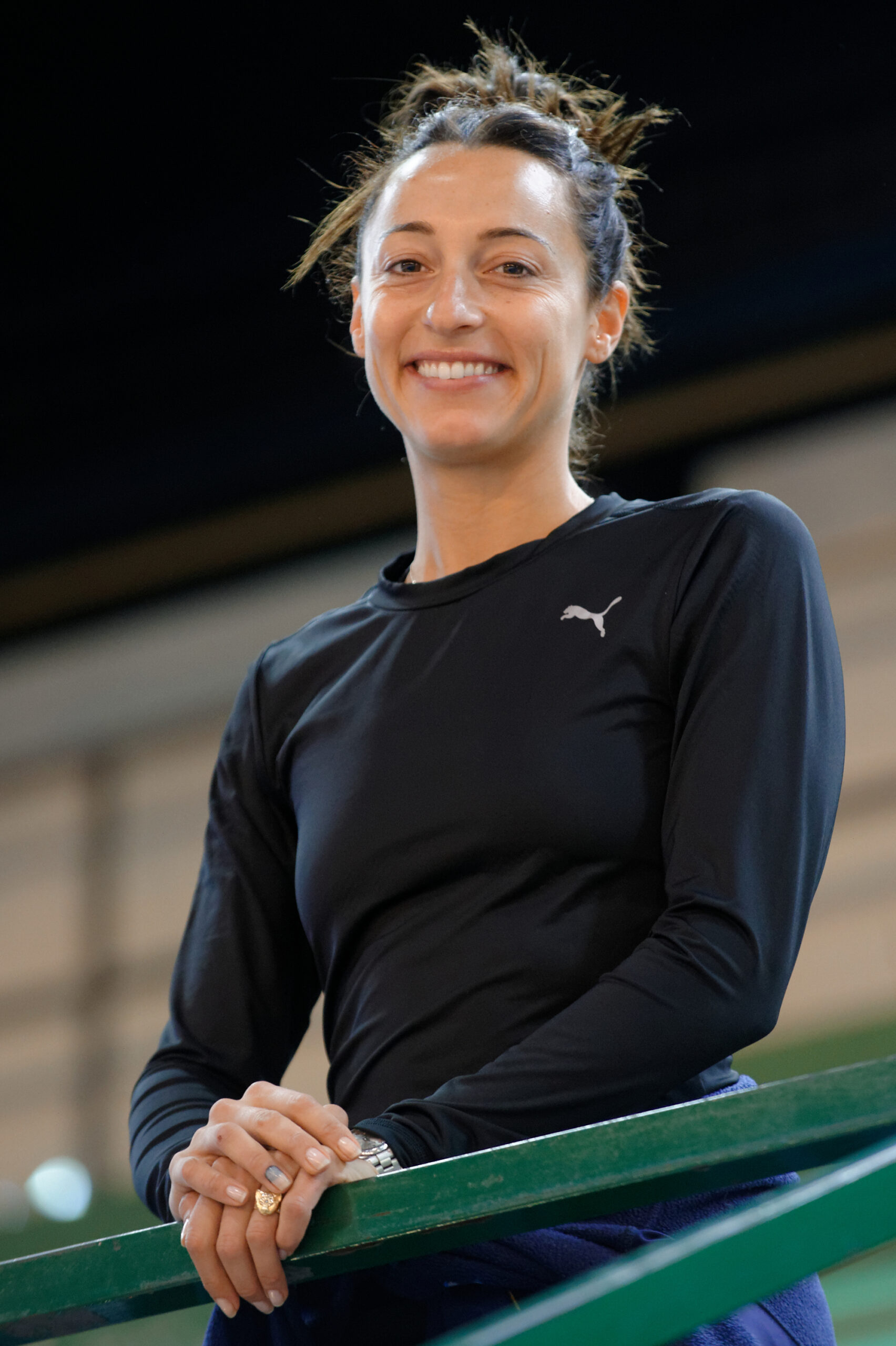
Elisa Di Francisca is a name that resonates deeply within the world of fencing. Born on December 13, 1982, in Jesi, a town in the province of Ancona, Italy, Di Francisca has not only excelled as an athlete but has also become a significant figure in the cultural and social fabric of Italy. Her journey from a young girl in Jesi to a world-renowned fencing champion is marked by determination, resilience, and an unyielding passion for her sport.
Early Life and Introduction to Fencing
Elisa Di Francisca’s early years were shaped by her family’s support and her own intrinsic drive. Raised alongside her siblings, Michele and Martina, she was initially inclined towards dance. However, her path took a decisive turn when she stepped onto the fencing piste with her sister Martina. This initial foray into fencing quickly became a full-fledged passion, nurtured under the guidance of esteemed fencing masters Ezio Triccoli, Stefano Cerioni, and Giulio Tommassini. These mentors, who were already recognized as pillars of the Italian fencing community, played a crucial role in honing Elisa’s skills in the art of foil fencing.
Rise to Prominence
Elisa’s ascent in the world of fencing was swift. By 1995, she had already secured her first significant title, becoming the Italian champion in the “Ragazze” (Girls) category. The following year, she claimed the silver medal at the Italian “Allievi” championships, signaling her growing potential in the sport. Her early successes culminated in 2000 when she finished second in the “Giovani” (Youth) championships and third in the Italian “Assoluti” (Senior) championships.
Di Francisca’s academic pursuits did not take a backseat to her athletic ambitions. She completed her education at the socio-psycho-pedagogical high school, a testament to her ability to balance both her academic and athletic endeavors. By 2001, she was competing in the Italian “Assoluti” championships, where she placed tenth in the individual tournament and fourth in the team event. Her performances improved steadily over the next few years, culminating in a second-place finish in the individual tournament and a third-place finish in the team event in 2003.
International Success
Elisa Di Francisca’s breakthrough on the international stage came in 2004 when she made her debut with the Italian national team. At the World Fencing Championships in New York, she played a pivotal role in securing the gold medal for Italy in the team foil event. This victory marked the beginning of her illustrious international career. The same year, she also competed in the European Championships in Copenhagen, Denmark, where she won a bronze medal in the team event and placed fifth in the individual competition.
The following years saw Di Francisca’s career continue to flourish. In 2005, she participated in the Universiade in Izmir, where she won the gold medal in the team event and placed seventh in the individual competition. Her first World Cup victory came that same year in Havana, Cuba. Although she faced setbacks at the World Championships in Leipzig, where she finished fifth, Di Francisca’s determination remained unshaken.
Peak of Her Career
The period from 2006 to 2012 can be considered the pinnacle of Elisa Di Francisca’s fencing career. In 2006, despite a disappointing seventh-place finish at the World Championships in Turin, she rebounded by securing a silver medal at the European Championships. Although she missed qualifying for the 2008 Beijing Olympics, Di Francisca’s perseverance paid off in the following years. She claimed a second-place finish at the World Cup in Dallas and went on to win gold medals in both the World and European Championships in 2009 as part of the Italian team, alongside notable fencers like Arianna Errigo, Ilaria Salvatori, and Valentina Vezzali.
The year 2010 marked a significant turning point for Di Francisca. She achieved six podium finishes in the World Cup, including one gold, two silver, and three bronze medals. Her victory at the Grand Prix in Marseille against South Korea’s Nam cemented her status as one of the top fencers in the world. That same year, she became the Italian champion by defeating her fellow Jesi native, Valentina Vezzali, in the final. Although she settled for bronze at the European Championships in Syracuse, she quickly bounced back to win the world title at the World Championships in Paris.
Olympic Glory
Elisa Di Francisca’s crowning achievement came in 2012, a year that will forever be etched in her memory as her “golden year.” In April of that year, she was awarded the Golden Collar for sporting merit, one of Italy’s highest honors for athletes. Di Francisca then went on to triumph at the European Championships in Legnano, where she won the gold medal. However, her most significant victory came at the 2012 London Olympics, where she won the gold medal in the individual foil event, defeating fellow Italian Arianna Errigo in the final. The podium was completed by another Italian legend, Valentina Vezzali, who won the bronze medal after defeating South Korea’s Nam.
But Elisa’s success in London didn’t stop there. She also played a crucial role in securing the gold medal for Italy in the team foil event, alongside Ilaria Salvatori, Arianna Errigo, and Valentina Vezzali. This double Olympic triumph solidified Di Francisca’s status as one of the greatest fencers of her generation.
Life Beyond Fencing
After her Olympic success, Elisa Di Francisca made several significant changes in her life. She parted ways with her long-time coach, Stefano Cerioni, who had left Italy to coach the Russian fencing team, and began training under Giovanna Trillini, a former Olympic champion from Jesi. Di Francisca also started to gain more visibility in the media, making numerous television appearances. She became a familiar face on Italian TV, participating in various shows, including the popular game show “I Soliti Ignoti – Identità nascoste” on Raiuno.
In 2013, Elisa Di Francisca’s media presence expanded further when she joined the cast of “Ballando con le stelle,” the Italian version of “Dancing with the Stars,” where she was partnered with Raimondo Todaro. The pair went on to win the competition, further cementing her popularity with the Italian public.
Elisa also dedicated time to humanitarian efforts. In October 2012, she spent two weeks in Kenya as part of a humanitarian mission with Intervita Onlus. Her experiences during this trip were documented in a blog titled “La mia Africa,” which was hosted on the website of “La Gazzetta dello Sport,” one of Italy’s leading sports newspapers.
Continued Success and Legacy
Elisa Di Francisca’s fencing career continued to thrive in the years following her Olympic triumph. In 2013, she won the gold medal at the European Championships in Zagreb, defeating Russia’s Yakovleva in the final. She also secured the team gold medal alongside Carolina Erba, Benedetta Durando, and Arianna Errigo. Later that year, she added another gold medal to her collection at the Mediterranean Games in Mersin.
At the 2013 World Championships in Budapest, Di Francisca won the bronze medal in the individual competition and the gold medal in the team event, alongside Erba, Vezzali, and Errigo. Her consistent success on the international stage earned her widespread acclaim and solidified her status as one of the all-time greats in the sport of fencing.
In 2016, Di Francisca returned to the Olympic stage in Rio de Janeiro. Under the guidance of her coach Giovanna Trillini, she won the silver medal in the individual foil event, further adding to her impressive collection of Olympic medals.
Personal Life and Influence
Elisa Di Francisca’s influence extends beyond the fencing piste. She is a role model for aspiring athletes and young women in Italy and around the world. Her dedication, resilience, and ability to overcome setbacks have made her a source of inspiration for many. Throughout her career, she has remained humble and grounded, always acknowledging the support of her family, coaches, and teammates.
In her personal life, Elisa Di Francisca has been known for her warm and approachable personality. She has used her platform to advocate for various causes, including gender equality in sports and humanitarian efforts. Her commitment to making a positive impact on society has only added to her legacy as one of Italy’s most beloved sports figures.
Conclusion
Elisa Di Francisca’s journey from a small town in Italy to the pinnacle of the fencing world is a story of perseverance, talent, and passion. Her numerous achievements on the international stage, including her Olympic gold medals and World Championship titles, have made her a household name in Italy and a respected figure in the global sporting community. As she continues to inspire future generations of athletes, Elisa Di Francisca’s legacy as one of the greatest fencers of all time remains firmly intact.


