
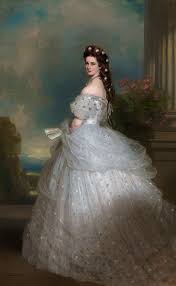
Elisabetta di Baviera, also known as Sissi, is one of the most iconic figures in European history. Born on December 24, 1837, in Munich, Bavaria, Sissi became the Empress of Austria and Queen of Hungary through her marriage to Emperor Franz Joseph I. Her life was marked by beauty, fame, tragedy, and a deep sense of melancholy that has fascinated generations. This article delves into the life of this enigmatic historical figure, exploring her age, fame, and the significant highlights that defined her life.
Early Life and Background
Elisabetta Amalia Eugenia di Wittelsbach was born into the royal House of Wittelsbach, one of the oldest and most prominent dynasties in Europe. She was the fourth of ten children born to Duke Maximilian Joseph of Bavaria and Princess Ludovika of Bavaria. Despite her noble lineage, Sissi’s early life was relatively carefree. She spent much of her childhood at the family’s summer residence in Possenhofen, away from the formalities of court life. This idyllic upbringing in the Bavarian countryside fostered her love for nature and animals, which remained with her throughout her life.
Sissi was known for her striking beauty from a young age. She had an unconventional appearance for the time, with long, flowing hair and a tall, slender frame. Her beauty would later become one of her most famous attributes, but it also contributed to her complex relationship with herself and the court.
A Royal Marriage
In the summer of 1853, at the age of 15, Sissi’s life took a dramatic turn. Her mother, Ludovika, arranged for her elder sister Helene to marry their cousin, Emperor Franz Joseph I of Austria. However, when the Emperor met Sissi, he was immediately captivated by her beauty and charm, and he chose her as his bride instead. This unexpected choice set the course for Sissi’s future, thrusting her into the spotlight as the future Empress of Austria.
The couple married on April 24, 1854, in a grand ceremony in Vienna. Sissi, now just 16 years old, found herself in a new world, one governed by the strict protocols and expectations of the Austrian court. The transition from the carefree life she knew in Bavaria to the rigid and demanding life of an empress was difficult for Sissi. She struggled with the expectations placed upon her and often felt suffocated by the lack of freedom.
Challenges at the Austrian Court
The early years of Sissi’s marriage were challenging. She was expected to conform to the strict rules of the Habsburg court, and her every move was scrutinized. One of her most significant challenges was her relationship with her mother-in-law, Archduchess Sophie. Sophie was a dominant figure at court and took it upon herself to oversee Sissi’s education and transformation into a suitable empress. This included controlling Sissi’s personal life, which led to significant tension between the two.
Sissi gave birth to her first child, Sophie, in 1855, followed by Gisela in 1856. However, her role as a mother was also undermined by Archduchess Sophie, who took over the care and upbringing of her grandchildren, further alienating Sissi. The death of her daughter Sophie in 1857, during a trip to Hungary, was a devastating blow to Sissi and marked the beginning of her lifelong battle with depression and anxiety.
Empress of Austria and Queen of Hungary
Despite the personal challenges, Sissi took on her role as Empress of Austria and later Queen of Hungary with a sense of duty. She was deeply involved in the politics of the Austro-Hungarian Empire, particularly in fostering relations with Hungary. Sissi was beloved by the Hungarian people and played a crucial role in the Austro-Hungarian Compromise of 1867, which established the dual monarchy of Austria-Hungary. Her close relationship with Hungary and her efforts to advocate for their rights earned her the title of “Queen of Hungary,” a role she cherished.
Sissi’s political influence, however, was often overshadowed by her personal struggles. She suffered from bouts of depression, which were exacerbated by the pressures of court life and the tragedies she endured. To cope, Sissi became increasingly obsessed with maintaining her beauty and physical appearance. She adhered to a rigorous beauty regimen that included extreme diets and exercise routines. Her beauty rituals were legendary, with her hair care alone taking hours each day.
The Tragic Losses
The latter part of Sissi’s life was marked by a series of personal tragedies. In 1889, her only son, Crown Prince Rudolf, died in a tragic incident known as the Mayerling Affair. Rudolf and his lover, Baroness Mary Vetsera, were found dead in an apparent murder-suicide pact at the Mayerling hunting lodge. The exact circumstances surrounding their deaths remain a mystery, but the loss of her son devastated Sissi. She wore mourning clothes for the rest of her life and became increasingly reclusive.
This period of Sissi’s life was characterized by constant travel. She rarely stayed in one place for long, preferring to wander through Europe. Her travels were a way to escape the burdens of her life and to cope with her grief. Despite her suffering, Sissi remained a beloved figure, admired for her beauty and grace.
The Assassination of an Empress
The final chapter of Sissi’s life came to a tragic end on September 10, 1898. While in Geneva, Switzerland, she was assassinated by Luigi Lucheni, an Italian anarchist. Lucheni had originally planned to assassinate a different royal, but when that plan fell through, he targeted Sissi instead. He stabbed her with a sharpened file, piercing her heart. Despite her injury, Sissi managed to walk a short distance before collapsing. She died shortly after, at the age of 60.
Sissi’s death shocked the world and marked the end of an era. Her funeral was a grand affair, with dignitaries from across Europe paying their respects. Sissi was laid to rest in the Imperial Crypt in Vienna, alongside her son Rudolf and her husband, Franz Joseph, who outlived her by several years.
Legacy and Cultural Impact
Elisabetta di Baviera, or Sissi, remains an enduring figure in European history and popular culture. Her life has been the subject of numerous books, films, and television series, most famously the 1950s film trilogy starring Romy Schneider. These films romanticized Sissi’s life, focusing on her beauty, charm, and tragic love story, contributing to the lasting image of her as the “fairy-tale empress.”
However, Sissi’s real life was far more complex and tragic than the romanticized versions suggest. Her struggles with mental health, her fraught relationships with her family, and her obsessive quest for beauty reveal a woman who was deeply unhappy and isolated. Sissi’s life was a reflection of the rigid social structures of the 19th century, which placed enormous pressure on women, particularly those in positions of power.
Today, Sissi is remembered not only as a beautiful and tragic figure but also as a symbol of resistance against the constraints of her time. She challenged the expectations placed upon her and sought to assert her independence in a world that offered her little freedom. Her legacy is one of beauty, tragedy, and a relentless pursuit of autonomy in a life that was anything but ordinary.
Historical Context and Nuances
To fully understand the life and impact of Elisabetta di Baviera, it is important to consider the historical context in which she lived. The 19th century was a period of significant political and social upheaval in Europe. The Austro-Hungarian Empire, of which Sissi was a part, was a complex and multi-ethnic entity that faced constant internal and external challenges.
Sissi’s marriage to Emperor Franz Joseph was not just a personal union but also a political alliance. The Habsburg monarchy, to which Franz Joseph belonged, was one of the most powerful in Europe, but it was also under constant threat from nationalist movements and external powers. Sissi’s role as Empress was, therefore, not just ceremonial; she was a key figure in maintaining the stability of the empire.
However, Sissi’s influence was often limited by the rigid protocols of the Habsburg court and the dominance of figures like Archduchess Sophie. Despite this, Sissi found ways to exert her influence, particularly in her relationship with Hungary. Her advocacy for Hungarian rights and her role in the Austro-Hungarian Compromise were significant achievements that had lasting effects on the empire.
Moreover, Sissi’s life reflects the broader societal expectations of women during the 19th century. As Empress, she was expected to embody the ideals of beauty, grace, and domesticity. However, Sissi resisted these expectations in many ways. Her obsession with beauty was, in part, a response to the pressures placed upon her, but it was also a way for her to assert control over her own body and image. Her refusal to conform to the traditional role of wife and mother, and her pursuit of personal freedom through travel and self-care, were acts of quiet rebellion against the constraints of her position.
Conclusion
Elisabetta di Baviera, better known as Sissi, was a woman of extraordinary beauty and complexity. Her life, marked by fame, tragedy, and a relentless pursuit of personal freedom, continues to captivate and inspire. While she is often remembered as the “fairy-tale empress,” the reality of her life was far more nuanced and tragic. Sissi was a woman who struggled with the limitations of her time and her position, but who also found ways to assert her independence and leave a lasting legacy.
Her story is a reminder of the complexities of history and the challenges faced by women in positions of power. Sissi’s life may have been filled with beauty and privilege, but it was also marked by profound personal struggles and a deep sense of isolation. In the end, Sissi remains a symbol of both the allure and the burdens of royalty, a figure who continues to resonate in the popular imagination.


