
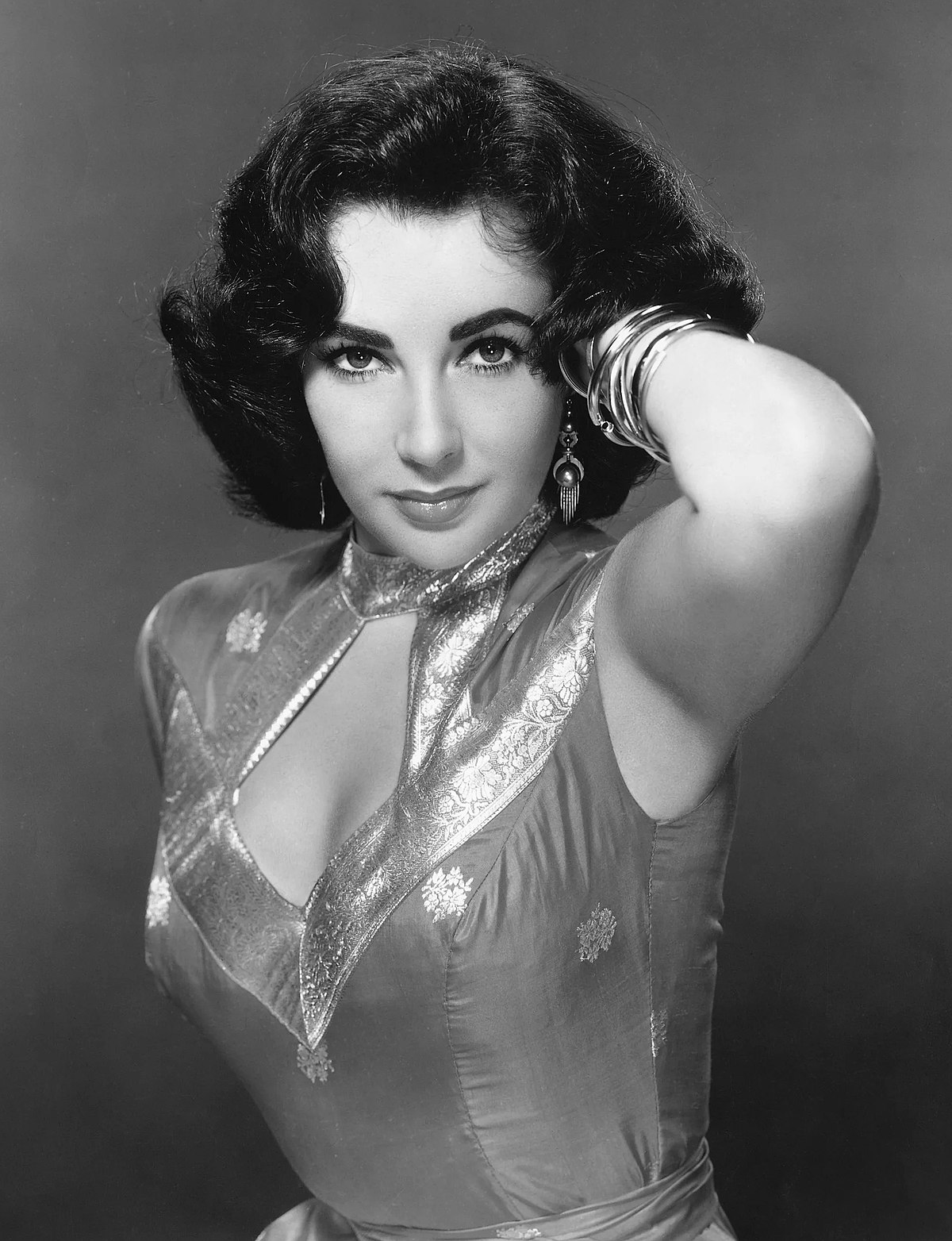
Elizabeth Taylor, one of the most iconic actresses in Hollywood history, captivated the world with her mesmerizing beauty, immense talent, and tumultuous personal life. Her life was a remarkable journey filled with highs and lows, from her early rise to stardom to her lasting legacy as a philanthropist. This article delves deep into the life, fame, and highlights of Elizabeth Taylor, exploring the nuances of her career, personal struggles, and the historical context that shaped her extraordinary journey.
Early Life and Hollywood Beginnings
Elizabeth Rosemond Taylor was born on February 27, 1932, in London, England. Her parents were Americans residing in the UK, and with the onset of World War II, the family relocated to the United States, settling in Los Angeles. Taylor’s striking beauty and natural talent were evident from a young age, leading her to a career in film that began when she was just ten years old.
Taylor’s first film role was a minor part in the 1942 film There’s One Born Every Minute, but it was her performance in Lassie Come Home (1943) and National Velvet (1944) that truly set her on the path to stardom. In National Velvet, Taylor played Velvet Brown, a young girl who trains a horse to compete in the Grand National. Her performance was both tender and powerful, earning her widespread acclaim and establishing her as one of Hollywood’s most promising young stars.
Rise to Stardom and Early Career
As Elizabeth Taylor transitioned from a child actress to a young adult, her roles began to reflect her growing maturity and depth as an actress. In the early 1950s, Taylor starred in A Place in the Sun (1951), where she played the role of Angela Vickers, a beautiful socialite who falls in love with a man accused of murder. This film marked a significant turning point in her career, showcasing her ability to take on more complex and emotionally demanding roles.
The 1950s were a pivotal decade for Taylor, as she continued to demonstrate her versatility and range as an actress. She starred in a series of critically acclaimed films, including Giant (1956) alongside James Dean and Rock Hudson, Raintree County (1957), and Cat on a Hot Tin Roof (1958), an adaptation of Tennessee Williams’ play. In these films, Taylor portrayed characters who were often strong, sensual, and deeply conflicted, roles that allowed her to explore the complexities of human emotion and relationships.
The Making of a Hollywood Legend
Elizabeth Taylor’s fame skyrocketed in the 1960s, solidifying her status as one of Hollywood’s most celebrated actresses. Her role as Cleopatra in the 1963 film Cleopatra remains one of her most iconic performances, despite the film’s troubled production. Cleopatra was one of the most expensive films ever made at the time, and its production was plagued by delays, budget overruns, and behind-the-scenes drama.
On the set of Cleopatra, Taylor met and fell in love with her co-star, Richard Burton. Their romance was one of the most famous and tumultuous in Hollywood history, capturing the attention of the media and the public worldwide. Taylor and Burton married in 1964, and their relationship, marked by passionate love and frequent arguments, was the subject of intense media scrutiny. The couple would go on to marry and divorce twice, their relationship becoming a symbol of the volatile nature of Hollywood romances.
Despite the off-screen drama, Taylor’s performance in Cleopatra was praised for its depth and complexity. She brought the legendary Egyptian queen to life with a blend of regality, vulnerability, and fierce determination. The film, although not a commercial success, further cemented Taylor’s status as a Hollywood legend.
Elizabeth Taylor’s Personal Life: Marriages and Publicity
Elizabeth Taylor’s personal life was as captivating as her on-screen performances, and her multiple marriages made headlines worldwide. Taylor was married eight times to seven different men, each marriage adding another layer to her public persona. Her first marriage, to hotel heir Conrad Hilton Jr. in 1950, ended in divorce just a year later.
In 1952, Taylor married British actor Michael Wilding, with whom she had two sons, Michael and Christopher. This marriage lasted five years, and in 1957, Taylor married producer Mike Todd. Tragically, Todd died in a plane crash just a year after their marriage, leaving Taylor devastated. Her next marriage, to singer Eddie Fisher, was highly controversial, as Fisher was married to actress Debbie Reynolds at the time. The scandalous nature of their relationship earned Taylor the label of a “home-wrecker,” a reputation that she would struggle with for years.
However, it was Taylor’s relationship with Richard Burton that truly captivated the world. Their marriage was marked by intense passion, lavish spending, and frequent public arguments. Together, they starred in several films, including Who’s Afraid of Virginia Woolf? (1966), a film that showcased their tumultuous real-life relationship. Taylor’s portrayal of Martha, a bitter and disillusioned wife, earned her a second Academy Award for Best Actress.
The Later Years: Philanthropy and Legacy
As Taylor’s film career began to wane in the 1970s, she increasingly turned her attention to philanthropy, particularly in the fight against AIDS. The death of her close friend, actor Rock Hudson, from AIDS in 1985 deeply affected Taylor, prompting her to become one of the first major celebrities to advocate for AIDS research and awareness. She co-founded the American Foundation for AIDS Research (amfAR) and later established the Elizabeth Taylor AIDS Foundation, which continues to support HIV/AIDS research and care.
Taylor’s commitment to this cause earned her widespread admiration and respect, and she was recognized for her humanitarian efforts with numerous awards, including the Jean Hersholt Humanitarian Award at the 1993 Academy Awards.
In her later years, Taylor remained a beloved figure in Hollywood, known for her enduring beauty, her fierce loyalty to her friends, and her unyielding dedication to her philanthropic work. Despite her health challenges, including heart surgery and a battle with scoliosis, Taylor continued to be a force for good in the world until her death on March 23, 2011, at the age of 79.
Legacy and Cultural Impact
Elizabeth Taylor’s impact on Hollywood and popular culture is immeasurable. She was a pioneer in many ways, breaking barriers as one of the first actresses to demand and receive a million-dollar salary for her role in Cleopatra. Her willingness to tackle controversial roles and her fearless approach to her craft made her a role model for generations of actresses who followed.
Beyond her acting career, Taylor’s legacy is defined by her humanitarian work. Her efforts in raising awareness and funds for AIDS research helped to change public perception of the disease and provided critical support to those affected by it. Taylor’s activism was not only groundbreaking but also deeply personal, as she used her platform and resources to make a tangible difference in the world.
Taylor’s influence extends beyond her films and philanthropy; she also set new standards for celebrity culture. Her marriages, fashion, and public persona were constantly in the spotlight, setting the template for modern celebrity journalism. Taylor’s life was a precursor to the intense media scrutiny faced by celebrities today, yet she managed to maintain a sense of dignity and grace throughout her life.
Conclusion
Elizabeth Taylor’s life was a complex tapestry of triumphs and tragedies, beauty and resilience. She was a woman who lived her life with passion, embracing both the highs and lows with equal intensity. Taylor’s contributions to film, her groundbreaking work in philanthropy, and her enduring status as a cultural icon ensure that her legacy will continue to inspire for generations to come.
As we reflect on Elizabeth Taylor’s life, we are reminded of the power of talent, determination, and compassion. She was not just a Hollywood star; she was a trailblazer who used her fame to make a lasting impact on the world. Elizabeth Taylor’s story is one of resilience, and her legacy is one of enduring influence in both the arts and humanitarian efforts.


