
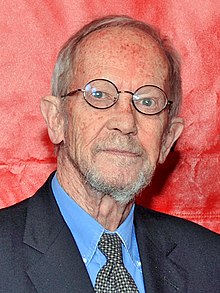
Elmore Leonard, born on October 11, 1925, in New Orleans, Louisiana, is one of America’s most celebrated writers, particularly known for his contributions to the crime and thriller genres. With a distinctive style characterized by sharp dialogue, gritty realism, and a deep understanding of human nature, Leonard became a master storyteller whose work has been widely adapted into film and television. This article explores the life, career, and legacy of Elmore Leonard, delving into his rise to fame, the unique elements of his writing style, and his lasting impact on American literature and popular culture.
Early Life and Influences
Elmore John Leonard Jr., often referred to as “Dutch,” was born to a middle-class family in New Orleans. His father worked for General Motors, which led to frequent relocations during Leonard’s childhood, eventually settling in Detroit, Michigan. This Midwestern city, with its industrial backdrop and vibrant cultural mix, would later become a significant setting in many of Leonard’s works.
Leonard’s early life was marked by a love of storytelling, which was evident from a young age. He was an avid reader, devouring adventure novels, Westerns, and the hard-boiled detective stories that were popular during his youth. These genres would heavily influence his later writing, particularly his early works. Leonard attended the University of Detroit High School, where he began writing for the school newspaper, honing his skills as a writer.
Military Service and Early Career
During World War II, Leonard enlisted in the Navy, serving in the South Pacific. His experiences during the war, though not directly influencing his later work, instilled in him a discipline and resilience that would be crucial in his writing career. After the war, Leonard returned to Detroit and enrolled at the University of Detroit, where he studied English and philosophy, graduating in 1950.
Leonard’s early career was marked by his work in advertising, where he wrote copy for Chevrolet. This job helped him develop a concise, impactful writing style, which became a hallmark of his fiction. However, Leonard’s passion for storytelling never waned, and he spent his free time writing short stories and novels.
The Westerns: A Start in Literature
Elmore Leonard began his writing career in the early 1950s, focusing on Westerns, a genre that was immensely popular at the time. His first published novel, The Bounty Hunters (1953), was well-received and set the stage for his subsequent works. Over the next decade, Leonard published several Western novels and short stories, including Hombre (1961), which is considered one of his best works in the genre.
Leonard’s Westerns were notable for their authenticity and attention to detail. He conducted extensive research to ensure that his depictions of the Old West were accurate, and he had a deep respect for the genre’s conventions. However, Leonard also brought something new to the table—his characters were complex and morally ambiguous, a departure from the more clear-cut heroes and villains typical of the genre. This nuanced approach to character development would become a defining feature of his later crime novels.
Despite his success in the Western genre, Leonard realized that the market for Westerns was declining. By the mid-1960s, he began to transition into crime fiction, a move that would define the rest of his career.
Transition to Crime Fiction and Breakthrough Success
The shift from Westerns to crime fiction marked a turning point in Leonard’s career. His first crime novel, The Big Bounce (1969), was initially rejected by several publishers before finally being released. Although the book did not achieve significant commercial success, it demonstrated Leonard’s ability to craft compelling crime stories, blending humor with a keen sense of irony.
Leonard’s breakthrough in crime fiction came in the 1970s and 1980s with novels such as Fifty-Two Pickup (1974), Swag (1976), and Stick (1983). These novels introduced readers to Leonard’s signature style—crisp, realistic dialogue, fast-paced plots, and characters who were often as charming as they were dangerous. His ability to capture the rhythms of everyday speech and his ear for dialect set him apart from other writers in the genre.
The novel that truly catapulted Leonard to fame was Glitz (1985). This book, which follows a Miami cop tracking down a vengeful criminal, was a bestseller and cemented Leonard’s reputation as a master of the crime thriller. Glitz was followed by a string of successful novels, including Bandits (1987), Freaky Deaky (1988), and Get Shorty (1990), the latter of which was adapted into a highly successful film starring John Travolta, Gene Hackman, and Danny DeVito.
Style and Influence: The “Elmore Leonard Rules”
Elmore Leonard’s writing style is often described as “spare” and “lean,” with a focus on dialogue and character rather than elaborate descriptions or internal monologues. Leonard famously distilled his approach to writing into a set of guidelines known as “Elmore Leonard’s Ten Rules of Writing.” These rules emphasize simplicity and clarity, advising writers to avoid prologues, never use a verb other than “said” to carry dialogue, and leave out anything that readers might skip.
One of Leonard’s most quoted rules is: “If it sounds like writing, I rewrite it.” This philosophy underpins the realism and authenticity that characterize his work. Leonard’s dialogue-driven narratives give his novels a cinematic quality, making them particularly appealing to filmmakers. Indeed, many of Leonard’s novels and stories have been adapted for the screen, including Out of Sight (1996), directed by Steven Soderbergh, and Rum Punch (1992), which was adapted by Quentin Tarantino into the film Jackie Brown (1997).
Leonard’s influence extends beyond the crime genre. His approach to storytelling—focusing on character-driven narratives, avoiding clichés, and embracing a conversational tone—has inspired countless writers across different genres. Leonard’s work is often compared to that of Raymond Chandler and Dashiell Hammett, but his unique voice and style have ensured his place as one of the most influential writers of the 20th century.
Hollywood and Adaptations
Elmore Leonard’s relationship with Hollywood was complex but fruitful. While many authors struggle with the adaptation of their work, Leonard embraced the process, understanding that films and books are different mediums with different demands. His novels, with their tight plots and colorful characters, translated well to the screen.
One of the earliest adaptations of Leonard’s work was the film Hombre (1967), based on his Western novel. However, it was with the crime genre that Leonard’s stories found their greatest cinematic success. Get Shorty (1995) became a major hit, with John Travolta’s portrayal of the charming yet dangerous Chili Palmer becoming an iconic role. The success of Get Shorty led to further adaptations, including Out of Sight (1998), which starred George Clooney and Jennifer Lopez, and Jackie Brown (1997), which was Tarantino’s homage to Leonard’s storytelling.
Leonard’s work continued to inspire filmmakers into the 21st century. The television series Justified (2010-2015), based on Leonard’s novella Fire in the Hole (2001), was a critical and commercial success, bringing Leonard’s sharp dialogue and complex characters to a new audience. The show’s protagonist, U.S. Marshal Raylan Givens, became one of the most beloved characters in recent television history, a testament to Leonard’s enduring influence.
Legacy and Impact
Elmore Leonard’s impact on literature and popular culture is immense. Over a career spanning more than six decades, he wrote nearly 50 novels and numerous short stories, leaving behind a body of work that continues to be celebrated for its innovation and entertainment value.
Leonard’s legacy is evident in the way he transformed the crime and thriller genres. His focus on character-driven stories, combined with his ear for dialogue and his ability to inject humor into tense situations, set a new standard for the genre. Writers such as Dennis Lehane, George Pelecanos, and Carl Hiaasen have cited Leonard as a significant influence on their work.
Beyond his influence on other writers, Leonard’s work has had a lasting impact on the portrayal of crime and criminals in popular culture. His characters, often morally ambiguous and operating in a gray area between right and wrong, challenged traditional notions of heroism and villainy. This nuanced approach to character has become a staple in modern crime fiction and television, evident in shows like Breaking Bad and The Sopranos.
Personal Life and Final Years
Despite his success, Elmore Leonard remained a private and unassuming figure throughout his life. He lived for many years in the Detroit area, where he raised five children and worked from a home office filled with stacks of manuscripts and books. Leonard was known for his disciplined work ethic, writing every day in longhand on yellow legal pads, a habit he maintained throughout his career.
In his later years, Leonard continued to write prolifically, producing some of his best work well into his seventies and eighties. He received numerous accolades, including the Edgar Award, the Grand Master Award from the Mystery Writers of America, and the National Book Award’s Medal for Distinguished Contribution to American Letters.
Elmore Leonard passed away on August 20, 2013, at the age of 87, following complications from a stroke. His death marked the end of an era in American literature, but his influence remains strong. Leonard’s novels continue to be read and adapted, and his “rules” of writing are studied by aspiring writers around the world.
Conclusion
Elmore Leonard’s contribution to American literature is unparalleled in the crime and thriller genres. His ability to craft stories that are at once gritty, humorous, and deeply human has earned him a place among the greats of 20th-century fiction. Leonard’s work not only entertained millions but also reshaped the landscape of crime writing, influencing a generation of writers and filmmakers. As readers and viewers continue to discover and rediscover his stories, Elmore Leonard’s legacy as a master storyteller is assured.


