
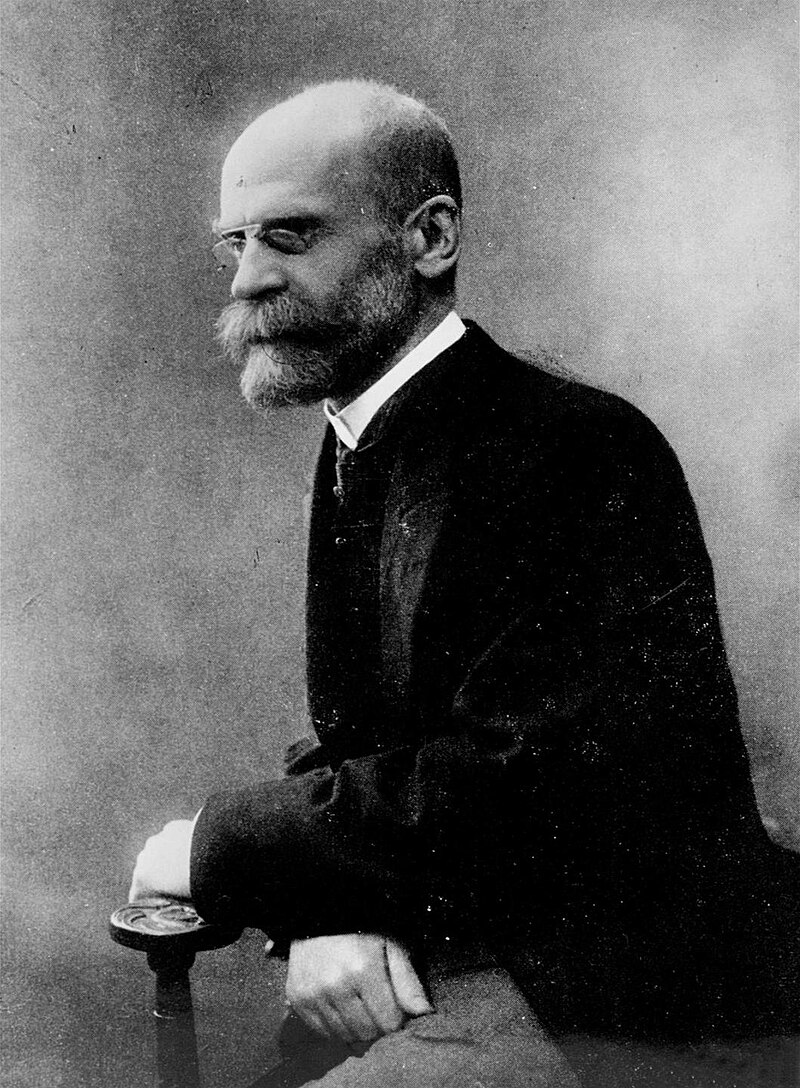
Émile Durkheim, born on April 15, 1858, in Épinal, Lorraine, France, is widely recognized as one of the founding figures of sociology. His work laid the foundation for the scientific study of society, transforming the field from philosophical musings into a distinct academic discipline grounded in empirical research. This article delves into the life, fame, and key highlights of Émile Durkheim, exploring the historical context of his work, his contributions to sociology, and his enduring influence on the field.
Early Life and Background
Durkheim was born into a devout Jewish family, with his father serving as a rabbi. His upbringing was steeped in religious tradition, but Durkheim himself would later distance from these roots, choosing instead to pursue a secular path focused on education and the study of society. From an early age, Durkheim displayed a keen intellect and a deep commitment to learning. His academic journey began at the Lycée in Épinal, and after several attempts, he was admitted to the prestigious École Normale Supérieure in 1879.
During his time at the École Normale, Durkheim was influenced by the intellectual atmosphere of Paris, which was then a hub of philosophical and scientific thought. He was particularly inspired by the works of Auguste Comte, the father of positivism, and Herbert Spencer, whose ideas on social evolution challenged traditional views of society. However, Durkheim was not content to merely adopt existing theories; he sought to develop a new approach that would establish sociology as a rigorous, empirical science.
The Birth of Sociology
In the late 19th century, Durkheim began to lay the groundwork for what would become modern sociology. He was particularly interested in understanding how societies maintain order and coherence in the face of increasing individualism and social complexity. Durkheim’s quest to understand social cohesion led him to develop his seminal theory of social solidarity, which he detailed in his first major work, The Division of Labor in Society (1893).
In this work, Durkheim argued that as societies evolve, they transition from a form of social solidarity based on similarity and shared beliefs, which he termed “mechanical solidarity,” to a more complex form of solidarity based on the interdependence of individuals, which he called “organic solidarity.” This transition, Durkheim posited, was driven by the increasing division of labor, which creates specialized roles within society. While mechanical solidarity is typical of traditional, simpler societies, where individuals perform similar tasks and share a common worldview, organic solidarity characterizes modern, complex societies, where individuals perform specialized roles but are united by their mutual dependence.
Durkheim’s analysis of the division of labor was groundbreaking in its emphasis on the empirical study of society. He believed that social phenomena should be studied as “social facts,” meaning that they are external to individuals and exert a coercive influence over them. This approach was a departure from the more abstract, philosophical analyses that had dominated social thought up to that point.
The Rules of Sociological Method
In 1895, Durkheim published The Rules of Sociological Method, a work that further solidified his reputation as a pioneering sociologist. In this book, he outlined the methodological principles that he believed should guide sociological research. He argued that sociology should be treated as a distinct scientific discipline, separate from psychology and philosophy, and that it should focus on the study of social facts.
Durkheim’s emphasis on empirical research and his insistence on treating social phenomena as objective realities had a profound impact on the development of sociology. His methodological rigor set the standard for future sociologists, who would build upon his ideas to develop more sophisticated tools for studying society.
One of Durkheim’s key contributions in The Rules of Sociological Method was his insistence that social facts must be explained by other social facts, rather than by individual psychology. This principle of sociological explanation laid the foundation for the study of social structures and institutions, which would become central to the field of sociology.
The Study of Suicide
Durkheim’s commitment to empirical research is perhaps best exemplified by his 1897 study, Suicide. In this groundbreaking work, Durkheim sought to demonstrate that even a seemingly individual act, such as suicide, could be understood as a social phenomenon. He conducted a detailed statistical analysis of suicide rates across different social groups and found that these rates varied significantly depending on factors such as religion, marital status, and social integration.
Durkheim identified four types of suicide, each corresponding to different social conditions: egoistic, altruistic, anomic, and fatalistic. Egoistic suicide occurs when individuals feel disconnected from society, as might happen in the case of people who are not integrated into social groups. Altruistic suicide, on the other hand, occurs when individuals are too strongly integrated into society, leading them to sacrifice themselves for a perceived greater good. Anomic suicide results from a breakdown of social norms, often occurring during periods of rapid social change, while fatalistic suicide occurs under conditions of extreme regulation, where individuals feel trapped by oppressive social conditions.
Durkheim’s study of suicide was revolutionary in its application of sociological methods to understand a deeply personal and seemingly individual act. It demonstrated the power of social forces in shaping individual behavior and underscored the importance of social integration in maintaining individual well-being.
Durkheim’s Influence on Education and Morality
In addition to his work on social cohesion and suicide, Durkheim made significant contributions to the sociology of education and morality. He believed that education played a crucial role in the transmission of social norms and values, and he was deeply interested in how societies inculcate moral values in their members.
Durkheim’s work on education is closely tied to his broader concerns with social order and cohesion. He argued that education serves as a mechanism for socialization, teaching individuals the norms and values necessary for participation in society. In his view, the school was a microcosm of society, where children learn the importance of discipline, cooperation, and respect for authority.
Durkheim’s ideas on morality were further developed in his later work, The Elementary Forms of Religious Life (1912). In this study, he explored the role of religion in maintaining social cohesion and examined how religious beliefs and practices contribute to the formation of collective consciousness. Durkheim argued that religious rituals reinforce social solidarity by bringing individuals together in shared acts of worship, thereby strengthening the bonds that unite society.
One of Durkheim’s most influential ideas was his concept of anomie, which he described as a state of normlessness that arises when social norms are weak or absent. Anomie can occur during periods of rapid social change, where traditional norms are undermined but new norms have not yet been established. Durkheim saw anomie as a major cause of social instability and believed that it could lead to increased rates of suicide and other forms of social dysfunction.
The Dreyfus Affair and Durkheim’s Political Engagement
While Durkheim is often remembered for his academic contributions, he was also an engaged public intellectual who participated in some of the most important political debates of his time. One of the most notable examples of Durkheim’s political engagement was his involvement in the Dreyfus Affair, a major political scandal that divided France in the late 19th and early 20th centuries.
The Dreyfus Affair centered on the wrongful conviction of Alfred Dreyfus, a Jewish French army officer, for treason. The case became a flashpoint for broader debates about anti-Semitism, justice, and the role of the military in French society. Durkheim was a vocal supporter of Dreyfus and argued that the affair revealed deep flaws in the French justice system and the dangers of unchecked military power.
Durkheim’s involvement in the Dreyfus Affair demonstrated his commitment to social justice and his belief in the importance of moral principles in public life. His willingness to speak out on controversial issues reflected his broader concern with the moral health of society and his belief that sociologists had a responsibility to engage with the pressing social issues of their time.
Legacy and Lasting Influence
Émile Durkheim’s contributions to sociology are vast and enduring. He is widely regarded as one of the most important figures in the history of the discipline, and his ideas continue to shape sociological research and theory to this day. His emphasis on empirical research, his development of key sociological concepts such as social facts, anomie, and collective consciousness, and his commitment to the scientific study of society have left a lasting legacy.
Durkheim’s influence extends beyond sociology into fields such as anthropology, education, and political science. His ideas have been taken up and developed by subsequent generations of scholars, including those working in the traditions of structuralism, functionalism, and cultural sociology. His work has also inspired ongoing debates about the nature of social order, the role of institutions in shaping individual behavior, and the relationship between morality and society.
In addition to his intellectual legacy, Durkheim’s life serves as an example of the importance of intellectual engagement and public service. He was not only a brilliant scholar but also a committed educator and public intellectual who sought to use his knowledge to improve society. His work reminds us of the power of ideas to shape the world and the responsibility of scholars to engage with the social and political issues of their time.
Conclusion
Émile Durkheim was a towering figure in the history of sociology, whose work laid the foundation for the scientific study of society. From his early efforts to establish sociology as a distinct discipline to his groundbreaking studies on social cohesion, suicide, and morality, Durkheim’s contributions have had a profound and lasting impact on the field. His ideas continue to influence sociological research and theory, and his legacy as a scholar, educator, and public intellectual remains as relevant today as it was in his own time.
As we reflect on Durkheim’s life and work, we are reminded of the enduring importance of understanding the social forces that shape our lives and the need for a rigorous, empirical approach to the study of society. Durkheim’s vision of sociology as a science of society continues to inspire scholars and students alike, and his work remains a cornerstone of the field.


